Memory, Activism, and the Future: UAB Commemorates the Day Against LGTBIQ+ Phobia
Every May 17th, the world remembers that the rights of LGTBIQ+ individuals are the result of decades of collective struggle. From the Stonewall riots to the approval of equal marriage, as well as student activism that has left its mark on campus, the UAB (Autonomous University of Barcelona) has joined this day to reclaim memory as a tool to reflect on the future challenges of the LGTBIQ+ community.

From Stonewall to Depathologization: The Origins of a Global Struggle
The date of May 17th commemorates the day in 1990 when the World Health Organization removed homosexuality from its International Classification of Diseases. That deeply symbolic gesture culminated decades of activism and research aimed at ending the medical and institutional pathologization of sexual orientation, a pathologization that, for much of the 20th century, had been used to justify coercive treatments, legal exclusions, and everyday violence.
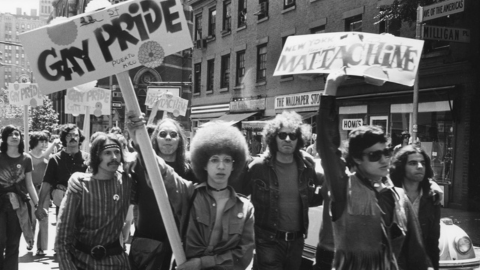
However, the origins of the global LGTBIQ+ liberation movement are usually traced back more than two decades earlier, to the early morning of June 28, 1969. That night, the patrons of the Stonewall Inn bar in New York, largely racialized trans women, lesbians, sex workers, and homeless youth, stood up to one of the routine police raids. The Stonewall riots lasted several nights and marked the birth of the contemporary gay liberation movement, leading to the celebration of the first Pride march just one year later. Since then, June 28th has become the international benchmark date for the LGTBIQ+ struggle.
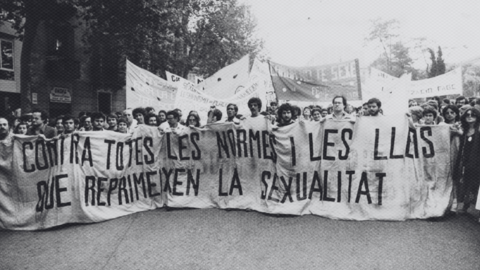
In our country, the movement organized itself within an especially hostile context: the final stage of the Franco dictatorship, when the 1970 Social Dangerousness Act openly criminalized homosexuality and transsexuality. Despite this, the Front d'Alliberament Gai de Catalunya (FAGC) was founded in Barcelona in 1975, becoming one of the first LGTBIQ+ organizations in the country with legal status and a key piece in building the movement.
On June 26, 1977, just two years after the dictator's death, Barcelona hosted the very first Pride demonstration in the Spanish state. This historic mobilization along the Rambla, which today features a commemorative plaque, paved the way for the repeal of the Social Dangerousness Act in 1979. Since then, the Catalan movement has been a driving force for decisive progress: from the country's first comprehensive LGTBI law in 2014, to Law 13/2005, which made Spain the third country in the world to recognize civil marriage and adoption for same-sex couples, and up to Law 4/2023 for the real and effective equality of trans individuals.
The UAB and the Memory of the LGTBIQ+ Movement
The university has not been a stranger to this history. For decades, student collectives at the UAB have woven a space for activism, education, and welcoming support, helping to make the campus fertile ground for the defense of LGTBIQ+ rights. Much of this memory is preserved today in the University's General Archive, thanks to materials donated by the JALG (Joves per l'Alliberament Lèsbic i Gai / Youth for Lesbian and Gay Liberation) in 2009, which serve as a valuable testament to student activism for sexual and gender freedom. This tradition connects directly with the exhibition inaugurated on May 14th, which traces the movement's journey from the end of the Franco regime to the present day.
This year, to mark May 17th, the Equality and Diversity Service has organized the exhibition "20 Years After Equal Marriage: Memory, Activism, and Future Challenges of the LGTBIQ+ Community." It is addressed to the entire university community to commemorate two decades of one of the most significant legislative advancements in Spain's recent history. The opening ceremony took place on March 14th, opened by the Dean of the Faculty of Law, Ricard Esteban Legarreta, who highlighted the role of Law and initiatives like this one as an educational engine to make the journey visible.
"The exhibition has an educational value because it allows us to observe the path we have traveled, a path of progress," he stated.
Next, Montserrat Pi Llorenç, head of equality policies at the Faculty of Law, reviewed the social movements that twenty years ago made possible one of the most significant legislative achievements in the recent history of the Spanish state. Pi reminded the audience that rights are not permanent conquests, but rather processes that must be sustained collectively:
"Rights are conquered, but they can also be lost. When it comes to rights, we can never take anything for granted."
Following this, Alberto Lacasta Huelin, Director General of LGBTI+ Public Policies of the Generalitat de Catalunya, spoke about current public policies and stressed the importance of the social education that accompanied those advancements:
"The education generated by the equal marriage law led many people who were against it to accept it."
The event concluded with a speech by Esther Zapater, Secretary General of the UAB, who framed LGTBIQ+ memory and activism as an inseparable part of a university's commitment to equality and diversity.
"Rights are built through struggle, and not against anyone," she concluded.
A Sustained Commitment
The UAB's commitment to the rights of the LGTBIQ+ community is not limited to commemorative events. The university has an Action Plan for Gender Equality and Sexual and Affective Diversity that coordinates institutional policies in this area. It also features specific protocols against harassment and LGTBIQ+ phobia, a protocol for name changes for trans and non-binary individuals, and a network of equality policy coordinators and equality delegates distributed across all faculties. These are complemented by annual awareness and training initiatives driven by the Equality and Diversity Service.
This May 17th, we reaffirm the UAB's commitment to defending the rights of LGTBIQ+ people and to building a university community free from violence and discrimination based on sexual orientation, gender identity, or gender expression. Remembering Stonewall, the first Pride demonstration on the Rambla, or the approval of Law 13/2005 means recognizing that every right won has been the result of a collective struggle, and that the task of maintaining and expanding it remains everyone's responsibility. The exhibition will remain open until June 1st in the lobby of the Faculty of Law, and the entire university community is warmly invited to attend.