La materia no existe ("Matter does not exist"), a new book by Agustí Nieto-Galan about the intricate relationships between science and power in the 20th century
Through the privileged gaze of the chemist and science communicator Miquel Masriera Rubio (1901-1981), iHC researcher Agustí Nieto-Galan delves into the complexities of the political, scientific, social and cultural tensions of the 20th century.
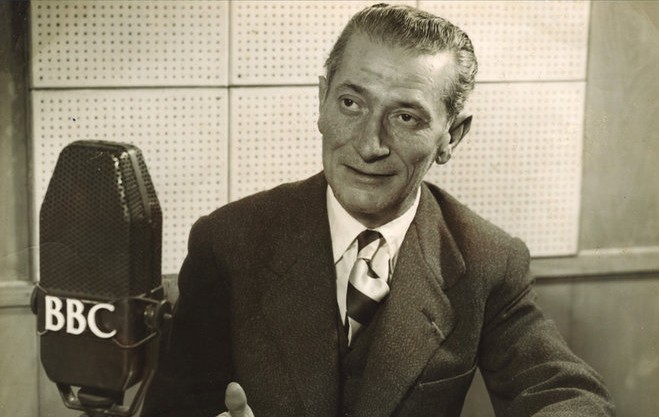
"La materia no existe" ("Matter does not exist") was the title of a controversial and captivating lecture that, in 1926, Miquel Masriera Rubio gave in Radio Barcelona. Masriera was then a young chemist who had returned to his hometown after a scientific training at the prestigious Swiss Federal Institute of Technology in Zurich. That title, aiming to grab the attention of radio listeners in the 1920s, foreshadowed a prestigious professional career and a fascinating personal itinerary, worthy of study.
La materia no existe crowns a longstanding historical investigation, in which Nieto-Galan sheds light on the intricate relationship between science and power. in the turbulent 20th century. Masriera's life bring us to a scientific culture with blurred boundaries between expert and popular knowledge, pure and applied science, physics and philosophy, freedom and censorship, local and global scales. We travel to Zurich in the 1920s, to the Spanish 2nd Republic and the Civil War, Nazi-occupied Paris, the grey Barcelona under Franco, and to the early years of transition to democracy; all that steeped in "atomism," "astronautics," and "cybernetics," the three pillars of Masriera’s ambitious science popularization programme.
Published by Marcial Pons in "Ambos mundos" series, the book opens the door to Masriera's subtle, cosmopolitan, rigorous, and captivating worldview, seamlessly blending science and humanities.
Watch, read and listen
- Agustí Nieto-Galan. Las relaciones entre ciencia y poder. Josep Maria Brunet's interview with Agustí Nieto-Galan on the podcast «Memoria y retos de España» (Radio Nacional de España, 12/05/2026).
- La materia no existe. Miquel Masriera y la cultura científica del siglo XX. Ángeles Gómez's interview with Agustí Nieto-Galan on the podcast «Feedback Ciencia» (Radio UHM, 27/05/2026).