Affiliate members
ICREA Research Professor at iHC-UAB (until December 2025)
Since 2019 I am the president of the European Society for Environmental History, a recognition of my work in that field. Although rooted in that discipline, I have developed a transdisciplinary research agenda blending environmental history with political ecology and environmental humanities. In 2013 I became the director of the Environmental Humanities Laboratory in Stockholm making it a global player in that emerging field.
My research clusters around three themes: environmental justice; migrations and the environment; and fascism and nature. Methodologically, I avoid any dichotomy between nature and society. Thematically, from toxicity to fascism, from migration to mountain communities, my research focuses on processes of expropriations and imposition of expert knowledge and the resistance of subaltern communities.
I am interested in directing Ph.D. and postdoctoral research in the following areas:
- migration and environment (migrant workers, transformations of landscape, transfer of knowledge and practices, etc.)
- fascist regimes and nature (politicization of nature, autarkic policies,
- environmental justice and conflicts (toxicity, pollution, social inequalities, mobilizations, etc.)
- history of environmentalism (especially subaltern environmentalism)
- disasters
- nature on trial (judicial environmental cases)
I teach courses on environmental history, political ecology, and environmental humanities.
If you wish to know more about my work, you can listen some of my talks here:
https://www.youtube.com/watch?v=I_WfgC5Ons8&t=1452s
https://www.youtube.com/watch?v=QlGghZFcP0c&t=1920s
https://www.youtube.com/watch?v=e3xhZ5LBp2U&t=689s
https://www.youtube.com/watch?v=45IGlGQq_no&t=104s
https://www.youtube.com/watch?v=I4KwVGEvU6w
https://www.youtube.com/watch?v=UCRaBqtAwsw&t=63s
Marià Baig i Aleu (Figueres 1955) got his PhD in Physical Sciences from the Universitat Autònoma de Barcelona (UAB) in 1981. He has been professor of theoretical physics at the UAB (1985-2018), being now retired. He has also carried out research in the following places: Centre de Physique Théorique – CNRS (Marseille) (1981-84), European Center for Scientific and Engineering Computing – IBM (Rome) (1986), Institut für Theoretische Physik – Hannover Universität (2004-2005). He has worked in high-energy physics, Monte-Carlo simulations of lattice gauge theories, quantum information and quantum computing.
He has also worked as a scientific disseminator, especially in the pages of La Vanguardia, and in the field of local history. He has been vice-president of the Institut d’Estudis Empordanesos (Figueres) between 2008 and 2016, continuing now as a member in charge of the electronic dissemination of the scientific journal of the entity.
He is currently interested in the History of Science and its relations with Technology and Society. He is currently working on the introduction of quantum mechanics in Spain, the metallurgy of the high charcoal blast-furnaces in the 18th and 19th centuries and the study of the fight against the phylloxera plague in Catalonia.
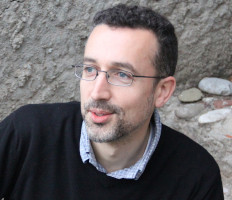
He holds a bachelor’s in History (UAB), a master’s in the History of Science (UAB-UB) and a PhD in Philosophy. He wrote his doctoral thesis on Aristotle’s influence on Arnau de Vilanova’s medicine and natural philosophy. He is currently an affiliated researcher in the Faculty of Philosophy and Humanities at the UAB, and his research in the field of the history of science primarily examines the relationship among medicine, natural philosophy and science in the Middle Ages and Renaissance, as well as the ties between science and the arts and humanities. In 2017, he won the Joaquim Carreras i Artau Philosophy Award from the Institut d’Estudis Catalans for Les transformacions d’Aristòtil. Filosofia natural i medicina a Montpeller: el cas d’Arnau de Vilanova (Institut d'Estudis Catalans, 2020).
Antoni Malet, Professor of the History of Science at Pompeu Fabra University until 2020, graduated in Mathematics (University of Barcelona) and obtained his PhD in History from Princeton University (1989). He has been a researcher or visiting professor at the universities of California (San Diego), Cornell, Toronto, Princeton, Paris VII, the Max Planck Institute for the History of Science in Berlin (Marie Curie Senior Fellow, 2013-2015), and a Fellow at the Institute of Advanced Studies, Paris (2017/18 academic year). He is a member of the Editorial Board of Annals of Science and Historia Mathematica, where he was book review editor (2006-2011) and currently serves as Editor-in-Chief (since 2022). He is a member of the International Academy of the History of Science, elected Vice-President in 2023. In various roles, he served as President of the European Society for the History of Science between 2014 and 2020. His research primarily focuses on mathematics and optics in the 16th and 17th centuries, optical and mathematical instruments, and the philosophy of mathematics in the classical period. He has also worked on the politics and institutions of science in Francoist Spain and its legacy. Currently, he is working on the sociological understanding of conceptual change in mathematics in the 16th and 17th centuries.