Part time members
Michele Catanzaro is a senior lecturer at the Faculty of Communication Sciences at the Universitat Autònoma de Barcelona and a researcher at the Institute of the History of Science. Since 2001, he has worked as a freelance journalist specializing in science, environment, health, and technology for media outlets such as Nature, Science, El Periódico de Catalunya, and others. He holds a PhD in Physics from the Polytechnic University of Catalonia and is the co-author of the book “Networks: A Very Short Introduction” and the documentary “Injusticia Exprés: the Óscar Sánchez case”. He has received several awards, including the International Journalism Award King of Spain (2014), the Golden Nimfa (2015), European Science Writer of the Year (2016), the Prismas (2017), the Colombine (2020), the Holtzbrink (2021), the Papageno (2023), and the Boehringer-Ingelheim (2024). He has received grants from Journalism Fund, European Journalism Center, Climate Investigation Grant, Peter-Hans-Hofschneider, and IJ4EU. In 2014-2015, he was a journalist in residence at the Heidelberg Institute for Theoretical Studies. In 2023, he was a Nature-Marsilius Invited Professor at the University of Heidelberg. He has participated in the European project ENJOI (Engagement and Journalism Innovation for Outstanding Open Science Communication) and coordinates the project PerCientEx (Excellence in Scientific Journalism).
(Photo by Yorley Ruiz)
Full Professor of Logic at the Philosophy Department of the Universitat Autònoma de Barcelona (UAB), member of the Barcelona Graduate School of Mathematics, and adjunct Scientist at the Artificial Intelligence Research Institute IIIA-CSIC since 2001.
I was working as a postdoctoral researcher in the Équipe de Logique Mathématique, of the CNRS (1999-2000, Université Paris-7). From 2012 to 2016, I have been Vice-chancellor for Research, and Director of the Doctoral School of the UAB. Recently, I have done a research stay of one year in the group Algorithmic Decision Theory at the Institute Data61 of the University UNSW of Sydney, Australia.
Since 1990 I have contributed to the field of model theory, to the study of the Horn fragment of equality-free languages and to predicate fuzzy logics. My current research interests are argumentation, logics and ethics for artificial intelligence.
I have been coordinator and task leader of several European and Spanish projects. At present, I am local coordinator of three European Projects of the Program H2020. I am an active member of different international networks in the field of fuzzy logics, such as ManyVal and MathFuzzLog. I am also an expert in evaluations for the European Program H2020, for the European Science Foundation, for the FWO research agency, and for AQU (Agency for the Catalan University System Quality) of the Generalitat de Catalunya.
Miquel Domènech Argemí is a full professor of social psychology at the Autonomous University of Barcelona. His research interests are broadly related in the field of science and technology studies (STS), with a special focus on the relationship between care and technology and on citizen participation in techno-scientific topics.
Most of his publications can be viewed at: academia.edu and ResearchGate.
Elena Fernández García és professora agreda laboral del Departament d'Història Moderna i Contemporània (Àrea d'Història Contemporània) de la Facultat de Filososofia i Lletres de la UAB
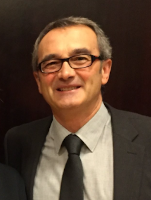
He is a researcher in the language of science and technology, a full professor of Spanish at the Universitat Autònoma de Barcelona and an associate professor at the Wszechnica Polska in Warsaw. She has conducted a wide range of research related to lexical history and lexicography, especially in relation to specialised languages.
His main avenue of research is studying the history of the language of science and technology in Spain and in the Romance languages. He has particularly worked on the history of the language of chemistry, although he is also interested in specialised language in its lexicographic and language teaching facets.
He is the lead research in the Grupo Neolcyt – Grupo de investigación en lengua de la ciencia y de la técnica, comprised of ten researchers from the following universities in Spain: Universitat Autònoma de Barcelona, Universidad de Murcia, Universitat Rovira i Virgili, Universitat de Barcelona and Universidad Carlos III of Madrid, and from Universidad del Rosario in Bogota, Colombia. Since 1997, the group has undertaken a range of projects with public financing in the field of Spanish for science and technology, especially in the 18th to 20th centuries.
He is the coordinator of the «Lengua y ciencia» Thematic Network, which encompasses 35 research groups in philology and the History of Science in Spain, France, Italy, Germany, Austria, Portugal and Canada, all of which are interested in the language of science. The network’s goal is to foster the study of this field and to contribute to its institutionalisation by overcoming the traditional barriers between fields of knowledge.
Lecturer at the Department of Basic, Evolutionary and Educational Psychology (UAB) and member of the Research Group on Governmentality, Science, Technology and Subjectivity (University of the Republic, Uruguay).
I hold a degree in Psychology from the Autonomous University of Madrid and a PhD in Diversity, Subjectivity and Socialization (Social Anthropology, History of Psychology and Education) from UNED. Before joining UAB, I taught at the UOC, UNED and the Cardenal Cisneros Center for Advanced Studies (UCM). I was a Margarita Salas postdoctoral researcher at UNED and have carried out research stays at the iHC, at the University of the Republic (Uruguay), at the Federal University of Rio de Janeiro (Brazil), at the National University of La Plata (Argentina), and at the Max Planck Institute for Evolutionary Anthropology (Leipzig).
My research interests lie at the intersection of the history of psychology, the history of primatology and comparative psychology, from a critical and genealogical perspective linked to Science and Technology Studies (STS), cultural studies, and critical animal studies. My work analyses, from a long-term perspective spanning from the 16th century to the present, the ways in which scientific practices, naturalist knowledge, and cultural representations have contributed to the historical definition of the human (and the animal), with particular attention to the role of nonhuman great apes in Western thought.
My current research is organized around three main axes: the critical analysis of primatology and comparative psychology; the study of the circulation of knowledge about great apes across scientific research, popular science, and popular culture; and the development of a relational, non-essentialist framework for the study of human–nonhuman relations.
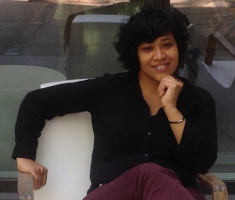
I research in the field of body policies and their linkage to the racial logics of science. I studied letters at the Central University of Venezuela. I have a master's degree in Critical Theory and Museum Studies and a master's degree in Science History. I am a student of the doctoral program of the Institut de Història de la Ciència of the Univrsitat Autònoma de Barcelona.
Since 2014 I co-dynamite the research collective @criticaldias (Premi Miquel Casablancas, 2017), and I have focused on the dynamization of workshops and discussion spaces on black decolonial methodologies and feminsms. Since 2018 I collaborate with the program Barcelona Interculturalitat del Ajuntament Program in Barcelona as a training machine. I have participated in various curatorship, curatorship and independent research projects, an activity that linked me as Fellow 2018-2019 to the Center of Arts, Design and Social Research.
Maria Antonia Martí Escayol és professora agregada laboral del Departament d'Història Moderna i Contemporània (Àrea d'Història Moderna) de la Facultat de Filososofia i Lletres de la UAB
Francisco Tirado is Senior Lecturer at Department of Social Psichology at the Universitat Autònoma de Barcelona. His main research interests are: a) the analysis of biological emergency situations from a STS perspective, b) the relation between biorisk and biopolitics, and c) how biosecurity practices enact a new conceptualization of life.
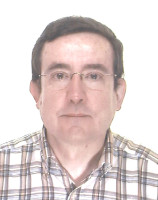
In addition to holding a bachelor’s in Catalan and Spanish Philology and a PhD in the former, he has also earned an advanced studies diploma in the History of Science. He is Full Professor in the Departament de Filologia Catalana at the Universitat Autònoma de Barcelona, coordinates the Grup d'Estudis de Literatura Catalana Contemporània and belongs to the Centre d'Estudios sobre Dictadures y Democracies.
He has analysed the Enlightenment, Romanticism, evolutionism, positivism, realism, naturalism, objectivism and existentialism, often from an interdisciplinary perspective. In the history of science, he has published studies on the relations between literature and different fields of science and the impact of technology (especially the phonograph), Darwinism and experimental medicine. In 2005, he won the Fundació Uriach History of Medicine award with a study on the theoretical-practical testing of Joan Giné i Partagàs’ phrenopathic homology and heterology, that is, similarities and differences between the processes of reason and unreason (1978).