Full time members
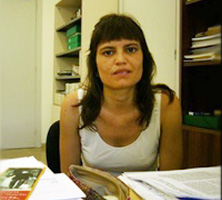
Coordinator of the PhD Program (2020- )
Associate Professor (2020)
Fields of interest: History of Human Sciences, History of Psychology, History of Science and Gender.
Mònica Balltondre is an Associate Professor in the Faculty of Psychology at the UAB. Her research focuses on female subjectivities constructed by past scientific theories. She has studied mediaeval spiritual women and spiritualism and spiritism from the early 20th century, primarily in Spain. She had a post-doc and visiting grant in the “História das Ciências e das Técnicas e Epistemologia” (HCTE) at the Universidade Federal do Rio de Janerio (UFRJ, 2015); at the Center for Science, Technology, Medicine and Society (CSTMS) at the University of California, Berkeley (2014); and at FIOCRUZ (Rio de Janeiro, 2010).
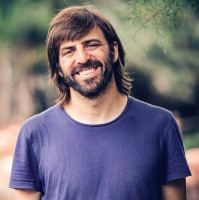
Serra Húnter professor at the History of Medicine Unit of the UAB
He holds a bachelor’s in Biology from the Universitat de Girona (2005) and a master’s (2010) and doctorate in the History of Science from the Universitat Autònoma de Barcelona (2015), with a thesis directed by Oliver Hochadel on the Orce Man controversy. The results of his thesis were published in English by Brill in the book Orce Man. Controversy, Media and Politics in Human Origins Research (2020). In addition to the History of Palaeoanthropology and the relationship between science, politics and the media, he is also interested in the history of science in the city of Barcelona, on which he published the book Barcelona, ciència i coneixement (2017) with Albertí Editors. In 2015, he created Historias de Ciencia, which offers scientific and cultural routes around Barcelona targeted at both the public at large and students and associations. He is also interested in the history of the natural sciences, specifically the history of the Barcelona zoo, about which he has published the book De les Gàbies als Espais Oberts. Història i Futur del Zoo de Barcelona (2018) with the publisher Alpina. He has participated in numerous Spanish and international conferences on these topics, has been invited to give talks in both academic and public settings, has published numerous scientific and informative articles and book reviews, and did a research stay while pursuing his doctorate at the University of Cambridge’s History and Philosophy of Science Department (2013-2014) thanks to a research grant from the British Society for the History of Science. He worked on the UAB’s scientific dissemination website, called Divulga (2012-2013), and he won the Historical Archives Fellowship from the Wenner-Gren Foundation (2015) to work on the personal archive of Josep Gibert i Clols, the main player in the Orce Man controversy; a research grant from L’Hospitalet de Llobregat (2016) for to study public health in this town; the Uriach History of Medicine Award (2017) for an article on the dustmen of L’Hospitalet; and the Montserrat Roig Barcelona City of Literature Grant (2018) for a book project on “the taxidermist of La Plaça Reial”. He classified the personal archive of Antoni Jonch i Cuspinera (2019) and is currently responsible for the library and archive at the Natural Sciences Museum of Granollers.
Deputy Director of iHC
Research Head Manager
Fields of interest: history of satellite data, history of satellite technology, environment.
Trained as a physicist, I obtained a PhD in History of Science at the Ecole des Hautes Études en Sciences Sociales (Paris). I have worked at Centre Alexandre Koyré (Paris), Centre National d'Études Spatiales (Toulouse), Institut Pierre Simon Laplace (Paris), National Air and Space Museum (Washington DC), Laboratoire Techniques, Territoires et Sociétés (Marne), Universitat Pompeu Fabra and Universitat Oberta de Catalunya.
My research explores the history of satellite remote sensing technology. More specifically, the history of the imbricated techniques, knowledge, practices, institutions, actors and ideas involved in the production, circulation and use of data generated with Earth-orbiting satellites, and the power relations they articulate, as well as their environmental, social and political implications.
Amongst others, I have been awarded prizes by NASA and History of Science Society (2015), American Institute of Physics (2016), European Space Agency (2017), and International Committee for the History of Technology (2016 and 2021). Since 2022, I am the PI of the project “CLIMASAT. Remote-sensing Satellite Data and the Making of Global Climate in Europe, 1980s-2000s” funded with an ERC Starting Grant.
Beatriu de Pinós Postdoctoral Fellowship
Colella works at the intersection of Science and Technology Studies (STS), environmental history, and political ecology. He holds a PhD in Applied Sociology and Social Research Methodology from the University of Milano-Bicocca, as well as an MA and a BA in Social and Cultural Anthropology.
He is currently developing the project "Fastidious Triads", which traces the socio-environmental history of Xylella fastidiosa from the late nineteenth century to the present across the United States, Brazil, and Southern Europe. The project examines how knowledge, ignorance, and expertise are produced and contested in the governance of plant disease, combining archival research with multi-sited ethnography.
His previous research has focused on the Xylella outbreak in Southern Italy and the related knowledge controversies between institutional science and socio-environmental movements. He has been involved in several interdisciplinary projects, including H2020 Viroplant (University of Milano-Bicocca), BRIDGES (CNR-IREA), and Engage-App (University of Bologna), working on plant health, soil ecologies, and consumer behaviour in fruit and vegetable consumption.
Sebastián Díaz Ángel is a post-doctoral researcher working on the ERC Starting Grant project "CLIMASAT: Remote-sensing Satellite Data and the Making of Global Climate in Europe, 1980s-2000s". He holds a B.A. in Political Science (Universidad de los Andes, 2003), a B.A. in History (Universidad Nacional de Colombia, 2008), an M.A. in Geography (Universidad de los Andes, 2011), and a Ph.D. in History (Cornell University, 2023). His research combines environmental history, science and technology studies, and geopolitics, with particular focus on historical geography and the history of cartography . His dissertation examined Cold War mapping and engineering projects in Latin America, and his current research analyzes the politics of remote sensing and satellite data infrastructures in the Americas. He has been awarded numerous prestigious fellowships and grants, and published four edited books, multiple book chapters and journal articles. He has organized numerous academic conferences and has extensive experience in digital humanities and curatorial work. Since 2007, he has served as academic coordinator of Razón Cartográfica, a pioneering digital network dedicated to the critical study of cartography and spatial representations in Colombia and Latin America.
Catriel Fierro: Beatriu de Pinós Postdoctoral Fellowship (AGAUR), ref. 2023 BP 00065.
Catriel Fierro is a psychologist-historian with interests in the philosophical history of science, particularly early 20th-century psychology in the United States. His main research areas are the institutionalization and professionalization of clinical psychology, the historical emergence of controlled psychotherapy research, early debates on case recording, diagnostic accuracy and technological efficacy, and the inter-professional debates and boundary work between mental hygiene professions during the interwar period. He carried his doctoral studies at the National University of San Luis (Argentina) under a National Scientific and Technical Research Council (CONICET) doctoral research grant (2016-2020). He was awarded his Doctorate in Psychology in 2021 with a dissertation on the historical and contemporary analysis of Argentinian undergraduate psychology program, which was published as a book that same year. He then pursued research on the history of early 20th-century clinical psychology and clinical mental testing under a CONICET postdoctoral research grant (2020-2021). He is currently a Beatriu de Pinos Postdoctoral Research Fellow at the History of Science Institute (iHC-UAB) (2025-2028).
Catriel's Beatriu de Pinos project is titled "The Emergence and Institutionalization of Clinical Psychology in the United States: Inter-professional Relations and Epistemological Debates in School, Academic and Medical Settings (1896-1939)". The project is an attempt to reconstruct the history of the field from a much-needed philosophy of science perspective, engaging with the knowledge claims of relevant historical figures, and emphasizing both the institutional as well as the cognitive and procedural dimensions of early attempts at establishing clinical psychology as a consulting, scholarly profession. Although focused on the early career and work of Carl Ransom Rogers (1902 - 1987), the project aims to provide a coherent and encompassing narrative linking the establishment of psychological clinics in the 1900s and 1910s, the inter-professional clashes with psychiatry and medicine in the 1910s and 1920s, the quest for methodological refinement and prognostic accuracy during the 1920s and 1930s, and the eventual emergence of psychotherapy research as a form of psycho-technological research in the late 1930s and early 1940s.
Catriel has been assistant researcher at the Institute of Humanities and Social Sciences (UNMdP - CONICET) since 2021. Before joining the iHC, he was instructor at the undergraduate "Social History of Psychology" course at the National University of Mar del Plata, Argentina (2016-2025). In 2023 he was Visiting Research Scholar at The Nicholas and Dorothy Cummings Center for the History of Psychology at The University of Akron in Akron, Ohio under a Fulbright research grant. Catriel has conducted extensive archival work, mainly at the Archives of the History of American Psychology, the National Archives, and the Library of Congress. He has been awarded multiple accolades for his work on the history of clinical psychology, most recently the Early Career Award (Society for the History of Psychology, 2021), the John C. Burnham Early Career Award (Forum for History of Human Science of the History of Science Society, 2022), the inaugural Mercedes Rodrigo-Bellido Award (History of Psychology Division, Interamerican Society of Psychology, 2023) and the inaugural Paul Engel Memorial Award (Rockefeller Archives Center, 2024).
Catriel has published original research in the field's main peer-reviewed journals, such as History of Psychology, History of Education Quarterly, History of the Human Sciences, the Journal of the History of the Behavioral Sciences, and Teaching of Psychology.
Lecturer professor at the History of Medicine Unit of the UAB
BA in biological anthropology by the National School of Anthropology and History (Mexico), MSc in medical anthropology by Brunel University (UK) and PhD in history of science from the UAB. Her research interests include the social and cultural history of disease and medicine, medicine and health in 16th-century New Spain, paleopathology, paleoepidemiology, medical anthropology, paleogenomics and sexological anthropology. While studying the cocoliztli in New Spain, she received the awards of the Division of History of Science and Technology-International Union of History and Philosophy of Science and Technology (2019), and the 2018 Gonzalo Aguirre Beltran Chair-CIESAS-UV Annual Prize (2019). Her current research focus on endemic diseases that occurred in New Spain from 1521 to 1580.
Lecturer professor at the History of Medicine Unit of the UAB
She is an expert in the social and urban history of health and the environment in contemporary history. She is particularly interested in the relationship between environment and health in professional discourses, in the sanitary control of epidemics and infectious diseases, in the ordinary practices of health and environmental professions, and in patients’ lived experiences of illness and sanitary measures in cities. Her main current lines of research are the everyday history of tuberculosis in Barcelona (1929–1970); the history of health and environmental risks in France, Spain, and Portugal; and the history of the everyday management of epidemics in port cities of the Iberian Peninsula throughout the twentieth century.
Beatriu de Pinós Postdoctoral Fellowship
Victoria Molinari holds a PhD in history from the University of Buenos Aires (UBA). She is an expert in the history of the human sciences, with a particular interest in the history of the “psi” disciplines (psychology, psychiatry and psychoanalysis) and in the history of education in the 19th and 20th centuries, both in Argentina and Spain.
She is currently a Beatriu de Pinós postdoctoral researcher at the Institute fot the History of Science at the UAB, where she is developing a project on the relations between gender and genius in Spain between 1888 and 1939.
Previously, she was a Marie Curie postdoctoral researcher at the Milà i Fontanals Humanities Research Institute of the CSIC in Barcelona and a CONICET postdoctoral researcher at the Faculty of Philosophy and Letters of the UBA. She has also taught for more than ten years at the Faculty of Psychology of the UBA and at the National University of La Plata (UNLP).
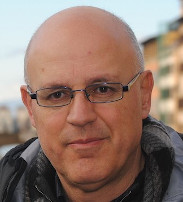
Director iHC (2020-2023)
Full Professor & ICREA-Academia researcher (2018 & 2023)
Fields of interest: Science in the public sphere in 19th Century, Science and power in the 20th Century.
I am Full Professor of History of Science at the Universitat Autònoma de Barcelona (UAB), and ICREA Acadèmia Fellow (2009 & 2018). Following degrees in both chemistry (URL) and history (UB), I took a PhD in the History of Science at the Universitat de Barcelona (UB) and held postdoctoral positions in the Modern History Faculty, University of Oxford, and the Centre de Recherche en Histoire des Sciences et des Techniques at the Cité des Sciences et de l’Industrie/ CNRS, Paris. I am also a founding member of the international research group “Science and Technology in the European Periphery” (STEP), and former Director of the Centre d’Història de la Ciència (CEHIC) at the UAB
I have written widely on the history of chemistry and natural dyestuffs, and the history of the popularization of science (18th-20th centuries). My research focuses now on Urban History of Science, as a way to explore the complex interactions between science and the city in several cultural contexts. In that “urban” context, I am working on the “Hunger Artists’ Project”, as a new research field on cultural history of science at a European level.
I have also been working on a new history of chemistry in twentieth-century Spain, with a particular emphasis on professional chemists’ role during Franco’s dictatorship and the coproduction of science and power in different political regimes. The book, The Politics of Chemistry (Cambridge, 2019) is a key result of this work.
In the framework of my ICREA-Acadèmia 2018 award, I develop the project, “Chemopolis”: The City of Chemistry in the Twentieth Century”. It is an attempt to build up a new big picture of chemistry in the twentieth-century at a European level. It includes, among other topics: cosmopolitanism; popular chemistry; toxics, experts and users; invisible science and the making of ignorance; pure-applied dichotomies; chemists as intellectuals in democratic and dictatorial regimes; chemical technology and the "natural-artificial" boundaries.
Grigoris Panoutsopoulos is a post-doctoral researcher working on the ERC-funded project “CLIMASAT: Remote-sensing Satellite Data and the Making of Global Climate in Europe, 1980s-2000s”. He holds a B.Sc. in Physics, a M.A. in History and Philosophy of Science and Technology and a PhD in History of Science from the University of Athens. His dissertation, which is titled "Planning CERN's Large Hadron Collider: An Entanglement of Physics, Technology, and Diplomacy", showcases an in-depth understanding of the intricate interplay between Big Science infrastructures, industry and politics. Grigoris possesses a broad range of research interests, including science diplomacy, the material culture of science, the history of Big Science, the relationship between European integration and scientific networks, climate and weather data, and the history of European satellite systems. With the support from a series of fellowships and grants, he has given presentations at international conferences and has published articles in peer-reviewed journals and edited volumes.
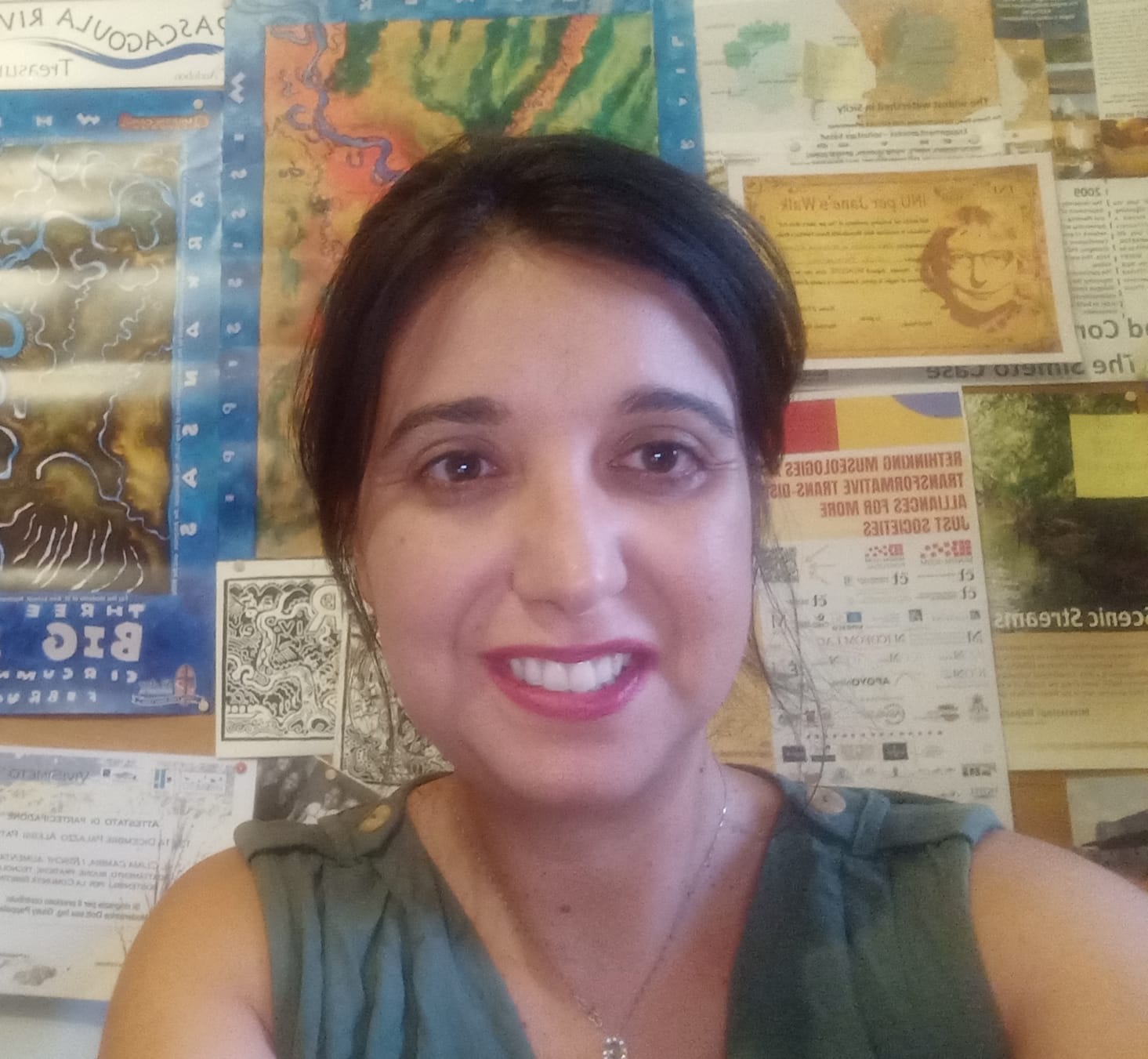
Trained as an architectural engineer, during my educational journey, I have developed an interest for neighbourhoods, cities, and territories as integrated socioecological systems, with the aim of working ‘with’ local communities – especially the most marginalised – rather than imposing top-down projects. For this reason, I became interested in experimenting with the action-research approach and, in 2009-2010, I have conducted a master’s thesis focused on collective maps as tools for promoting emancipatory pathways. The master thesis, “For a system of common knowledge, norms, and projects. The community mapping process in the Simeto River Valley” – conducted with fellow researchers at the Laboratory for Ecological Planning and Design of the University of Catania – has received several awards and recognition, and led me to continue my journey through a PhD focused on collaborative watershed planning.
Passionate about rivers as mirrors of broader socioecological dynamics, issues of power, exploitation, and (in)justices, I had the opportunity to conduct part of my doctoral research in the Deep South of the United States, in the state named after the Mississippi River, through a Fulbright Fellowship. After receiving my PhD in 2014, I gave back to my alma mater as a postdoctoral researcher from 2016 to 2018, developing interests in active anti-mafia, environmental history, environmental humanities, and other transdisciplinary intersections, working in both inner areas and distressed neighbourhoods.
From 2019 to 2024, I worked as an assistant professor, still at the University of Catania. In these years, my research interests focused on the processes of construction and care of territorial heritage as means to critically reflect on the past in order to shape more just evolutive trajectories. During this period, I also had the opportunity to be a visiting scholar in several European universities (in Norway, Belgium, Spain, and Portugal).
Qualified as a professor of second level for the Italian system, during my late stay at the University of Catania I taught Urban Techniques and Lab, Urban Design, Landscape Planning and Qualitative Research Methods, supervised several Master’s and PhD theses, and coordinated a research project of national relevance (PRIN) on the nexus between social innovation and institutional learning (called RESISTING). Recently, I have also been interested in insurgent and social museology and have been involved in several activities related to this field, including co-organising a conference of the International Movement of New Museology (MINOM) in 2024.
At UAB, iHC, I am currently working with Marco Armiero and other research fellows on a project called WRENCH (Whispers of Time: Heritage as Narratives of Climate Change), supported by the Belmont Forum, as well as other research activities. I am interested in linking commoning processes, the politics of care with more-than-human dynamics, and in reflecting on the role of territorial and living heritage – as perceived by the people whose voices have been silenced or unheard – as a catalyst for more just change. I am also interested in how institutions might evolve to serve people’s needs, and in exploring the history of science in relation to those fields of knowledge and practice concerned with spatial transformations, from a transdisciplinary perspective.
Finally, among various networks, I am currently part of the “Radical environmental humanities collective” of “Resistance: A Journal of Radical Environmental Humanities”.
Some of my previous works can be found here https://www.researchgate.net/profile/Giusy_Pappalardohttps://unico.academia.edu/giusypappalardo
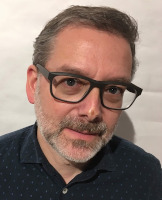
Coordinator of the Bacherlor's Degree in Science, Technology and Humanities.
Tenured Professor of History of Science.
Fields of interest: History of contemporary physics, science and humanities.
Xavier Roqué was educated as a physicist and historian of science at the Universitat Autònoma de Barcelona and did his post-doc at the University of Cambridge and the Centre de Recherche en Histoire des Sciences et des Techniques in Paris. He has been a visiting researcher at Cambridge and Uppsala universities. He is a member of the Philosophy Department. He has taught in the bachelor and post-graduate programmes in the faculties of Sciences, Biosciences, Philosophy and Humanities and Education. He has served as the director of the Centre d'Història de la Ciència, the coordinator of the master’s in the History of Science: Science, History and Society (UAB-UB) and coordinator of the doctoral programme in the History of Science. His research examines the social and cultural history of contemporary science, with particular attention on experimental practices, material culture, theoretical creativity and the relationships between science, politics and economics. He has published studies on the history of radioactivity, relativity and quantum physics; on physics in Spain; and on women and science, and he has edited and translated Albert Einstein, Marie Curie, Heinrich Hertz and Niels Bohr.
Coordinator of the Master's Degree in History of Science (2023-)
iHC Secretary (2020-2023)
Associate Professor Serra Húnter
Fields of interest: History and philosophy of technology; Policy of dissemination and musealization of science and technology in the 20th century.
Serra Húnter Associate Professor. I was trained in Philosophy at the Universitat de Barcelona and in History of Science at the Universitat Autònoma de Barcelona. Before joining the CEHIC, I taught at the Universitat de Barcelona, the Universitat Oberta de Catalunya and the Universidade de Lisboa, where I was postdoc researcher at the Centro Interuniversitário de História das Ciências e da Tecnologia (CIUHCT) from 2015 to 2019.
My main overarching research interest is the intersection between politics and the popularization of science and technology, with a strong emphasis on the politics of display.
I am preparing a book called The Machine on Display: Technology, History and Politics at the New York Museum of Science and Industry (1912-1951), under contract with Brill. By following this nomadic museum through Midtown Manhattan, the book will illuminate the political dimensions of the birth and transformations of industrial museums in the United States. It will also challenge the standard narrative on the history of “interactivity”. Parts of the story have already been published in History of Science and the Science Museum Group Journal. I have published on the politics of technological fun in amusement parks in the Iberian Peninsula, and I have recently co-edited, with Jaume Valentines-Álvarez, a special issue of the journal Centaurus about the banalization of nuclear technologies.
I am currently engaged in a historiographical reflection on how to advance towards a political history of “interactivity”, as well as in a history of international science popularization policies as tools for cultural diplomacy at the League of Nations and the early years of UNESCO.
Elena Serrano is Ramón y Cajal researcher at the Institut de Historia de la Ciència (iHC) of the UAB since January 2023. Previously, she was part of the CIRGEN project (Circulating Gender in the Global Enlightenment, cirgen.eu). She trained at the former Center for the History of Science (CEHIC) at UAB and the University of Cambridge and has held postdoctoral fellowships at the Max Planck Institute for the History of Science in Berlin, the Science History Institute in Philadelphia and the University of Sydney.
Her work combines methodologies from the history of science and medicine, material culture, cultural history, and gender studies. She has published on female networks and knowledge production (Notes and Records ), gender and material culture in the history of knowledge, and, most recently, on love prediction technologies (Isis, 2021). Her book, Ladies of Honor and Merit: Gender, Useful Knowledge and Politics in Enlightened Spain, has just been published by the University of Pittsburgh Press (2022).
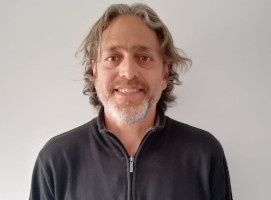
Director iHC (2023-)
Coordinator of the Master's Degree in History of Science (2017-2023)
Associate Professor (2015)
Fields of interest: Urban narratives about nature; history of life science; urban history; scientific communication and media/film studies.
A PhD in Biology (Universidad de Salamanca, 1993) and MA in History of Science (UAB, 2010), Carlos Tabernero has worked as a molecular biologist at the National Cancer Institute (NCI-NIH, 1992-1998, USA); as a teacher and designer of educational programs at Children's Studio School, in Washington DC (1999-2003, USA); as a researcher in communication studies at the Internet Interdisciplinary Institute (IN3-UOC; 2005-2010); and joined, in 2005, the Centre for the History of Science (CEHIC-UAB), where he is an Associate professor of history of science.
His teaching and research focuses on urban narratives about nature (the intersections between the history of life sciences, urban history, scientific communication and media studies), mostly in relation to cinema, television, literature and the processes of construction and circulation of natural history knowledge in the 20th century.
He currently teaches in the degrees of Medicine, Biology, Biomedical Sciences and Genetics, as well as in the official Master's Degree in History of Science: Science, History and Society (CEHIC), which he also coordinates, the Official Master's Degree in Teaching in Secondary Schools, and the CEHIC PhD Program in History of Science. He has published extensively in all the fields in which he has worked.
iHC Secretary (2024-)
Associate Professor (2022-)
Fields of interest: History of contemporary technology, technonationalism and transnational history, resistance to technology, and activist construction of science.
Jaume Valentines-Álvarez is an Associate Professor of History of Science at the Universitat Autònoma de Barcelona. Previously he was a researcher fellow and adjunct professor at the NOVA School of Science and Technology in Caparica (Lisbon) for eight years. He has also been a visiting scholar in Mexico, London, Berlin and Geneva. As historian of technology, his focus has been the twentieth-century Iberian Peninsula and his main interest is to understand how political authority and expert authority are entangled and resisted. His last works deal with the relationship between technology and revolution, the political role of technological display and alternative exhibitions, and the bridge between the social construction of technology and what could be called “social destruction of technology”. He is interested in crossing memories, useful arts and fine arts to imagine futures based on mutual aid, and in creating spaces to bring academics, activists and local communities together.