Extraordinary bodies in the making of knowledge
Event details
- Start: 16 June 2026 14:30
- End: 17 June 2026 17:30
- iHC Seminar room + Teams
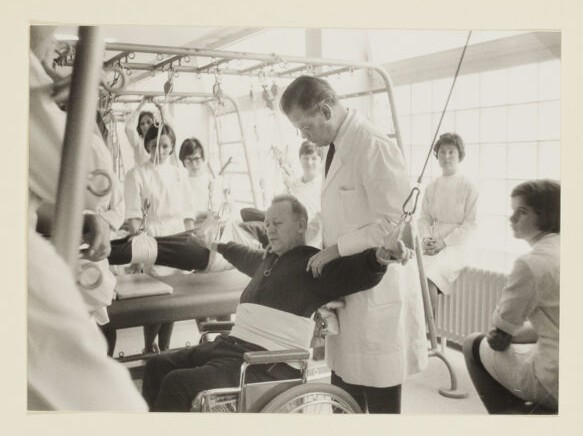
Nuns whose corpses remained incorrupt, a body that bears burning ashes, women and children mediums who communicate with the afterlife, a visionary capable of printing his visions on a polaroid camera and the first paraplegic athletes: ours is a diverse group of bodies that supposedly defy physical and mental limits. From the 18th to the 21st century, our collection of cases explores the epistemic, political, and cultural construction of embodied experiences that, in very different ways, appear to break boundaries. We argue that paying attention to these extraordinary bodies opens new ways of thinking about corporeality, male and female subjectivities, truth/fraud, normativity, disability, and the relationships between mind/soul, bodies, and technology. Our collection moves away from existing literature on “science and spectacle” to focus on the body as a means of forging connections and co-constructing scientific knowledge, in which audiences, trainers, intermediaries and carers also participated, and in which gender assumptions play a key role in this dynamic between sensory experience and epistemic authority.
On the one hand, we are interested in examining how the body and its limits become the subject of empirical experimentation. How did these individuals and their contemporaries perceive the functioning of the senses and the mind in these “extraordinary” situations? How did training supposedly improve or hinder these faculties? However, on the other hand, these intimate struggles became collective businesses for different reasons. We are also interested in exploring how these bodies are constructed, narrated and made intelligible through rituals, spectacles and alternative philosophical strands, or conversely, how they are questioned and accused of fraud. The papers invite us to reconsider how physical experience —felt, performed, disciplined, or imagined— has continually mediated the making of science.
Participants:
Mònica Balltondre* (iHC-UAB)
Laura Guinot Ferri (Valencia University)
Hansun Hsiung (Durham University)
Agustí Nieto-Galan (iHC-UAB)
Alicia Puglionesi (Johns Hopkins University)
Elena Serrano* (iHC-UAB)
(*) Organizers
Online participation by this Teams link
Programme
June 16th
14:30 - 14:40 Introduction
- Mònica Balltondre and Elena Serrano
14:40 - 16:20 Part 1
- Laura Guinot Ferri: Debating women’s sanctity through the use of the body: The miraculous incorruption of Mariana de Jesús in the eighteenth century (Comments by Elena Serrano)
- Elena Serrano: The incombustible Spaniard: Human experimentation in the Royal Laboratory of Chemistry (Comments by Agustí Nieto-Galán)
16.20 - 16.40 Coffee-Break
16.40 - 18.10 Part 2
- Mònica Balltondre: Speaking between worlds: Translating mediumistic experience into Science (Comments by Hansun Hsiung)
- Hansun Hsiung: The flying gaze: Embodied surveillance in Cold War parapsychology (Comments by Alicia Puglionesi)
June 17th
14.30 - 16.00 Part 3
- Agustí Nieto-Galan: From spinal cord injuries to Paralympic Games: Revisiting Ludwig Guttmann (1899-1980) (Comments by Laura Guinot)
- Alicia Puglionesi: Receptive mothers, enchanted children, and the parascientific mind (Comments by Mònica Balltondre)
16.00 - 16.20 Coffee-Break
16.20 - 17.30 Round table and publications plans