The encapsulated ocean: Satellite data and the early expansion of ocean monitoring systems in Europe, 1977-2002
Event details
- Start: 11 June 2026 13:00
- End: 11 June 2026 14:30
- iHC Seminar room
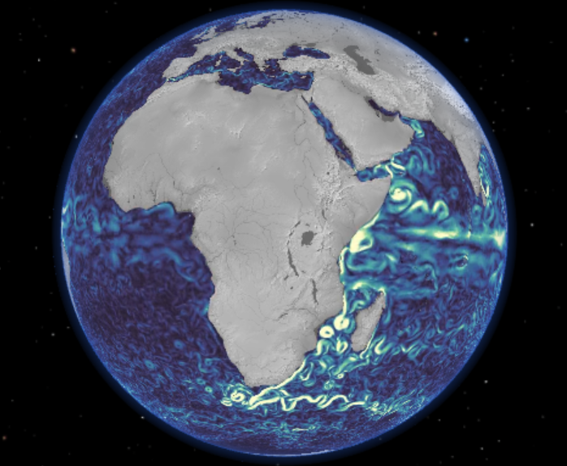
In this Work in Progress (WiP) seminar, Hèctor Isern examines ocean monitoring systems in Europe between 1977 and 1992, and the role that satellite data played in this period. More specifically, it analyses the production, distribution, and use of data through the case of ERS-1, the European Space Agency's first major Earth-observation satellite, launched in 1991. More broadly, this work foregrounds the question of how satellite data became a powerful tool in late twentieth-century ocean and climate science, contributing to the production of knowledge that often appeared authoritative and uncontested. By the close of the twentieth century, ocean monitoring systems had become firmly consolidated in Europe, with satellite data forming one of their fundamental components while also providing one of the key rationales for their continued expansion. The dissertation tackles the question of how satellite data came to function as a sine qua non.
In short, Isern's argument is that satellite data co-produced and reproduced old and new data-related practices. The notion of encapsulation helps explain this reciprocal process. Satellite data paved the way for the expansion of ocean monitoring systems because they encapsulated and mobilised a broader constellation of old and new elements. Satellite data concealed the instruments, algorithms, standards, processing chains, labour, institutional arrangements, and political expectations that made them possible. As these data products were distributed, they did not merely depict the ocean; they also co-produced and reproduced the very practices through which ocean monitoring systems expanded. In other words, data never travels alone.
Commentator: Xavier Roqué (UAB)
Hèctor Isern is a PhD student working on the ERC-SG project «CLIMASAT: Remote-sensing satellite data and the making of global climate in Europe, 1980s–2000s». Her academic background includes a Bachelor's degree in Environmental Sciences (UB), a Bachelor's degree in Philosophy (UB), a Master's degree in Environmental Engineering (UPC), and a Master's degree in the History of Science (UAB). Her research interests include the history of Earth observation satellites, the relationship between science and diplomacy, the history of data, the history of technology, and environmental history.
If you are interested in reading the entire text in advance —highly recommended, since the WiP seminar format presupposes prior reading— you can request it from Hector.Isern@uab.cat or Laia.Torres.Casas@uab.cat
Remember that you can bring your lunch on site, as we will have a lunch-seminar format, rigorous and informal at the same time.