Hunters and animal traders of Spanish Guinea: from Lassaletta to Ikunde
Event details
- Start: 25 March 2026 13:00
- End: 25 March 2026 14:30
- iHC Seminari room
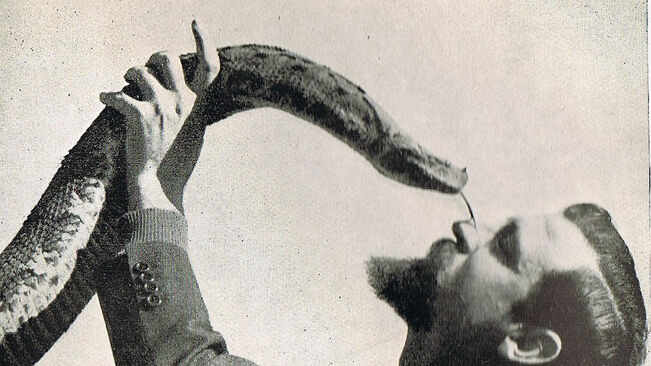
Josep Maria Reyné Vergeli’s research studies the development of the Ikunde centre, a research station that the Barcelona City Council created in Africa, in the continental zone of the Spanish colony of Guinea, at the end of the 1950s. Ikunde was conceived in the context of Francoism, in the midst of the post-war period and in a period in which Barcelona participated in the colonial exploitation of Guinea. Its main objective was the extraction of animals, plants and objects of all kinds.
In this Work in Progress (WiP) Reyné Vergeli proposes a text that aims to show the research on the extraction of fauna from the Spanish colony of Equatorial Guinea during the 1940s and 1950s, with special attention to the animal trade networks between Africa and Spain, the logistics of animal transport and the dynamics of colonial exploitation.
Commentator: Yvonne Ramírez Corredor, independient researcher.
Josep Maria Reyné Vergeli holds a degree in mathematics from the Autonomous University of Barcelona and a master's degree in history of science (UB/UAB). He is currently a doctoral student at the Institute for the History of Science at the UAB.
If you are interested in reading the entire text in advance —highly recommended, since the WiP seminar format presupposes prior reading— you can request it from Josep.Reyne@uab.cat or Laia.Torres.Casas@uab.cat
Remember that you can bring your lunch on site, as we will have a lunch-seminar format, rigorous and informal at the same time.