Beyond blood: a revolution in transfusion medicine
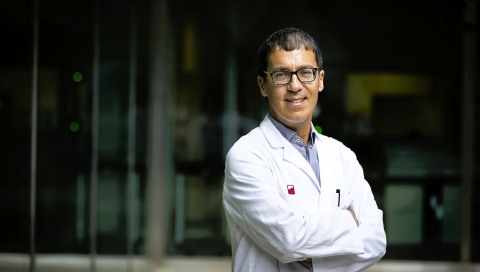
This article for the September edition of Expertesa FUAB is written by the joint coordinator of the University Master’s Degree in Transfusion Medicine and Cell and Tissue Therapies, Dr Joaquim Vives, who provides an overview of the strong evolution of this discipline over the past 20 years and underlines the international cooperation that has made this master’s degree possible.
22/09/2026
If we think about transfusion medicine, many of us imagine a bag of blood helping to save a life during an emergency operation. This image, although true to life, only reflects a small area of a discipline that is evolving at great speed. Today, transfusion medicine is at the forefront of modern biomedicine, is directly connected to blood donation and tailored medicine, through innovation in immunotherapy, regenerative medicine and blood, tissue, and cell bank management.
The key concept revolves around what are known as Substances of Human Origin (SoHO). This is not simply blood, but also an entire range of fluids, cells and tissue that is donated by eligible donors. These substances allow us to prepare in-vivo treatments that can regenerate tissue, cure complex haematological diseases, or even re-educate the immune system to combat certain types of cancer and its side-effects.
A scientific and rigorous bridge between research and clinical medicine
Blood and tissue banks and immunotherapy services have changed radically over the past two decades. And they will continue to evolve through the implementation of the new European regulations on SoHO which reinforce safety, quality, and ethical aspects throughout the value chain: from the donor to the patient. To transform this regulatory framework and translate discoveries in the laboratory into safe clinical realities, we require professionalisation and highly specialised talent.
As a researcher working on tissue engineering and the development of treatments based on the use of SoHO, daily I witness how the frontier between the laboratory and the patient is becoming smaller. Developing a treatment of this complexity not only requires knowing how to manipulate cells under conditions of maximum control and traceability, but also understanding immunology and microbiology in depth, as well as the regulatory framework and how to strategically manage resources. It is at this meeting point where science faces its greatest ethical and technical challenges: How can we guarantee universal and equative access to innovative treatments? How can we optimise the preservation of SoHOs and their derivatives? How can we ensure the maximum quality of these treatments without losing the human dimension of voluntary donation?
An international alliance at the forefront of knowledge
This holistic and rigorous vision is what encouraged us to set up the University Master’s Degree in Transfusion Medicine and Cell and Tissue Therapies at the Universitat Autònoma de Barcelona (UAB). It is gratifying to see how an academic project can transform into a real driving force behind international change. As a result of a strategic alliance between the UAB, the Blood and Tissue Bank of Catalonia (BST), Leiden University Medical Center (LUMC) and the Sanquin blood bank, the latter two located in the Netherlands, we have created a teaching programme that is unique in Europe and is supported by the UAB Foundation.
One of the great assets of this master’s degree is shared teaching between lecturers in both Barcelona and Leiden, which allows students to learn directly from the experts who participate in writing up the clinical and scientific guides which govern transfusion medicine around the world.
Also, the master’s degree is offered 100% online (either in a bilingual Spanish English option or fully in English), which allows a global virtual classroom to be set up where doctors, biologists, pharmacists, biotechnologists, and nursing professionals exchange their experiences from different corners of the world.
Treatment of the future is designed today.
Our aim is not only to transmit theoretical knowledge, but also to qualify a new generation of leaders to ensure they:
- Develop the ability to take strategic decisions: In blood banks, cell therapy centres, tissue banks, or biopharmaceutical industries.
- Apply scientific and ethical rigour: applying the highest standards for the management and responsible use of SoHOs.
- Undertake applied R+D+i: conducting research projects in cell therapies, immunotherapies and tissue and regenerative and tailored medicine.
The medicine of the future will not only be consolidated though the synthesis of chemical medicines, but also though the comprehension and use of human biological material. If you are a healthcare or life sciences professional and would like to be at the front line of this biomedical revolution, our management and teaching staff are waiting for you and will help to support you on this journey.
This new Transfusion Medicine needs your vision, your rigour, and your commitment. See you next year?
Joaquim Vives is a senior researcher and group leader at the Blood and Tissue Bank (BST), principal investigator at the Vall d'Hebron Research Institute (VHIR), a researcher linked to the Department of Medicine at the Universitat Autònoma de Barcelona (UAB) and co-director of the Master's Degree in Transfusion Medicine and Cell and Tissue Therapies.