More than half of the armed conflicts in 2025 took place while peace processes were underway
The UAB School for a Culture of Peace (ECP) has published Peace Negotiations 2025: Analysis of Trends and Scenarios, its annual report on the global state of peace negotiations. The analysis shows that 53 peace processes were recorded in 2025—the highest figure in recent years. Furthermore, dialogue and negotiation processes were underway in 55% of ongoing armed conflicts (22 out of 40). Despite this increase in negotiations, a rise in conflict levels was observed against a backdrop of escalating armed conflicts and tensions worldwide.
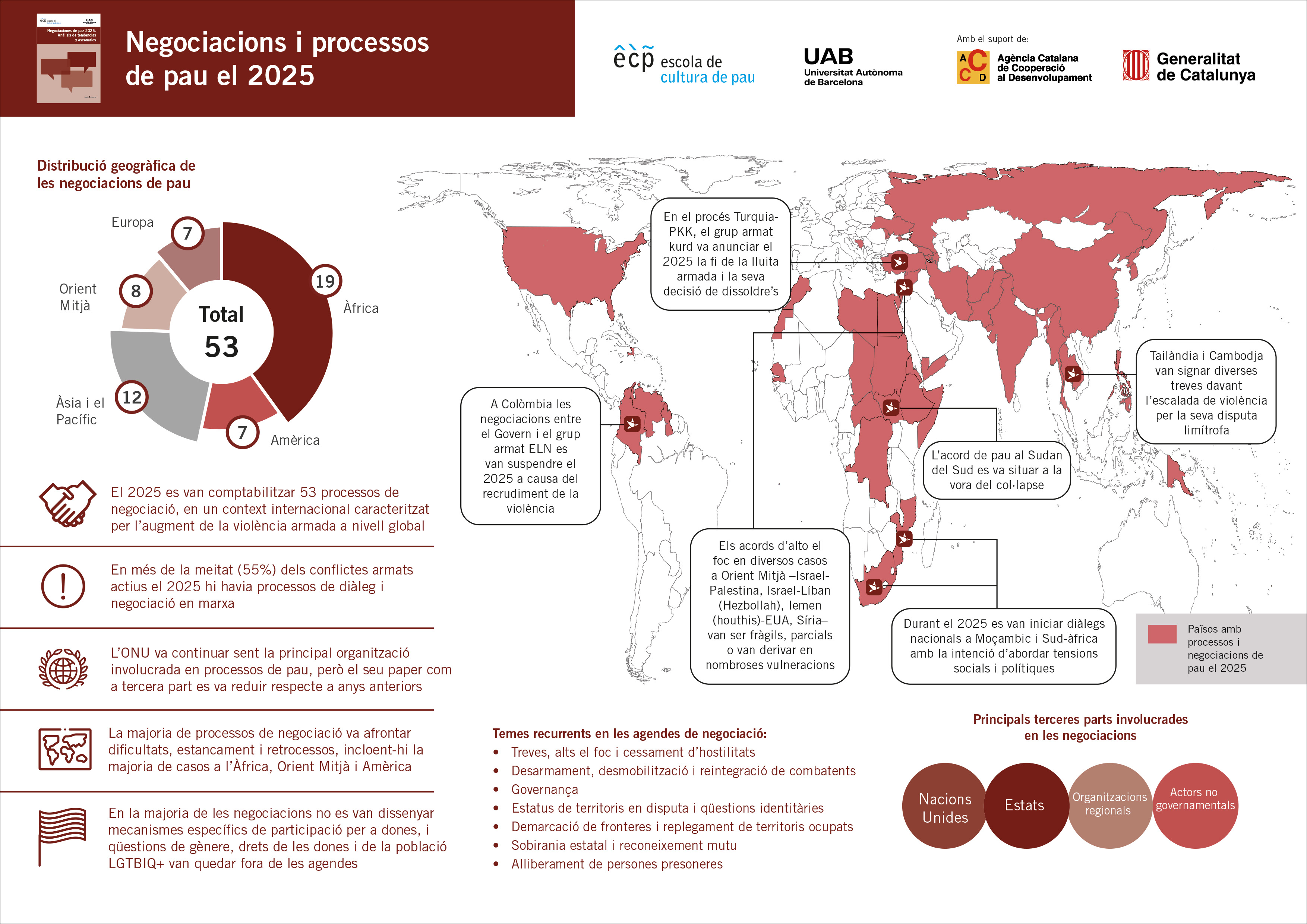
The study conducted by the ECP-UAB confirms that 2025 was a record year: 53 peace processes and negotiations were recorded, the highest figure since the ECP-UAB began using the current classification in 2017. However, this trend was not accompanied by a reduction in conflict and violence; instead, it occurred against a global backdrop of rising armed conflicts and an upward trend in tensions. As many as 40 active armed conflicts were recorded in 2025—the highest number since 2011—according to the Alert! report, also produced by the ECP.
With regards to peace processes, the report highlights that they were present in 55% of active armed conflicts in 2025. The geographical distribution shows that 36% of the negotiations were underway in Africa; 23% in the Asia-Pacific region; 15% in the Middle East; and an equal percentage (13%) in both the Americas and Europe. Among the various dialogue processes underway, the study analyses cases such as the resumption of negotiations between Russia and Ukraine, albeit amidst multiple obstacles; negotiations regarding the Iranian nuclear programme, which saw ups and downs and were affected by the 12-day war between Iran, Israel, and the US; negotiations between Thailand and Cambodia concerning the armed conflict that began in 2025 over their historic border dispute; and the Inclusive National Dialogue process in Mozambique, aimed at addressing the massive popular protests and social crises that shook the country.
Difficulties in the processes
Most of these negotiations faced deadlocks, obstacles, and difficulties—and in some cases even setbacks, such as in Colombia, with the official suspension of talks with the ELN in early 2025; or Yemen, where the peace process stalled due to regional turmoil and the interconnected nature of the conflicts.
The yearbook highlights another aspect of the 2025 peace processes: the participation of external actors in mediation and dialogue-support roles. Third-country governments, intergovernmental organisations, religious organisations, and civil society actors participated in 48 of the 53 negotiations. In line with a trend established in previous years, the UN was the primary intergovernmental organisation participating as a third party in support of the peace processes, although its role diminished slightly compared to earlier years. Many states became involved as third parties in negotiation processes, often in the context of projecting national interests amidst an international landscape of hegemonic rivalry between powers. For instance, Turkey, Qatar, the UAE, and Saudi Arabia played active roles as third parties in various negotiations across Africa.
The study also highlights the persistent difficulties women face in participating in negotiations and incorporating a gender perspective into peace processes. The Americas was the only region where women’s participation and leadership were observed in a significant number of peace negotiations—specifically in Colombia—although this participation did not result in gender agendas being given a prominent place. The ECP-UAB emphasises that, despite their exclusion from most processes, women's civil society organisations mobilised to demand participation in peace negotiations, put forward demands, call for ceasefires, and engage in various initiatives, such as emergency responses to conflicts.