UAB study reveals how the expansion of one of Europe’s first states was halted 4,000 years ago.
A study conducted by researchers Marcello Peres and Roberto Risch, and published in the Journal of Archaeological Research, analyses the social, economic, and political relations between the centre and the periphery during the Bronze Age on the Iberian Peninsula, based on over a century of archaeological data collected across a territory of more than 210,000 km².
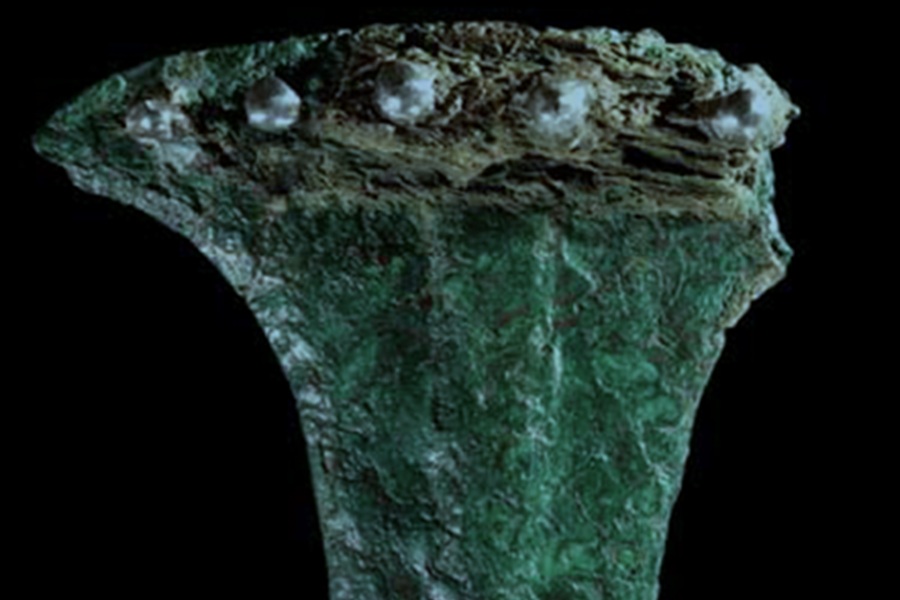
A new study led by researchers and lecturers Marcello Peres and Roberto Risch, from the UAB Department of Prehistory, has redefined the way in which we understand power relations, exchange, and social resistance in Mediterranean Europe during the Bronze Age (between 2200 and 1550 BCE). The work, titled "Social Resistance in Bronze Age Iberia", has been published in the renowned scientific journal Journal of Archaeological Research. The research analyses a vast amount of data—collected in over more than a century of excavations and surveys—from over 1,500 settlements spread across an area of more than 210,000 km² in the southeastern quadrant of the Iberian Peninsula. The study demonstrates that two opposing social models coexisted in this territory: on one hand, El Argar—one of the most dynamic, centralised, and hierarchical societies in European prehistory, considered by many specialists to be one of the first states in Western Europe—and, on the other, a network of independent, non-state communities located on the northern periphery. The spatial distribution of settlement patterns, economic evidence, weaponry, and indicators of physical violence show that El Argar’s capacity for expansion differed markedly in the north compared to the west.
Resistance strategies
The study shows that the peripheral communities of the north were not passive victims of Argaric expansion. To defend themselves and avoid being annexed or subjugated, they implemented a set of social and economic resistance strategies. Firstly, they opted for atomisation: over 83% of the peripheral settlements measured less than 2,000 m² and almost half did not exceed 500 m². Rather than concentrating in large cities that were easy to subjugate, they dispersed into small family nuclei that were much more difficult to control. They also carried out the strategy defined by the authors as (physical and architectural) "entrenchment": more than three-quarters of these settlements were strategically located on inaccessible hills or cliffs or were fortified with powerful stone walls. This combination of rugged topography and defensive architecture created a protected landscape. Finally, they established economies of escape and self-sufficiency. The territorial advance of the Argaric organisation in this direction was limited throughout the 600 years of its existence.
Economic exchanges using ivory objects
One of the study’s most notable findings is that objects of great symbolic and coercive value belonging to the political elites of El Argar—swords, halberds, and weapons decorated with silver rivets—were never adopted by the populations to the north of El Argar. Outside the Argaric territory, these prestige weapons were concentrated within the mining corridors of the southwestern Iberian Peninsula. In contrast, African elephant ivory did circulate in the northern periphery, though it played no significant role in El Argar’s westward expansion. Fashioned primarily into prismatic buttons, the ivory appears to have functioned as a form of proto-currency or as a marker of economic alliances. Through the exchange of ivory and copper, El Argar was able to negotiate for essential resources from the periphery—such as grain, textiles, or labour—in instances where appropriation by force was not a viable option.
Two ways of fighting: warriors vs weapons of opportunity
The analysis of the armament reveals two opposing military and political models: specialised metal weapons (halberds and swords) were developed at El Argar, designed for close-quarters combat and used by a group of warriors or ruling class. By contrast, the northern peripheral area had no swords, and halberds were virtually non-existent. To defend themselves, they used makeshift or non-specialised weaponry, based on everyday tools such as copper or stone axes and flint, bone and copper arrowheads. Violence was, nonetheless, a real component. Analyses of human remains reveal a large number of combat-related traumas in the adult men of the frontier line. On the northern frontier of El Argar, up to 37.5% of the preserved skeletons show fatal or combat injuries inflicted by weapons. Furthermore, the study highlights the paradigmatic case of the Motilla del Azuer (Ciudad Real), where between 48% and 57% of the adult men buried in the earliest phases present lethal or combat wounds inflicted by copper axes and daggers.
An innovative methodological approach
For more than a century, archaeology has focused primarily on defining “cultures” from a very limited or biased part of the material record, such as pottery and burial types. "In this work we dispensed with these filters and focused on an overall view of the relationships between communities with significant demographic and economic differences, based on the complete archaeological record of the settlements. This change in focus allows us to explain atomised and entrenched social spaces, which are absolutely exceptional in Bronze Age Europe, as well as the numerous pieces of evidence of physical violence", states Marcello Peres. Roberto Risch adds that “the differences between territories also reveal how the more exploitative and expansive political organisations could be countered through specific strategies". "This study invites us to reflect on how power structures condition the lives of those who do not submit to their rules, and also on the capacity of these communities to build alternatives. The possibility of organising oneself outside of hierarchical and exploitative structures is not an exclusively modern aspiration. At least 4,000 years ago, there were already communities that resisted state annexation, both socially and materially", concludes Peres.
Original article: Peres, M., Risch, R. (2026). Social Resistance in Bronze Age Iberia. Journal of Archaeological Research.
DOI: 10.1007/s10814-026-09230-7.