The UAB to collaborate on a European project to test a new drug for childhood cancer
The PHOENIX project brings together 13 European institutes and will, for the first time, evaluate AbilityPharma’s drug ibrilatazar in paediatric patients through a phase I/II clinical trial. This experimental drug could offer a more effective and less toxic alternative for children and adolescents with relapsed neuroblastoma or other aggressive solid tumours. Collaborating on behalf of the UAB is researcher José Miguel Lizcano de Vega from the Department of Biochemistry and Molecular Biology and the Institut de Neurociències.
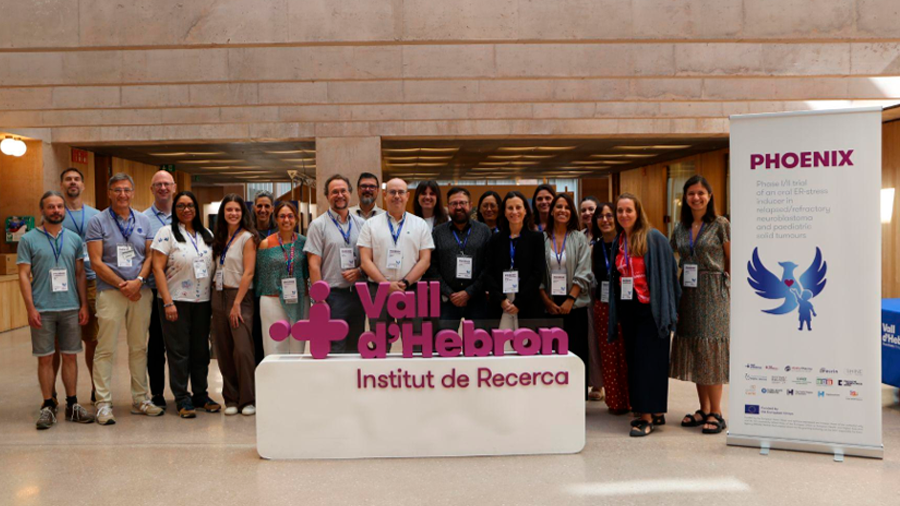
The Universitat Autònoma de Barcelona (UAB) will be working on the European project PHOENIX, an initiative aimed at launching the first clinical trial in a paediatric population using the experimental drug ibrilatazar (ABTL0812), developed by the Catalan biotechnology company AbilityPharma. The project is coordinated by the Vall d’Hebron Institute of Research (VHIR) and has received €8.5 million in funding from the European Union’s Horizon Europe programme, under the Cancer Mission.
PHOENIX will evaluate the potential of this new treatment in children and adolescents with relapsed or refractory neuroblastoma and other aggressive solid tumours, with the aim of developing more effective and less toxic therapies for childhood cancer.
Pediatric solid tumours—such as neuroblastoma, sarcoma, and certain extracranial tumours—remain a leading cause of cancer-related mortality in childhood and adolescence. Although current treatments have improved survival rates, they remain highly aggressive and can lead to significant physical and emotional aftereffects. Each year, more than 6,000 children in Europe are diagnosed with solid tumours, and approximately 1,000 of these cases are high-risk, with very limited or non-existent treatment options.
The phase I/II clinical trial, scheduled to begin next year, will include approximately 50 patients aged between 6 months and 18 years. The study will evaluate the drug ibrilatazar in combination with chemotherapy or immunotherapy, as previous studies have shown that it can enhance the effect of these treatments without adding toxicity. The primary objectives will be to establish the recommended dose of the drug and to study its safety and antitumour activity.
The UAB will be represented by researcher José Miguel Lizcano de Vega, from the Department of Biochemistry and Molecular Biology and the Institut de Neurociències. His research group studies novel cell signalling pathways involved in tumour cell proliferation and survival, as well as strategies based on modulating autophagy and endoplasmic reticulum stress for the development of new cancer treatments. The group has also collaborated for years with AbilityPharma on the preclinical development of ibrilatazar.
Unlike traditional chemotherapy, ibrilatazar does not act by damaging DNA, but rather by activating cellular mechanisms that promote the selective death of tumour cells, aiming to preserve healthy cells and reduce side effects. The drug had already demonstrated good tolerability and signs of efficacy in clinical studies involving adults with pancreatic, lung, and endometrial cancer, as well as promising results in preclinical models of neuroblastoma.
"This mechanism opens up a different therapeutic avenue with potential application in various types of tumours, including paediatric ones", adds Dr. Carles Domènech, CEO and co-founder of AbilityPharma. The company—located at the Vallès Technology Park and formerly at the UAB Research Park—is dedicated to developing innovative oncology drugs based on the induction of autophagy, a strategy that promotes the selective elimination of tumour cells.
PHOENIX also will investigate predictive biomarkers that allow for anticipating treatment response and the onset of adverse effects. Furthermore, it will incorporate tools such as liquid biopsy—based on the analysis of circulating DNA in the blood—and take into account the experiences of patients and their families to assess aspects such as quality of life, treatment acceptability, and potential barriers to accessing clinical trials.
Thirteen institutes from six European countries are participating in the project, including research centres, hospitals, social organisations, and companies. Coordinated by the VHIR and the Vall d’Hebron University Hospital, the project's collaborating members—apart from the UAB—are AbilityPharma, the CRIS Against Cancer Foundation, the Foundation for Biomedical Research of the Hospital Niño Jesús (FIBHNJS), the European Network of Clinical Research Infrastructures (ECRIN), SHINE 2Europe, Global Health Connector, the Gustave Roussy Institute, the Institut Curie de Paris, Children's Health Ireland, the Children's University Hospital of Brno in the Czech Republic, and the Rigshospitalet in Denmark.