First inventory of Pyrenean lakes and ponds published
A research team led by CREAF and with the involvement of the UAB has published the first inventory of bodies of water found in the Pyrenees, with information on a total of 6,361 lakes and ponds, each assigned a unique ID to facilitate further stud. The catalogue, LacusPyr, was published in the scientific journal Geoscience Data Journal.
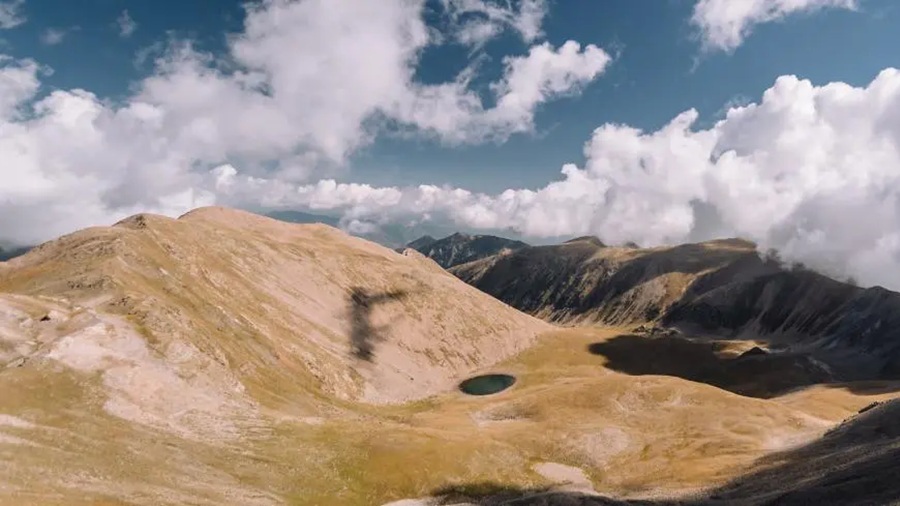
The inventory includes detailed data of each body of water found in the Pyrenees, stretching from the Mediterranean to the Atlantic, such as lake area, depth and basin, as well as official names, variations, and historical names. Each body of water has also been assigned a unique georeferenced identification to facilitate its identification and scientific study.
The creation of this inventory and its publication in the scientific journal was led by two researchers at CREAF, Jordi Catalan (from the CSIC) and Marisol Felip (from the UB). The UAB also contributed to the project through researcher Miquel Ninyerola, from the Department of Animal Biology, Plant Biology and Ecology. Researchers from the Centre for Advanced Studies of Blanes (CEAB-CSIC) are also co-authors of the catalogue.
The georeferencing information for each pond or lake allows for the organisation of data and helps avoid confusion in scientific studies, while also making this information accessible to anyone interested in learning the official names and locations. Regarding toponymy, the official name has been recorded—accompanied by a code to prevent confusion between designations—along with various alternative forms, whether in terms of the name itself, language, or pronunciation.
Interesting organisms found living in the ponds
The smallest ponds recorded in the inventory can measure just two square metres in surface area and, in many cases, do not even have a proper name. Many are temporary and dry up during the summer, so only species adapted to this intermittency live in them. Among the most remarkable are the anostracans, crustaceans that are particularly striking in appearance, which can display reddish or bluish colours and can form very large populations. To survive when the water disappears, they produce resistant eggs that can remain in the sediment for a long time until conditions become favourable again.
"These temporary ecosystems and the organisms that inhabit them have not yet been studied extensively. In the new catalogue, we have also assigned a code to each of these ponds to identify them; this represents a first step toward gaining a better understanding of these small—often inconspicuous—habitats, which are nonetheless of great ecological interest," explains Jordi Catalan.
Certascan, Cregüeña and Redon, of the largest and deepest lakes in Spain
The inventory compares the dimensions (including depth) of the Pyrenean lakes. For example, Certascan, measuring over 60 hectares, is one of the largest lakes on the Spanish side of the Pyrenees, and the largest in all of Catalonia. Cregüeña, located in the Maladeta Massif, is one of the deepest lakes found in the Pyrenees, measuring more than 100 metres deep. Both Cregüeña and Lake Redon are deep lakes that have not been modified for hydroelectric use and, therefore, are of great interest for conservation.
Lake Redon is also known for being one of the most studied high-mountain lakes in the world: approximately 105 scientific articles have been published about it. In fact, Jordi Catalan and Marisol Felip have been conducting research there for over four decades, and are the authors of many of the publications concerning this lake. They also study other lakes in the vicinity of Aigüestortes, such as Llebreta and Cabidornats (Plan).
According to the researchers, "maintaining this research over time is extremely valuable for obtaining long time series and studying how lake ecosystems respond to environmental and climatic changes, as well as understanding human impact throughout history."
Original article: Catalan, J., M. Batalla, T. Buchaca, et al. 2026. LacusPyr, a Catalogue of Lakes and Ponds of the Pyrenees. Geoscience Data Journal 13, no. 4: e70109. https://doi.org/10.1002/gdj3.70109.
Database: https://datadryad.org/dataset/doi:10.5061/dryad.fqz612k66