Training provided to equip volunteers with psychological tools
The FAS offers training for volunteers on psychological tools to help individuals in vulnerable situations. Psychologist and former volunteer Anna Colet led a practical session—developed from her final degree project—on how to manage silences, validate emotions, and set boundaries in complex contexts.
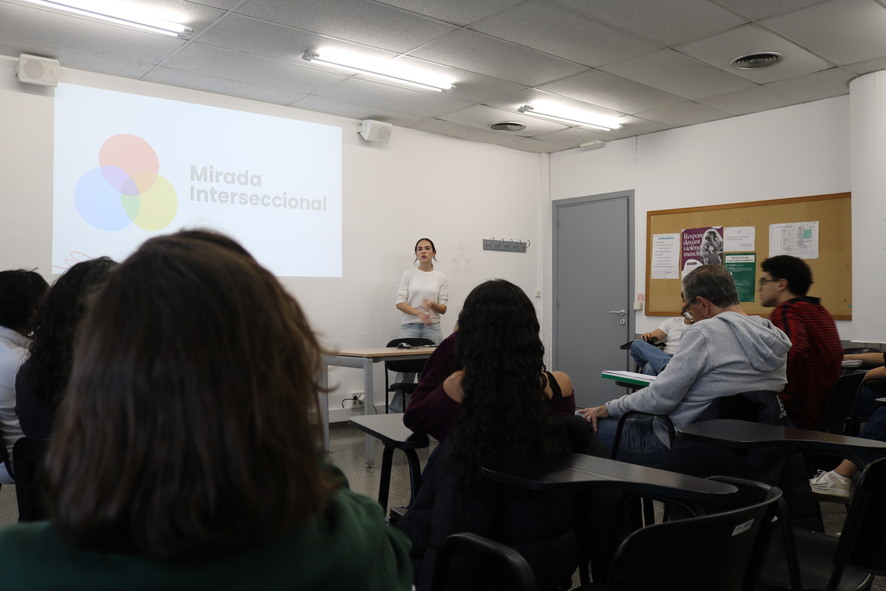
Volunteers from the Fundació Autònoma Solidària (FAS) took part in a training session titled "When We Don't Know What to Say: Psychological Tools for Listening, Communicating, and Taking Care of Ourselves," led by psychologist and former Justice programme volunteer Anna Colet. The session aimed to equip new volunteers joining this academic year with emotional resources to provide support for individuals in situations of extreme vulnerability.
The training was aimed both at the prison volunteering programme, in which more than a hundred students from various degree courses take part each year to break down isolation and promote reintegration, and at other foundation programmes, such as the Refugee programme, where conversations of a highly sensitive nature are often addressed.
The initiative stems from the final degree project (TFG) using an Aps methodology that Colet developed while studying Psychology at the UAB in collaboration with FAS. The research analysed the experiences of volunteers in the Compensatory Intervention Unit (CIU) at Brians I prison, a pilot project by the Catalan Ministry for Justice that offers personalised and multidisciplinary care to female inmates with accumulated vulnerabilities —such as mental health problems, addictions or violence—who do not require psychiatric admission.
In this setting—where students collaborate through recreational and artistic workshops designed to facilitate the return of inmates to general housing units—a study conducted from an intersectional perspective concluded that there is a need to strengthen the prior psychological preparation of the volunteers who carry out activities there.
From final project to training proposal
Colet’s research revealed a common clash of expectations: many young people arrived at the centre expecting to find "bad people", only to encounter women who were deeply vulnerable—often sad and subdued. Based on this insight, the psychologist designed a practical workshop using role-play and active listening techniques to help participants validate emotions, set protective boundaries, and overcome the fear of pauses. "Silences are important because when someone recalls a trauma, they need that space of silence. When that is provided, it leads to some truly beautiful conversations," the instructor notes.
According to Neus Aliaga, FAS volunteer coordinator, this training proposal is the initial mandatory training focused on the overall vision of the Catalan prison system, its internal workings, and the role volunteers play, as well as guidelines for behaviour, boundaries, responsibilities, and the volunteer's role. Colet's proposal allows for the specific psychological support required for intervention in the UIC and in prisons. "It is hoped that this preparation will give volunteers confidence and, at the same time, have a positive impact on the well-being of the inmates," she says.