The UAB and the Government of Catalonia launch new Centre for Integrative Neuroscience and Neurotechnology at the Bellaterra campus
The Government of Catalonia will invest 20 million euros between 2026 and 2029 to drive the construction of the new Centre for Integrative Neuroscience and Neurotechnology at the Universitat Autònoma de Barcelona (CENIT-UAB). The new scientific facility will be built on the Bellaterra campus in Cerdanyola del Vallès and will become a leading hub for advanced research in neuroscience, neurotechnology, and cognitive science.
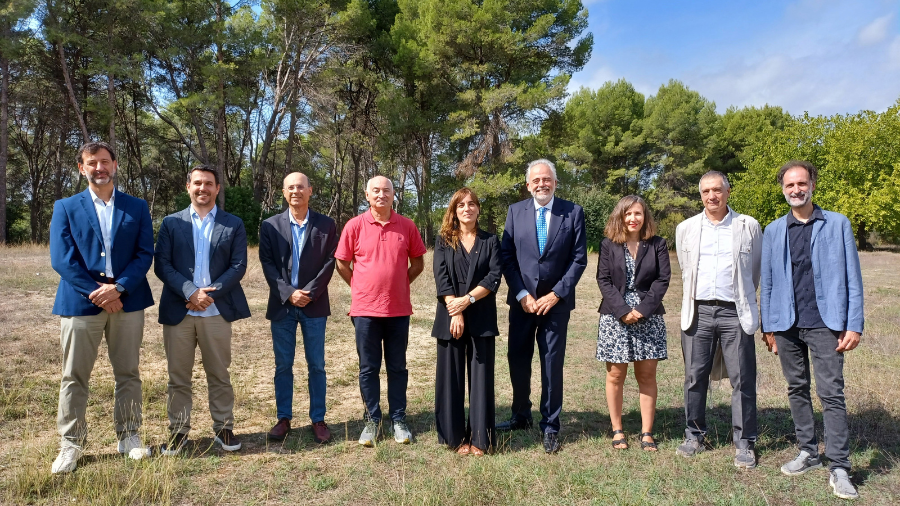
Núria Montserrat, Minister for Research and Universities, noted that “the creation of this benchmark scientific infrastructure will drive the development of state-of-the-art, transformative biomedical solutions, through a scientific effort that works in synergy with the local innovation and technology transfer ecosystem”. Speaking at the presentation of the investment held this morning at the UAB, the minister also highlighted that the launch of the new centre is “aligned with the government’s RIS3CAT 2030 Strategy and enables Catalonia to stand alongside leading international neurotechnology initiatives in Europe and across the globe”.
UAB Rector Javier Lafuente expressed his satisfaction in launching the construction of the first major research and innovation facility on campus since the opening of the Institute of Environmental Science and Technology (ICTA-UAB) headquarters in 2014. According to Rector Lafuente, "the new building will serve to attract and retain talent and to foster synergies within an academic field—neuroscience and psychology—in which the UAB is a leading institution". Furthermore, the rector noted that the design of the new facilities contributes to "consolidating a sustainable university campus model that prioritises people's well-being and the harmonious coexistence of the university community."
The contribution approved by the government will contribute to the financing of the works, installations and equipment necessary to bring the new centre into operation. The project envisages a total estimated investment of €44.6 million, excluding VAT, which includes the construction of the building, the drafting and supervision of the project, the scientific and technical installations, laboratory furniture, and all other works necessary to commence operations.
The CENIT-UAB will have a total built area of 17,809 m² and will house the Institut de Neurociències of the Universitat Autònoma de Barcelona (INc-UAB), research groups in the fields of psychology and cognition, and a new platform specialising in neurotechnology. The centre is conceived as an interdisciplinary space that will integrate knowledge from biology, medicine, psychology, engineering, materials science, data science, and artificial intelligence.
The new infrastructure will enable research into the nervous system to be strengthened and will advance the development of new tools for studying, preventing and treating neurological disorders. Among the planned lines of work are neuroprostheses, bioelectronic and brain-computer interfaces, neuromodulation, nerve regeneration and technologies aimed at restoring sensory, motor and autonomic functions.
A unique scientific and technological ecosystem
The location of the CENIT-UAB on the Bellaterra campus will allow it to take advantage of one of the most powerful scientific and technological ecosystems in Catalonia. The campus is home to specialised infrastructures and centres in nanotechnology, microelectronics, advanced materials, biomedicine and scientific imaging, such as the Catalan Institute of Nanoscience and Nanotechnology (ICN2), the Barcelona Microelectronics Institute (IMB-CNM), the Barcelona Institute of Materials Science (ICMAB-CSIC), and the ALBA Synchrotron.
The project will also strengthen collaborations with healthcare and research centres within the UAB sphere, including Vall d’Hebron University Hospital, Hospital de la Santa Creu i Sant Pau, Germans Trias i Pujol University Hospital, Parc Taulí Hospital, and the Guttmann Institute. This proximity will facilitate translational research and the application of scientific findings to clinical practice and to the real needs of patients and society.
The CENIT-UAB will also strengthen relationships with companies in the neurotechnology and neuromodulation sectors based in Catalonia. The goal is to foster knowledge transfer, the development of new technological solutions, and the generation of projects with high scientific, healthcare, social, and economic impact.
Set to open at the end of 2029
According to the planned schedule, the executive project is to be completed in September 2026 and the award of the works is scheduled for May 2027. The works are expected to be completed in May 2029, while the centre's ancillary facilities and equipment should be finished in December of the same year.
The construction of the CENIT-UAB will consolidate the Bellaterra campus as a unique scientific environment for the development of integrative neuroscience and neurotechnology. The new infrastructure will strengthen Catalonia's capacity to attract talent and investment, participate in international scientific projects, and transform research findings into solutions that contribute to improving the health and well-being of the public.