UAB Libraries take part in the 1st CLARIAH-ES Libraries Workshop
Libraries from the Universitat Autònoma de Barcelona took part in the 1st CLARIAH-ES Libraries Workshop held in Madrid, where they presented two initiatives showing how university libraries are becoming key actors in the development of digital infrastructures and the promotion of Open Science.
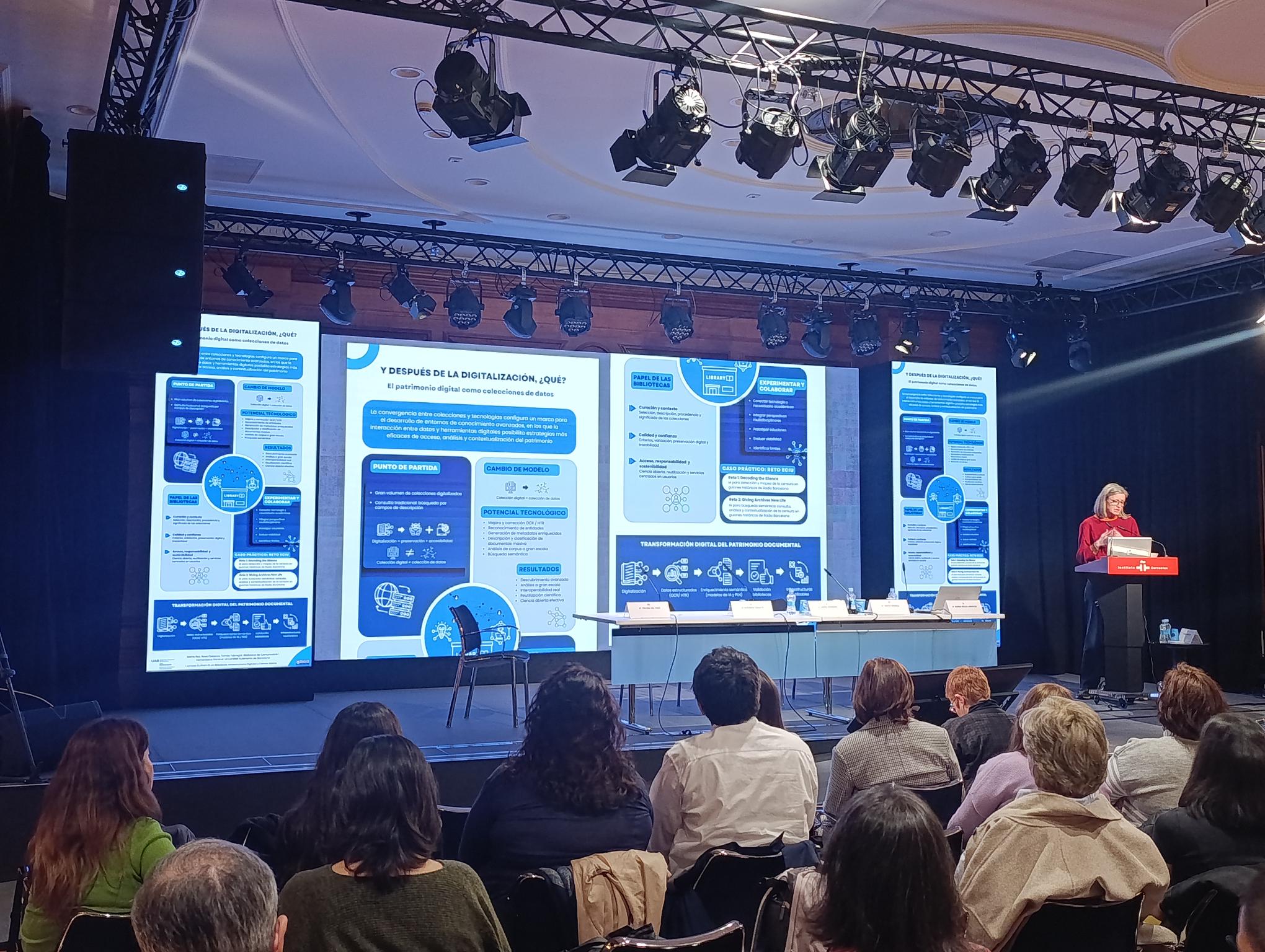
Libraries from the Universitat Autònoma de Barcelona played an active role in the 1st CLARIAH-ES Libraries Workshop: Digital Infrastructures and Open Science, held the day before yesterday in Madrid. The event brought together professionals from libraries, archives and GLAM institutions to explore the potential of digital infrastructures for contemporary research and the role libraries can play in this context.
With a strong outreach focus, the workshop introduced concepts that are often perceived as complex —such as research infrastructures, data management, interoperability and scientific clouds— through accessible language and practical examples. The aim was to show how technology can become an ally for improving information management, increasing institutional visibility and fostering a more collaborative Open Science.
In this context, the UAB Library Service presented two initiatives illustrating how university libraries are evolving into infrastructures that support research.
The first presentation, “Digital Humanities and university libraries: the case of UAB”, highlighted the consolidation of a Digital Humanities ecosystem at the university, with dozens of ongoing projects, several research groups involved and institutional partnerships. The UAB Digital Humanities Portal acts as a platform for visibility and connection, while the Library Service plays a strategic role by providing specialised technical support, advice and digital infrastructure management.
The second presentation, “What comes after digitisation? Digital heritage as data collections”, addressed the paradigm shift that transforms digital collections into data collections. Beyond preserving and providing access to digitised documents, libraries are increasingly working to structure, enrich and connect information through technologies such as OCR/HTR, entity recognition and large-scale corpus analysis, enabling collections to become reusable research data.
During the workshop, European initiatives such as CLARIN, DARIAH and the European Open Science Cloud (EOSC) were also presented—these infrastructures facilitate the sharing, preservation and reuse of scientific data. This European framework reinforces the role of libraries as key actors in data management and in building Open Science based on collaboration and knowledge reuse.
UAB’s participation in the workshop highlighted how university libraries are no longer merely spaces for preservation, but active infrastructures that transform collections into reliable, contextualised and open data, connecting technology, research and society.
The UAB, with the Sustainable Development Goals
-
 Quality education