Launch of the participatory process for the new UAB campus master plan
A participatory process to redesign the UAB's Bellaterra campus has begun. The aim of the urban master plan, Pla director urbanístic (PDU), is to define a new campus model that acts as a hub for education and knowledge, is integrated with the surrounding cities, offers diverse uses outside academic hours, fits well within its territorial, environmental, and landscape context, and incorporates a sustainable mobility model.
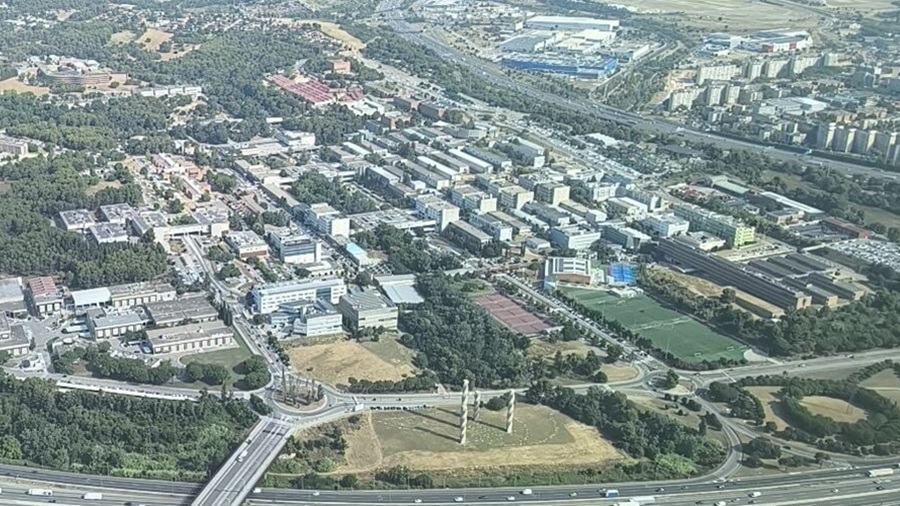
"Today marks the start of the process to transform the UAB campus in Cerdanyola del Vallès into an innovative, sustainable urban ecosystem," said Sílvia Paneque, Minister of Territory, Housing, and Ecological Transition. This launch coincides with the beginning of a participatory process designed to help draft the Urban Master Plan (Pla Director Urbanístic, PDU) for the reorganisation of the campus—an iconic 263-hectare metropolitan site. Drafting the PDU represents a strategic opportunity to "evolve towards an open campus model, strengthen the UAB's role as a metropolitan knowledge hub, and incorporate environmental and quality-of-life criteria," the minister stated.
UAB Rector Javier Lafuente stated that "the campus is the UAB's primary asset in its relationship with the surrounding area", highlighting the presence of prominent research institutions at the university and the "role played by the UAB Research Park (PRUAB) in knowledge and technology transfer." Rector Lafuente noted that the PDU would contribute to "consolidating our campus as a driver of regional transformation" and emphasised the importance of the university community's involvement in this participatory process.
The process will serve to gather proposals from the UAB community, the populations of surrounding cities, and all stakeholders involved. The key themes of the participatory process correspond to the attributes envisioned for the future campus:
- A campus that is alive: spaces for community living, social and cultural activity.
- A city campus: urban integration, mixed uses and relationship with the surrounding area.
- An interconnected campus: mobility and relationship with the local innovation ecosystem.
- A healthy and sustainable campus: environmental sustainability, health and quality of life.
- A flexible and innovative campus: adaptability, innovation and future evolution of the campus.
The participatory process will begin with five interviews with key stakeholders in July and continue with an institutional presentation session and five thematic sessions—one for each focus area—to be held during September and October. A survey will also be made available on the Government of Catalonia’s portal "Participa". As for the UAB, its website provides information and promotes the participatory process, offering a link to the participa.gencat.cat portal.
The proposals gathered during this participatory process, together with the environmental documentation and supplementary studies, will be used to draft an initial preliminary document for the PDU, which is expected to be ready by the end of 2026. Once drafted and granted initial approval, the PDU will undergo the mandatory public information period for citizens and consultation with the affected municipalities. Any submissions received at that stage will be incorporated, where appropriate, into the final approved PDU document.
A community of over 50,000 people
The UAB was established in 1968, and the majority of its teaching centres and services are located on the Bellaterra campus—a 263-hectare site within the municipality of Cerdanyola del Vallès. The campus originated between 1969 and 1971, when land was acquired for the university. The general planning framework currently governing the site is the Metropolitan General Plan (PGM), approved in 1976 and supplemented by a derivative plan approved in 1992. Since then, various amendments to these instruments have been introduced to accommodate the reforms and remodeling projects that have taken place. Today, the Bellaterra campus is a hive of activity during teaching hours, serving a community of over 50,000 people. However, the scarcity of uses and activities typical of urban areas limits its ability to attract residents from surrounding municipalities outside of academic hours.
"Its location holds great potential that we aim to strengthen, thereby enhancing the connection between the university and the productive sector", highlighted Minister Paneque. Indeed, the UAB campus is situated along the B-30 corridor—"one of the most powerful economic and R&D&I hubs in Southern Europe," according to Paneque. Rector Lafuente underscored the synergies between the UAB and its surrounding area, noting the presence of one of Europe's major scientific facilities, the ALBA Synchrotron.
A new campus model
Social and technological evolution, along with the synergies emerging worldwide between universities, research, and the business sector, make it necessary to rethink the operations of a campus dating back to the 1970s. The institution aims to promote a new university campus model that, while remaining a hub for education and knowledge, also prioritises integration with surrounding cities, diverse uses, proper territorial fit—considering environmental and landscape aspects—and a sustainable mobility model tailored to the needs of its users.
It is also necessary to incorporate the new elements introduced by the various urban planning instruments approved since 1976—such as the Barcelona Metropolitan Territorial Plan (approved in 2010) and the Metropolitan Urban Master Plan (currently being processed). In short, the aim is to enable the development of the campus "in a setting where key regional transport infrastructure, various municipalities, and a network of open spaces—which must be integrated into the surrounding area—all converge" Minister Paneque explained. Therefore, the primary objective of the Urban Master Plan (PDU) will be to create the appropriate urban planning framework to reorganise the UAB's Bellaterra campus "in line with a new university campus model and its relationship with the surrounding area, ensuring that this academic institution—vital to the country—can meet the challenges of the 21st century", the minister specified.
Rector Lafuente stated that "the campus is a defining feature of the UAB," adding that "being a campus-based university not only makes us unique within the Catalan university system but is also one of the values we are most proud of". The UAB ranks among the world's top 100 universities for sustainability according to the QS rankings and has been working for years on the SiS (Healthy and Sustainable) Campus project, aiming to prioritise the university community's well-being and establish an inclusive, efficient, and responsible environment. According to the rector, the PDU aligns with the UAB leadership team's current goal of building "a comprehensive space management policy aimed at optimising usage, improving functionality, and reducing environmental impact".
The new PDU will specifically aim to:
- Foster the transition of the campus from a specialised knowledge space to a complex, diverse, and active fabric seven days a week.
- Establish a regulatory framework with sufficient flexibility to allow the campus to develop in response to new challenges, within a coherent urban and territorial planning framework.
- Strengthen the UAB's relationship with surrounding towns and centres: Cerdanyola del Vallès, Bellaterra, Badia del Vallès, Sabadell, Sant Quirze del Vallès, Sant Cugat del Vallès, the Cerdanyola Directional Centre, Parc de l'Alba, and the Vallès Technology Park.
- Ensure the landscape and environmental integration of the campus with the surrounding area through the planning of open spaces and ecological connectivity.
- Improve mobility and accessibility to make them more sustainable and better suited to user needs by reorganising road access, internal traffic routes, public transport, and car park areas.
The UAB, with Sustainable Development Goals
 Sustainable cities and communities