
New article: “Can we vaccinate the brain? The promise of precision immunology”
Research group: Protein Folding and Conformational Diseases
Abstract:
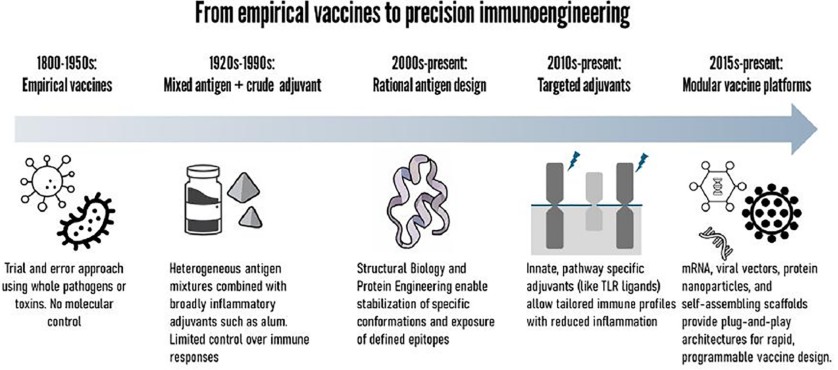
Vaccines have evolved far beyond their empirical origins as mixtures of weakened pathogens and crude immune stimulants. Modern vaccinology is increasingly defined by precision: the ability to design antigens, tune adjuvants to engage specific innate pathways, and deploy modular platforms that shape immune responses with high specificity. Advances in structural biology, protein engineering, and nanotechnology now enable antigens to be displayed in defined architectures and co-delivered with molecular cues that steer immunity toward desired effector functions. These innovations have expanded the role of vaccines from preventing infectious disease to engineering immunity for therapeutic purposes.
Neurodegenerative diseases represent one of the most demanding frontiers for this new generation of vaccines. Misfolded proteins such as amyloid-β, tau, and α-synuclein adopt toxic conformations that propagate within the brain yet differ subtly from their physiological counterparts. Precision immunoengineering offers strategies to target these pathogenic species while avoiding harmful T-cell activation or neuroinflammation. By integrating rational antigen design, selective adjuvant signaling, and nanoscale presentation, emerging vaccines aim to elicit durable, conformation-specific antibody responses capable of intercepting pathogenic processes and slowing disease progression. Together, these advances illustrate how vaccinology is being reimagined for some of the most challenging biomedical problems.
Article data:
Damian Álvarez-Paggi, Salvador Ventura. Can we vaccinate the brain? The promise of precision immunology. The Biochemist. May 2026; 48 (2): 5–8 https: https://doi.org/10.1042/BIO2026200
The UAB, with the Sustainable Development Goals
-
 Good health and well-being