
BIOPOL: Sustainable biotechnology for the leather industry
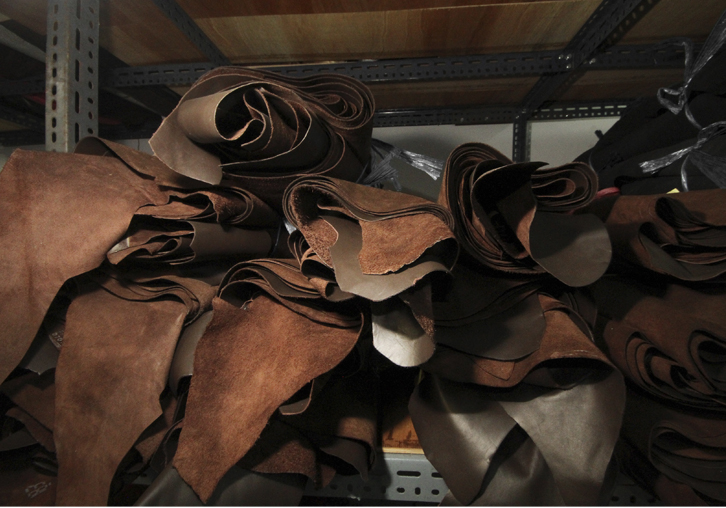
The Bioprocess Engineering and Applied Biocatalysis Group (ENG4BIO) of the UAB, is conducting the Biopol scientific project in collaboration with the company Cromogenia Units, an international company that develops different chemical specialties, to tackle one of the major environmental challenges in the industry: the leather tanning process. The aim is to replace chromium, which is highly toxic, with new products based on biopolymers. The project also includes the evaluation of the environmental impact of the new agents by analysing their life cycle.
The project, funded by the CDTI under the “Cervera” Technology Transfer R&D Projects program, focuses on the design and development of new sustainable tanning and retanning agents based on biopolymers. The aim is to replace chromium, currently the most widely used agent in tanning and retanning processes, with more environmentally friendly alternatives. While chromium is technically effective, it involves high toxicity and the generation of hazardous waste.
In addition to chromium, the project also seeks alternatives to glutaraldehyde and its derivatives, compounds widely used in metal-free tanning processes, known as wet white. Although these technologies have gained popularity as a greener option, they have significant limitations: glutaraldehyde has a bactericidal effect, which can disrupt wastewater treatment plants; leathers tanned with it tend to take on a yellowish hue, limiting their use for light or pastel colors; and most concerning, glutaraldehyde was classified in 2021 as a Substance of Very High Concern (SVHC) by REACH, with current restrictions and expected inclusion in Annex XIV of the regulation.
The initiative stems from the recognition that the leather tanning industry continues to cause pollution, both due to the chemicals used and the solid and liquid waste it generates. Although there have been advances in recent years to reduce the sector's environmental impact, major challenges still remain.
Cromogenia Units is a company with a strong international presence and a firm commitment to sustainability that has been investing for years in innovation to develop safer and greener chemical products. This collaboration with UAB represents a key step in its strategy to provide solutions that not only maintain the technical performance of tanning, but also significantly reduce its environmental footprint.
In the UAB’s ENG4BIO group, with extensive experience in bioprocess development and applied biocatalysis, we have already achieved very promising results at laboratory scale. The new tanning and retanning agents designed are based on natural polymers that not only replace chromium but also show good compatibility with current industrial processes.
Over the coming months, Cromogenia Units will validate these products at pilot scale under real production conditions, allowing evaluation of both their technical effectiveness and economic viability. The ultimate goal is to integrate these new solutions into the leather value chain, improving the sustainability of the process without compromising the quality of the final product.
In addition to technological development, the project includes the environmental impact assessment of the new agents through life cycle analysis, a key aspect to ensure alignment with current industry sustainability standards and European regulations.
This collaboration between university and industry is a clear example of how applied research can generate real solutions to global problems, combining scientific knowledge with industrial expertise to build a more sustainable future.
Group of Bioprocess Engineering and Applied Biocatalysis
Department of Chemical, Biological and Environmental Engineering
Universitat Autònoma de Barcelona
References
The project ‘Study and Development of New Treatments for Leather from Alginate and Starch - BIOPOL’ (IDI-20240037) has been co-financed by the European Regional Development Fund (ERDF 2021-2027) and the Centre for Technological Development and Innovation (CDTI), with the support of the Spanish Ministry of Science, Innovation and Universities.