

How did hunter-gatherers manage seismic risk 30,000 years ago?
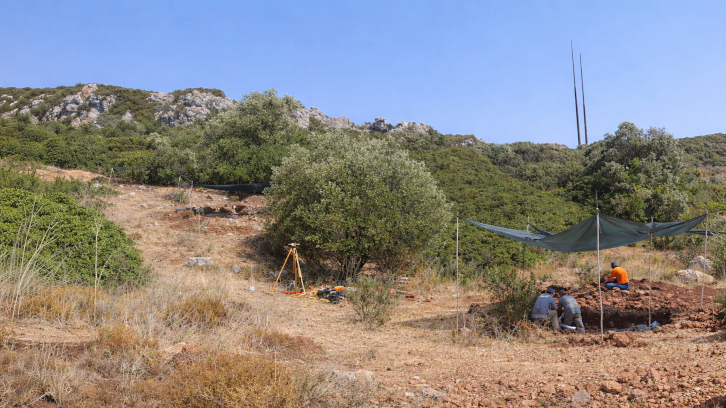
A study by the Universidade do Algarve in collaboration with the UAB, published in Archaeological and Anthropological Sciences, shows that hunter-gatherer populations that inhabited southwestern Portugal between 30,000 and 24,000 years ago developed complex strategies to deal with recurrent earthquakes. Unlike other prehistoric contexts in which human groups left large regions after major natural disasters, these communities adjusted their mobility, space use and social networks to mitigate the risks associated with seismic activity.
Our research presents the first integrated analysis of geophysical, geological, geochronological, and archaeological data to reconstruct human responses to moderate-magnitude earthquakes in a tectonically active landscape. The study focuses on the open-air site of Vale Boi (Vila do Bispo, Portugal), a strategic location repeatedly occupied between the Gravettian and Proto-Solutrean periods, in a region crossed by faults capable of generating earthquakes of magnitude 5.7 Mw or higher.
The project was led by the Interdisciplinary Centre for Archaeology and the Evolution of Human Behaviour (ICArEHB) at the Universidade do Algarve, in collaboration with researchers from the UAB and other academic and research institutions in Portugal, Spain, and the Netherlands. The international and multidisciplinary team brought together specialists in archaeology, geophysics, geochemistry, micromorphology, geochronology, Bayesian modelling, and technological analysis, enabling an integrated approach to the interaction between tectonic processes and human responses throughout the Upper Paleolithic.
The results show that earthquakes triggered rockfalls and rapid burial of archaeological deposits. At specific times, such as during the Gravettian, groups increased their mobility and temporarily abandoned the site as an effective strategy to reduce exposure to seismic risk. However, when earthquakes coincided with episodes of severe climatic stress, human groups did not abandon Vale Boi. Instead, they carried out short, selective occupations of the site to mitigate seismic risks while maintaining access to coastal resources.
3D view of the tectonic sampling points of the prehistoric site of Vale Boi. 1-4 Lithic refittings found at the site during periods seismically active.
The study highlights that the resilience of these communities relied on cohesive, regionally connected social networks that facilitated recovery after seismic events. Cooperation and social connectivity thus acted as a preventive mechanism against future impacts, functioning as a collective buffer in the face of environmental stressors.
These findings that we obtained represent some of the earliest known evidence of seismic risk management in human history and expand our understanding of Paleolithic resilience beyond responses to climate or ecological change. The study underscores the value of deep archaeological sequences for reconstructing how humans coped with interconnected geological and environmental pressures over time.
CEPAP-UAB – Centre d’Estudis del Patrimoni Arqueològic de la Prehistòria
IPHES-CERCA – Institut Català de Paleoecologia Humana i Evolució Social
References
Barbieri, A., Martínez, J.S., Belmiro, J. et al. Early evidence of earthquake management through mobility and social network adjustments at Vale Boi (SW Iberia). Archaeol Anthropol Sci 18, 25 (2026). https://doi.org/10.1007/s12520-025-02400-6.