Joan Manuel Serrat visits Dr. Miguel Chillón's gene therapy laboratory
Joan Manuel Serrat and members of the Antian Association had the opportunity to learn first-hand about the research being carried out to develop a potential treatment for ADSL deficiency, an ultra-rare genetic disease that affects children.
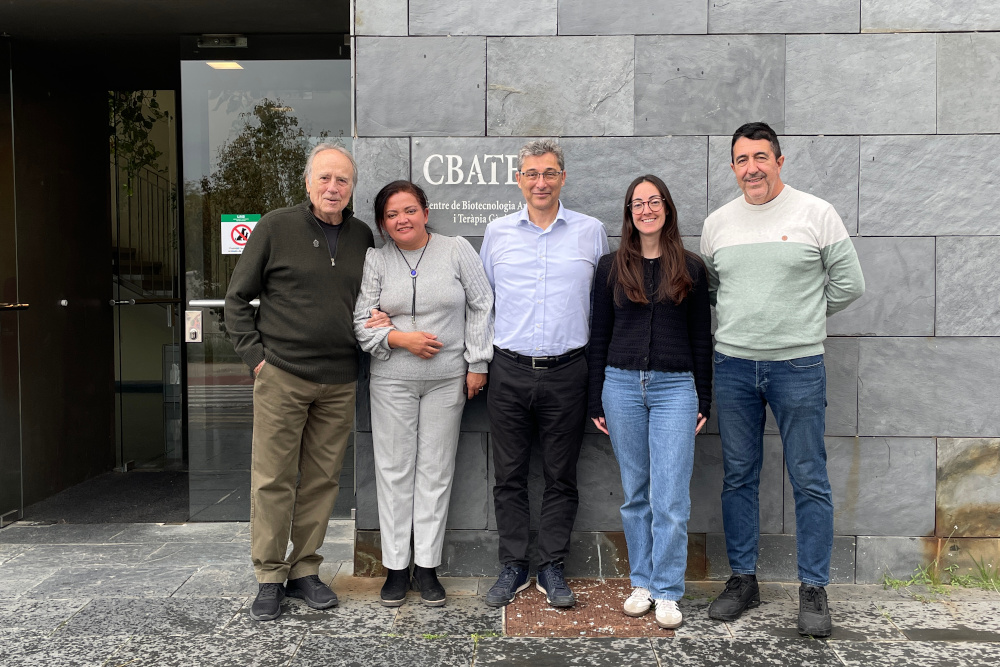
The laboratory of Dr. Miguel Chillón, an ICREA Research Professor at the Institute, welcomed Joan Manuel Serrat and members of the Antian Association. During the visit, Dr. Chillón explained the principles of gene therapy and how this therapeutic approach is being developed in the laboratory. The meeting also provided an opportunity to learn about the different stages of the research process, from the design and production of viral vectors to the studies used to assess their therapeutic potential.
The visit focused on the research project that Dr. Chillón’s team is developing in collaboration with the Antian Association, with the aim of advancing towards a potential treatment for ADSL deficiency. This is an extremely rare genetic metabolic disorder caused by mutations in the gene encoding the enzyme adenylosuccinate lyase. The condition can lead to significant neurological impairments, including intellectual disability, delayed psychomotor development and epilepsy.
The Antian Association was founded to support research into this disease and help improve the quality of life of affected children. The association is currently working to promote the development of a potential therapy that could slow disease progression and offer new perspectives for families. You can support the fundraising campaign through the link.
In this context, the research team is investigating gene therapy as a potential treatment approach. The aim is to introduce a functional copy of the affected gene into cells and restore its function as far as possible. This is a complex research process involving several stages of study and validation before any potential treatment could reach clinical practice.
The visit helped bring the researchers’ day-to-day work closer to the people supporting the project and highlighted the importance of collaboration between the scientific community, patient associations and society as a whole.
Initiatives such as the Antian Association’s are essential to raising awareness of these diseases and supporting research projects that could transform the future of those affected.