The inappropriate use of scientific databases renders Indigenous peoples’ role in conservation invisible
The scientific community often makes inappropriate use of large global biodiversity databases, sometimes applying them to analyses and research for which they were never designed.
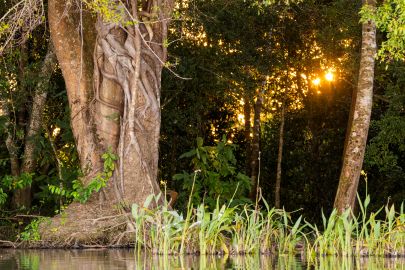
This is revealed by a new study led by ICTA-UAB, which, after analyzing the distribution of tree species in Bolivia using three different databases, warns about the severe deficiencies of some of these geospatial methodologies.
The research, published in the prestigious journal npj Biodiversity, demonstrates that basing the assessment of natural richness exclusively on big data extraction can distort reality on the ground and contribute to rendering invisible the key contributions of local and Indigenous communities to protecting the planet. Therefore, it recommends that scientists thoroughly evaluate the scope of their sources and adopt locally grounded collection practices.
The work, which characterizes species distribution across Indigenous lands, protected areas, and other territories in Bolivia as a case study, highlights the lack of robustness in research that blindly relies on international tools such as the IUCN Red List or the Global Biodiversity Information Facility (GBIF). By comparing these global databases with national records from Bolivia, the team verified that selecting one source or another yielded completely contradictory results regarding which areas or species should be prioritized for conservation. This inconsistency occurs because these repositories are not homogeneous maps, but heterogeneous accumulations of old inventories, specific botanical expeditions, and museum collections with objectives very different from those of a territorial distribution study.
"The databases are not designed as a comprehensive representation of the complete species distribution. If used as such, they introduce significant bias to the analyses. For example, half of the recorded tree species in the Red List for Bolivia belong to the cactus family, even though they represent only 1% of the country's native tree flora," explains Sven Kock, who led the study.
Likewise, the authors criticize standard scientific practice for attempting to compress cultural dynamics and ancestral knowledge systems into simple numerical species counts. "When information is processed out of context and data are stored in Global North institutions without documenting the origin of the information or the work of local communities, the scientific methodology itself can end up disadvantaging Indigenous territories in global conservation maps," indicates Álvaro Fernández-Llamazares, ICTA-UAB researcher.
To correct these bad practices, the ICTA-UAB team urges the research community to stop assuming that big data is neutral or objective. The study calls for critically evaluating the context of each dataset before using it and demands the redesign of scientific projects by integrating Indigenous peoples not as mere providers of information in the field, but as collaborators in research design, data interpretation, and decision-making.
Article reference: Kock, S., Llopis, J.C., Fernández, M. et al. Characterizing tree species richness in Indigenous Peoples’ lands: addressing often-overlooked data limitations and biases. npj biodivers (2026). https://doi.org/10.1038/s44185-026-00153-6