Dr. Joleah Lamb joins ICTA-UAB to tackle ocean pathogens
Researcher Joleah Lamb will join ICTA-UAB in the coming months through the ATRAE programme of the Spanish Ministry of Science, Innovation and Universities (MICIU), a national initiative designed to attract internationally recognised research talent to Spanish universities and research centres. Her arrival will strengthen the institute’s international leadership in environmental health and marine ecosystem research.
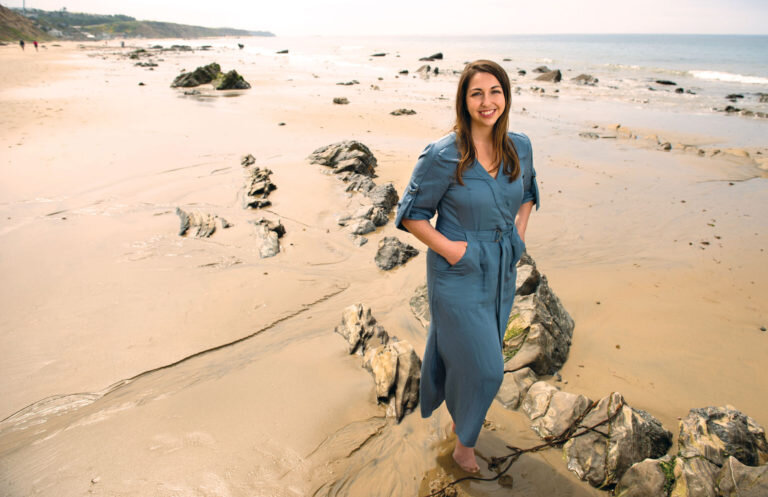
Coming from the University of California Irvine, where she is currently an Assistant Professor and leads the Healthy Oceans and People Laboratory (HOPE Lab), Dr. Lamb will lead the project GREENMARINE (Reference: ATR2025-164731) over the next four years as Principal Investigator.
The project, Elimination of Antibiotic-Resistant Pathogens Using Nature-Based Solutions in Built Marine Environments, addresses one of the most urgent global health challenges: antibiotic resistance.
Built infrastructure is expanding into the marine environment to support rapidly growing coastal populations, adapt to sea-level rise and climate change, and meet increasing global demand for energy, food and transportation. However, global outbreaks of disease in marine systems are associated with intensified coastal development. Human bacterial pathogens entering the ocean from terrestrial sources are estimated to generate an economic cost of US $12 billion annually, with more than one million deaths attributable to antimicrobial-resistant infections. Predicting and minimizing these risks in marine systems represents a globally significant research challenge.
GREENMARINE will investigate how concepts of green infrastructure can be incorporated into the built marine environment to reduce risks to human and ecosystem health. In particular, it will examine the role of seagrass meadows — the largest coastal ecosystem on Earth — as natural filtration systems capable of reducing antibiotic-resistant bacterial pathogens originating from land-based sources.
The project will combine next-generation ecogenomics, sea simulator experiments, and early-warning predictive modelling to better understand, anticipate, and mitigate health risks in marine environments.
Antibiotic resistance is a top global health priority, as common and treatable infections are increasingly becoming life-threatening. Nature-based filtration systems may offer especially relevant solutions in regions lacking resources for centralized and mechanized treatment infrastructure, providing cost-effective and scalable alternatives.
It is estimated that 1.1 billion people and 19 megacities are located within 50 km of seagrass ecosystems. Coastal and marine ecosystems also provide essential services valued at US $25 billion, including carbon sequestration, nutrient cycling and coastal protection. In Spain, where more than 80% of the population lives near the coast, strengthening the role of natural coastal ecosystems is of strategic importance.
Through GREENMARINE, ICTA-UAB will advance innovative and interdisciplinary research that supports evidence-based decision-making, contributing to global sustainable development and marine biodiversity conservation goals.