Bolivia at a crossroads: scientists warn of a possible environmental setback
Bolivia, one of the most biodiverse countries on the planet, stands at a critical juncture.
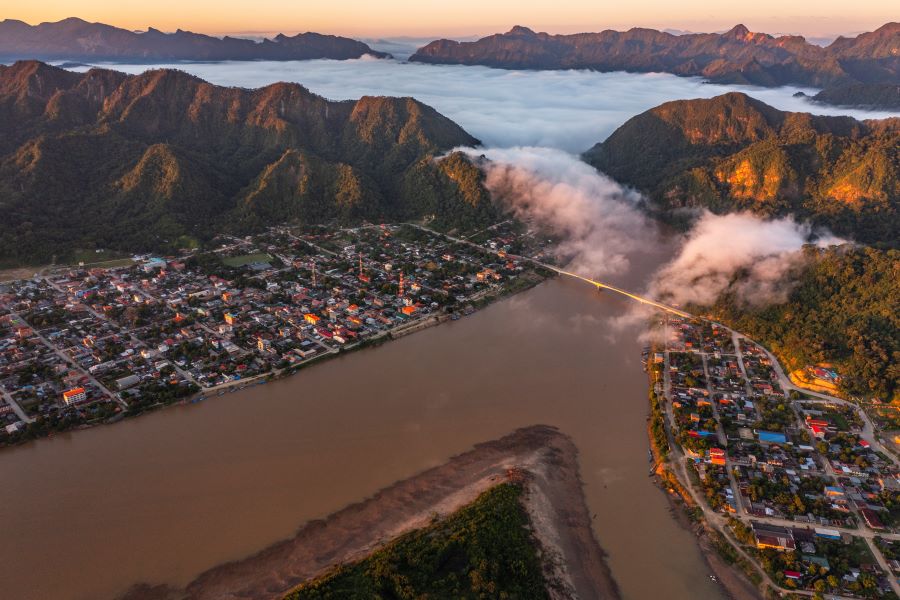
A letter recently published in the scientific journal Nature Ecology and Evolution and signed by an interdisciplinary team of scientists from Bolivia and Spain warns that accelerating deforestation, infrastructure expansion, illegal mining and intensive agriculture have pushed many of the country’s ecosystems towards collapse, with far-reaching consequences for human well-being, Indigenous peoples and climate resilience.
The letter, the result of a close collaboration between four Bolivian scientists and researcher Álvaro Fernández-Llamazares of the Institute of Environmental Science and Technology at the Universitat Autònoma de Barcelona (ICTA-UAB), analyzes how the recent election of a new government represents a historic opportunity to halt ecological decline and redefine Bolivia’s environmental trajectory. However, the absence of a clear environmental agenda and the intention to relocate the Ministry of Environment and Water under the Ministry of Development Planning could weaken environmental governance at an especially critical moment.
The missive, led by Bolivian botanist Mónica Moraes, underscores that after nearly two decades under the leadership of the Movimiento al Socialismo party—which promoted the ideals of its well-known “living well” and the rights of Mother Earth—agro-industrial and extractive expansion policies have come into conflict with those principles.
The decline in gas revenues and the relaxation of land-use regulations facilitated agricultural and mining expansion, while the devastating fires of 2010, 2019 and 2024 degraded extensive areas of the Chiquitano Dry Forest region and threatened thousands of Indigenous communities. Despite having one of the lowest population densities in the world, Bolivia currently ranks third globally for primary forest loss since 2020, and weak enforcement of forest-protection laws together with institutional fragmentation have eroded the country’s environmental vision.
In this scenario, the new center-right government, led by Rodrigo Paz of the Christian Democratic Party, inherits the responsibility to halt ecological decline, reconcile economic and environmental priorities, and restore Bolivia’s standing as a global leader in biodiversity. However, early signals are not encouraging: the new government’s initial plans could represent a significant institutional setback at a critical moment for environmental governance.
The letter proposes four strategic lines to address the crisis: strengthening environmental governance through institutional restoration and effective law enforcement; halting deforestation with strict regulations and territorial zoning; protecting and empowering lowland Indigenous peoples as guardians of biodiversity; and advancing a just ecological transition that diversifies the economy, restores degraded ecosystems and promotes sustainable forest-based and agroecological livelihoods.
“Bolivia now faces a choice that will define its ecological and social future,” authors stress. “The country has the opportunity to reverse environmental deterioration and reaffirm its credibility in international forums by placing nature at the center of the development and social well-being agenda.”
Article reference: Moraes R, M., Fernández-Llamazares, A., Aguirre, Luis F., Maillard O., Romero-Muñoz A., A potential turning point for Bolivia's biodiversity conservation. Nature Ecology and Evolution. https://doi.org/10.1038/s41559-025-02937-8