A new predictive artificial intelligence method combining NIR and chemometrics for illicit drug analysis in collaboration with the Mossos d’Esquadra.
A study has been published in the prestigious journal Analytical Chemistry (American Chemical Society, ACS) regarding the development of a new analytical method based on chemometrics and handheld NIR technology for the analysis of illicit drugs seized by the Mossos d’Esquadra. The work, resulting from a collaboration with the Scientific Police Division, enables the rapid and in-situ identification and quantification of substances such as cocaine, MDMA, and THC-related products.
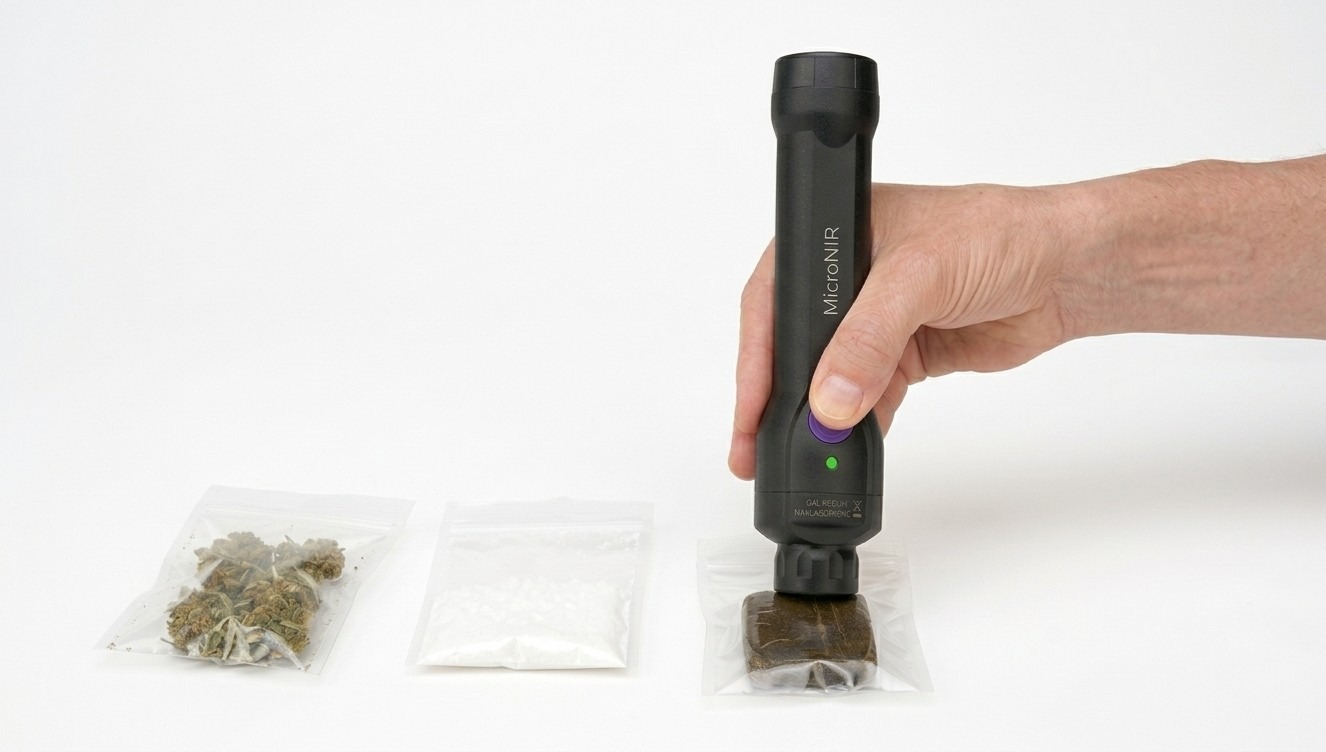
The accumulation of seized narcotic substances creates a massive logistical and analytical challenge for forensic laboratories. In response, researchers, in collaboration with the Scientific Police Division of the Mossos d'Esquadra, have developed and validated a fast and robust method successfully implemented by the police force.
The method is based on the use of Near-Infrared (NIR) spectroscopy combined with chemometric models for processing large multivariate datasets. The analysis of nearly 2,500 real-world samples has validated a tool that rapidly resolves backlogs, achieving excellent results in both the identification and purity determination of cocaine, MDMA, and THC-related products. The analysis is performed in a few seconds, acquiring the NIR spectrum directly from the sample without requiring any type of reagent or solvent and, consequently, the environmental impact is zero.
This breakthrough stands out for its use of handheld NIR technology, which will enable the decentralization of analysis: all police regions in Catalonia will be able to process samples in situ with the same reliability as the central laboratory. This project not only represents scientific progress in the fields of predictive artificial intelligence and chemometrics but also serves as an essential management tool to optimize public resources and streamline the justice system.
Source: Analytical Chemistry. 19 de març de 2026.
https://doi.org/10.1021/acs.analchem.5c07967