Nanotechnology to Prevent Radiodermatitis in Breast Cancer Patients
The NANORADIOMED project, a collaboration involving UAB, ICN2, the Germans Trias i Pujol Research Institute (IGTP), and CARINSA Group, aims to prevent and treat some of the most common side effects associated with radiotherapy in breast cancer patients. Its technology is based on the controlled release of active ingredients through microcapsules integrated into clothing, with the goal of improving patients’ quality of life.
Breast cancer is one of the most significant global public health challenges. According to data from the Global Cancer Observatory, it was among the most frequently diagnosed cancers in 2022, with millions of new cases reported each year. Although treatments have improved considerably in recent years, leading to high five-year survival rates, many still have side effects that directly impact patients’ well-being. One of the most common is radiodermatitis, a skin reaction to radiotherapy that can cause redness, inflammation and peeling, and ulceration in severe cases. Following surgery, more than 90% of patients undergoing radiotherapy may develop some degree of skin damage. In addition to causing pain, itching and a burning sensation, radiodermatitis may necessitate adjustments to radiation doses or delays to treatment, which could affect its effectiveness.
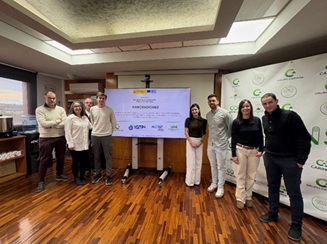
Now, NANORADIOMED kicks off with the objective of providing a practical and innovative nanotechnological response to this issue. The project brings together UAB groups from the Departments of Chemistry (“Electrochemistry, Photochemistry and Organic Reactivity”) and Nursing (“Multidisciplinary Research in Health and Society”), ICN2’s group “Nanostructured Functional Materials”, the Germans Trias i Pujol Research Institute (IGTP), and CARINSA Group. Its approach centres on encapsulating active ingredients with proven benefits against these symptoms, within microscopic capsules. These capsules will be designed to release their contents gradually and in a controlled manner and can be incorporated directly into the fabric of bras worn by patients during treatment to enable continuous delivery to the skin.
Unlike conventional creams or lotions, which require frequent application at specific times, this strategy would simplify dosing. The system is also designed to be sustainable and reusable, enabling the formulations to be reapplied after washing the clothes.
The multidisciplinary NANORADIOMED team combines expertise in advanced formulation, encapsulation, nanotechnology, hospital-based clinical validation, and industrial scale-up, aiming to develop a new effective solution against radiodermatitis that enhances patient health and quality of life.
This work is supported by MICIU/ AEI / 10.13039/501100011033 / FEDER through the Proyectos en Colaboración Público-Privada program (project CPP2024-011271).