AI identifies a novel enzyme system with CRISPR-like features
An Anthropic team has identified a new enzymatic system with characteristics similar to CRISPR systems using Claude, although its biological function has not yet been experimentally confirmed.
AI is becoming an increasingly important tool in life sciences research. In this context, Anthropic has released the first findings from its new life sciences research initiative, which explores how AI models can accelerate biological discovery through large-scale analysis of genomic data.
According to the company, the AI model Claude independently examined a vast database of DNA sequences in search of novel reverse transcriptase families, enzymes capable of converting RNA into DNA. During this process, the system detected an unusual repetitive DNA pattern associated with a reverse transcriptase that had previously escaped detailed characterization.
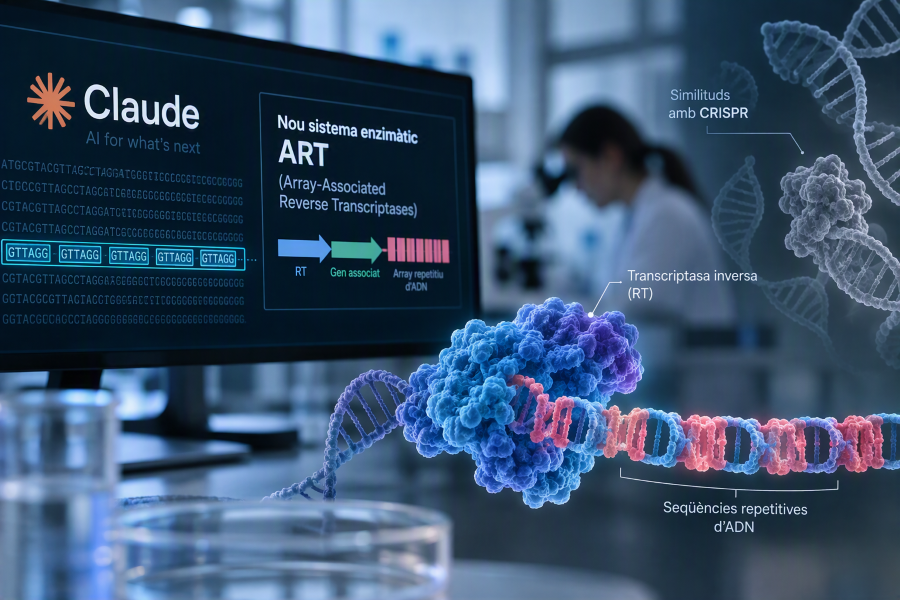
Further analysis led to the identification of what the company has named the ART (Array-Associated Reverse Transcriptases) system. The system consists of three main components: a reverse transcriptase, an associated gene and a long array of regularly spaced DNA repeats. This organization resembles that of CRISPR systems, which rely on repetitive DNA elements and RNA molecules to recognize specific genetic sequences and carry out programmable biological functions.
Researchers emphasize that the biological role of ART remains unknown. Initial laboratory experiments suggest that the repeated DNA array is expressed as a collection of short RNA molecules, providing an early indication of functional relevance. However, additional studies will be required to determine how the system operates and whether it may eventually have applications in biotechnology or genome engineering.
Beyond the discovery itself, the work illustrates the growing potential of artificial intelligence as a tool for fundamental biological research. The ability to analyse vast amounts of genomic information, identify patterns and generate testable hypotheses could help accelerate the discovery of previously unknown molecular systems and support future advances in biotechnology. At the same time, the findings highlight the importance of rigorous experimental validation before assigning biological functions to AI-generated hypotheses.
The results have been released as a scientific preprint and remain under investigation. Among the external experts cited by the company, Feng Zhang, a pioneer in CRISPR genome-editing technologies, described the identification of RNA-repeat arrays associated with reverse transcriptases as an intriguing observation that warrants further study.
Source
Anthropic Says Claude Discovered a New Enzyme System Resembling CRISPR. Aria Bloom. September 23, 2026.UNITE.AI