Interview with Francesc Serras, Law alumnus ’20 and co-founder of TECOUS
“It is fascinating to see how a sector as traditional as the legal profession now truly has to embrace innovation.”
“UAB has been a major source of support from a business perspective and has provided a significant boost in terms of visibility.”
30/10/2026
"One thing is to have an idea that seems interesting to you, and quite another is for it to solve a real need that someone is willing to pay for."
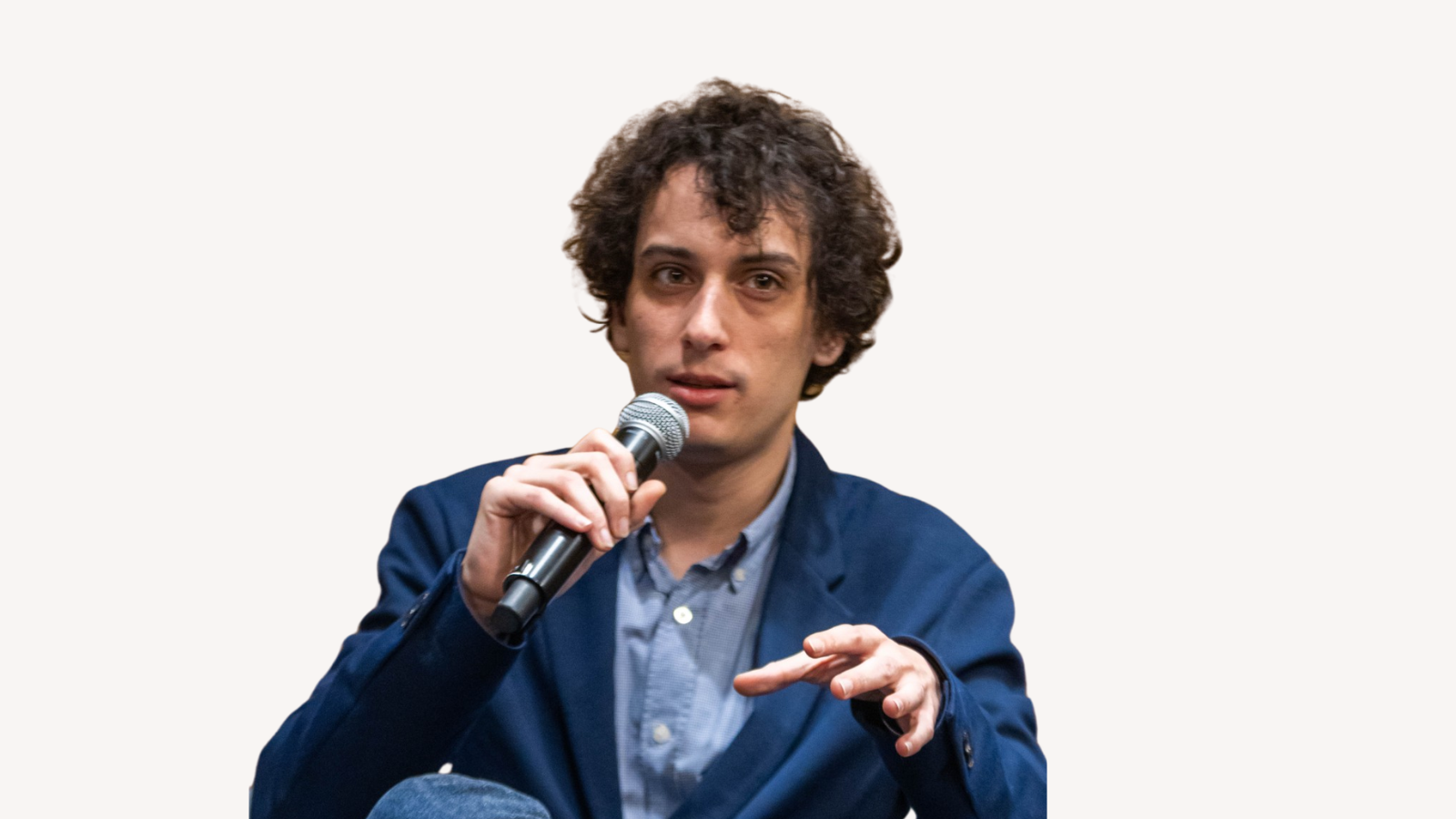
Francesc Serras, a Law’20 alumnus of the Universitat Autònoma de Barcelona and co-founder of TECOUS, the first company to be recognised with the Startup UAB label. Trained as a lawyer and an entrepreneur by conviction, he turned a final project into a legal tech company dedicated to making legal documents easier to understand for citizens, businesses and public administrations. Linked to the UAB through Alumni UAB, Emprèn UAB and several research groups, he advocates for more accessible legal communication and sees innovation and artificial intelligence as an opportunity to bring law closer to people.
- How do you go from a master's final project to creating a start-up?
A bit by accident. It all started as a result of a personal experience: I had to pay the shipping costs to return a gift I had bought. I had accepted the terms and conditions, but since I hadn’t read the fine print, I didn’t know I was responsible for paying it. And the amount was certainly not small.
- Is that how the idea came about?
Yes. It occurred to me that all this information should be made easier to understand. At the same time, while I was studying, I worked in a retail establishment where I often had to explain the withdrawal policy to customers. I decided to do my master’s final project on how to help people understand legal concepts that are, in principle, abstract, complicated and leave many people behind.
- How was TECOUS born?
The first outlines of the project emerged in 2023, as a result of the master’s final project I had completed during the 2021-2022 academic year. From there, we gradually shaped the idea until we established ourselves as a company in 2026. We were also the first company to obtain the Startup UAB label, which makes us especially proud.
- What has been the most difficult thing so far?
Finding the product-market fit, that is, understanding what product we had to build and for whom. It is one thing to have an idea that seems interesting to you and another for it to solve a real need that someone is willing to pay for. I think that has been the most difficult part.
- How do you manage to transform complex legal documents into clear and accessible information?
What we do is very simple. We begin by identifying where doubts arise, where the friction lies between the administration and the citizen, between the person providing the document and the person who has to sign it; from there, we build repeatable products.
- What can it mean when we click “Accept” on “I have read and accept the terms and conditions”, when in reality we haven’t read them at all?
European consumers are protected by regulations, but there are examples that show the extent to which we accept things without reading them. There was a video game whose terms and conditions stated that by buying from its store, you were giving away your soul. And in an experiment involving a fictitious social network, participants agreed to hand over their first-born child. They were examples, but they illustrate the problem very well.
- Who are your clients?
Both public administrations and private companies. With administrations we have three fairly well-defined lines: grants, regulations or tax ordinances, and resolutions. In all cases we make legal language easier to understand while always maintaining traceability between the summary and the original text. With private companies we work with contracts, terms and conditions or other documentation and turn them into content that can be consulted in a much more interactive, accessible and agile way.
- What do clients pay for your services?
We have a model that combines three sources of revenue generation: a one-time implementation fee, recurring maintenance fees and additional functionalities. It is good that we do not focus only on one type of document. This allows companies and administrations to use different services and contract them together at a discounted rate.
- Do you have competitors?
We are a somewhat unorthodox legal tech company; we do not compete with legal tech firms that focus on generating legal documents. We focus on making those documents understandable. We deal with the understanding and communication of legal terms. But I always say that our competition is not only other software: very often it is the person who picks up the phone and answers the questions that the document has generated.
- Could it be a risk for your technology that AI has become so widespread?
It would be a risk if a general-purpose AI actually enabled any citizen to complete a public administration procedure without any doubts whatsoever. In any case, public administrations cannot afford the margin of error caused by hallucinations; they are institutions that require the highest level of guarantees and rigour. We exist to be a guarantor for administrations by providing citizens with truthful and simple information.
- Can AI influence the transformation of the legal profession?
Yes. It is fascinating to see how a sector as traditional as the legal field now really has to embrace innovation. The legal sector experienced the last technological revolutions quite comfortably. With AI, legal work is indeed changing. I do not know in which direction, but it is a very powerful tool that is shaking up the sector.
- Does that worry you?
Quite the opposite! Personally, I am passionate about it. I think it was necessary and, moreover, it is a fantastic window of opportunity. We still communicate many legal resolutions and decisions in much the same way as was done centuries ago. Now we have the opportunity to make justice more understandable and available to many more people, instead of keeping it limited to a small circle of experts.
- TECOUS helps people understand privacy policies, regulations, administrative communications, grant guidelines and resolutions. Are you planning to expand into more types of documents, work with other solutions or enter the international market?
We would like to make medicine leaflets easier to understand, but also communications about collective agreements or, for example, the teacher placement assignment processes of the Department of Education. As for internationalisation, we have a clearly European vocation. Regulatory developments within the European Union open up market and impact opportunities for us. Beyond the EU, what we do could also make sense in Latin America. And in the United States or the rest of the world? Why not, but it is not a short- or medium-term objective.
- What are your plans?
The idea is to start expanding into the European Union market at the end of 2028 or the beginning of 2029. As for Latin America, it will depend more on the opportunities that arise.
- Since 2023 you have received various forms of support, including from the Emprèn UAB programme. What did it involve?
At MWC 2024 I approached the UAB stand to tell them that I was an alumnus of the university and that we were developing a business idea. I wanted to reconnect with the institution. First I did so through Alumni UAB and then through Emprèn UAB, whose acceleration programme helped us greatly in finding our product-market fit. It made us rethink our proposal.
- So you remain connected to the UAB?
Yes, very much so. We have re-established our connection with the institution and collaborate with the TransMedia Catalonia research group, the CVC and the UAB-Cruïlla Chair. We have also been the first company recognised with the Startup UAB label, which makes us extremely happy. I also maintain ties with the Faculties of Law and Economics and Business, where I have recently been able to teach a class or two. It is an experience I would never have imagined and one I have found fascinating. I greatly admire the people who stand in front of students every day.
- What has the UAB meant for TECOUS so far?
It has been an important source of support for the business and a boost in visibility. It has helped us improve our proposal and reconsider whether we are moving in the right direction. Being present at 4YFN with the support of the UAB was a turning point; it helped us position ourselves.
- How do you remember your time at university as a student?
They were the happiest years of my life. At that time I had just the right balance between freedom and responsibility, with plenty of opportunities ahead of me. It was also a very safe environment that gave me a great sense of peace of mind. Altogether it created fantastic synergy. I also greatly enjoyed studying law, and the bar as well.
- Had you imagined you would become an entrepreneur?
Never. I am a lawyer by training and completed the master’s degree in order to practise, although later I began working as a municipal secretary-interventor in public administration. I had no intention of becoming an entrepreneur, and I think that is also part of the magic of TECOUS. My partner, Víctor de Cubas, is an engineer and had already started several ventures. We have found a good balance between someone passionate about solving a problem and someone passionate about entrepreneurship and building things. We make a good team.
- How did you meet?
We knew each other before starting university, although we had not maintained close contact for several years. We met again at exactly the right time and place to work together.
- Where do you find the time for TECOUS?
I have a job, and entrepreneurship is a task that does not respect weekends or public holidays, but just as you give, you also receive. When you become an entrepreneur, you do it heart and soul. I also think that if I do not do it now, I do not know when I will. I am taking advantage of the fact that I have the motivation and fewer responsibilities and constraints than I will have in the future.
- On LinkedIn you share books that have inspired you while, as you say, “trying to understand what this entrepreneurship thing is all about”. What is entrepreneurship like?
Fascinating and exhausting, but above all fascinating.
- Why do you like it so much?
I had never really thought much about what my legacy in life would be, and with TECOUS I have found something that I think could be a good legacy. Impact entrepreneurship gives you a driving force that goes beyond results. I like to think that, regardless of what ultimately happens with the company, we have followed a path worth taking, because simplifying legal language helps people.
- Where would you like TECOUS to be in five years?
I would like TECOUS to have expanded and become international, and for us to have become a benchmark in accessibility in legal communication. Above all, I would like us to help generate trust between parties that often find themselves in unequal positions: public administrations and citizens, or a company and the consumer who has to sign the document; but also to generate trust between parties operating in areas with little regulation, such as contracts between companies.
- UAB alumni have the opportunity to mentor final-year students through the UAB Mentoring Programme. Why will you dedicate part of your time to guiding students in their transition to the labour market?
Both my partner and I will be mentors in Mentoria UAB. I think it could be good to try to help students avoid certain setbacks. It is also an opportunity to offer them a broader perspective. When you are finishing your degree, it feels like the world is ending if you do not find a job and reach the point you had planned. After more than 20 years of continuous study, the day comes when you finish and ask yourself, “What do I do now?” I think we can help them manage that frustration. It was not that long ago that I was in their position.
- What would you recommend to students for the next stage, entering the workforce?
I would tell them to allow themselves to pause and to be patient. Things do not always move as quickly as we would like. I like the idea of “Be patient with yourself.” When you finish your degree, there are thousands of other students who also want to start working. Planning helps too: thinking about what you would like to do before you finish, but without becoming obsessed, because nothing is set in stone. We keep moving forward and readjusting.
- What does entrepreneurship bring to you?
I love meeting people, and entrepreneurship is very much about that: meeting people, talking to those who will use what you are creating, and learning how to deal with frustration when they tell you no. After working in public administration and in large companies, where it can sometimes be difficult to see the direct impact of your work, as an entrepreneur you see it much more clearly. And here, if you do not make a move, nobody will make it for you.