The CEETNOVA's Knowledge Valorisation Ambassadors Training Programme continues to advance
The European project CEETNOVA is training a community of 100 knowledge valorisation ambassadors to transform this knowledge into significant social value.
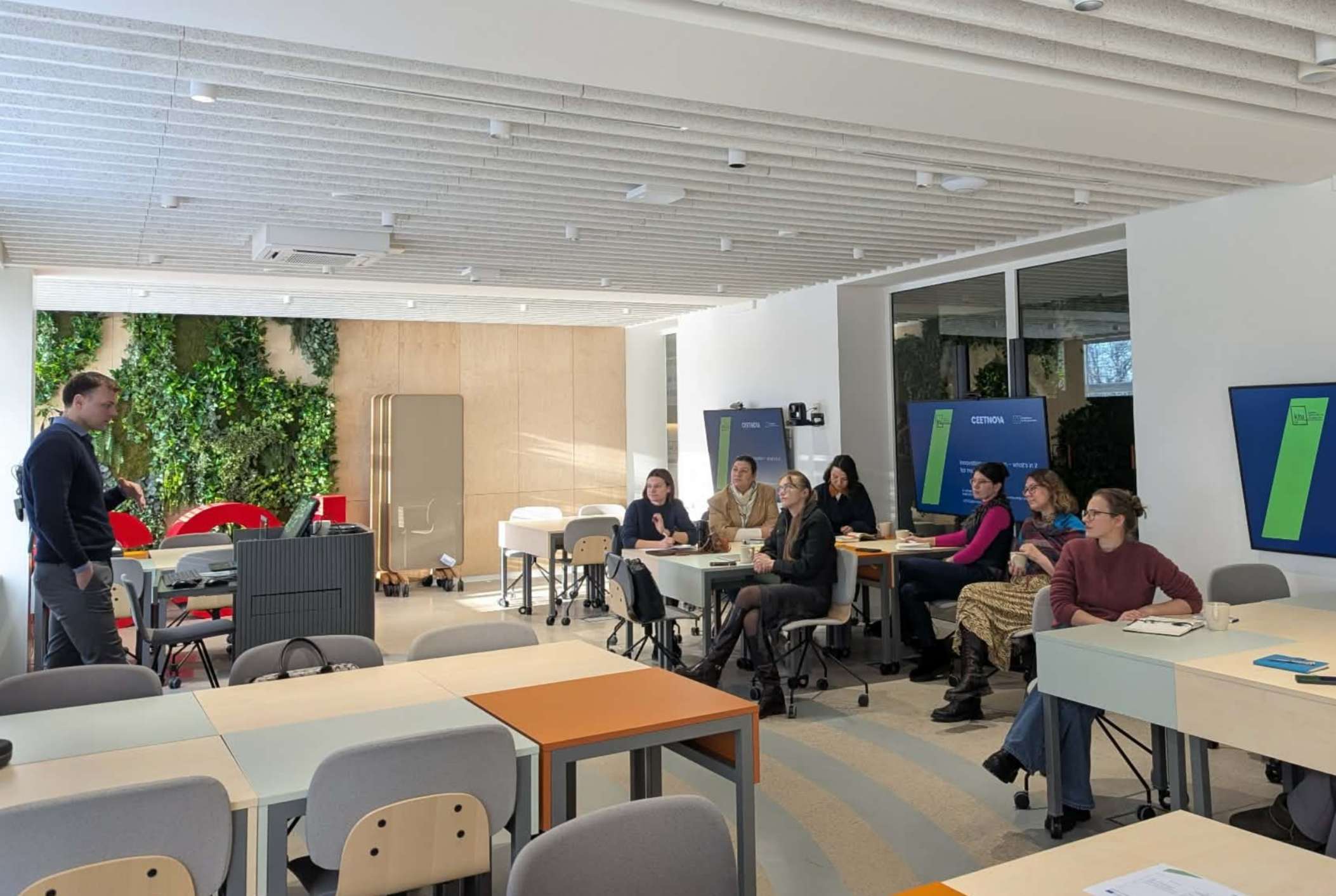
Three knowledge valorisation ambassadors share their insights on the project.
CEETNOVA (Connecting European Innovation and Entrepreneurship Ecosystem through Knowledge Valorisation Ambassadors) works to ensure that knowledge and research have a real impact beyond academic publications and laboratories. Through its Knowledge Valorisation Ambassadors training programme, this initiative trains university staff from five countries (Norway, Sweden, Lithuania, Italy and Spain) to facilitate the transfer of knowledge and the use of research results in society and the European innovation ecosystem.
One of the ambassadors is Associate Professor Dr Donatella Puglisi, researcher at Linköping University, who focuses on the need for a change of mindset within the academic community:
«Researchers are trained to work in a non-profit context, and the idea of commercialisation does not come naturally. When universities encourage parallel entrepreneurial activities, researchers run the risk of navigating without the proper training, which can lead to mistakes.»
She sees the role of ambassador as a "human interface" that connects the university's visual identity with the real values and professional integrity practiced in the laboratories.
Marta García Prats, PhD candidate at the Universitat Autònoma de Barcelona, explains the importance of including social agents from the beginning to generate real impact:
«For scientific research to have a real and valuable impact on society, it is essential to involve social actors (stakeholders) at all stages of the process»
Marta points out that building connections with external actors from the beginning helps translate research into applicable solutions.
Dr Lina Abromaitiené, from Kaunas University of Technology, highlights the value of having practical tools to systematise valorisation processes:
«Before the training sessions I found general principles, but I did not have a structured framework or concrete tools on how to systematically use valorisation as an aplicable process»
She also warns of the additional workload involved in integrating these practices into the daily work of academic staff.
The vision of the three ambassadors shows that the valorisation of knowledge is not only a technical issue, but also a strategic one: it requires both a change in mentality and learning new skills to ensure that research has a tangible impact on European society and its economy.
More information: CEETNOVA article