
The other side of the blue economy: the hidden role of local communities
In recent years, the term blue economy has been coined to refer to activities related to the sea or the coast. A study involving the UAB has analysed six local coastal communities from various parts of Europe to examine how they adapt to this economy. They have concluded that the informal activities that communities carry out are not sufficiently taken into account by policy makers.
The blue economy has become a strong interest in global and European policy discourses over the last decade. As a policy agenda, the blue economy promises to extract more profitability from various maritime industries (marine fisheries and aquaculture, offshore energy generation, deep seabed mining, maritime transport, coastal tourism) while still taking care of the health of the seas. However, a series of previous studies by critical scholars have questioned whether blue economy policies really benefit coastal communities and marine ecosystems.
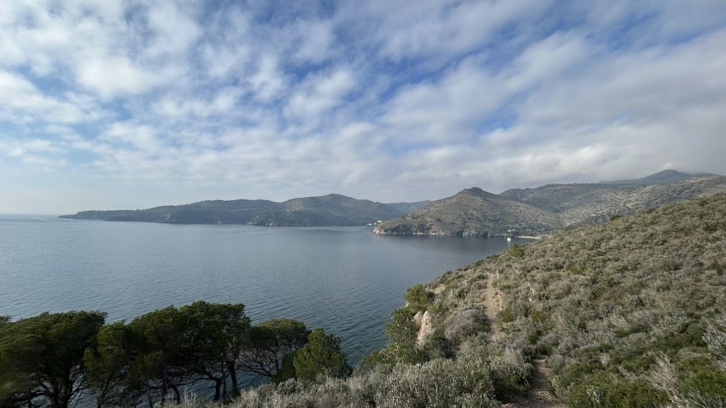
Our study, recently published in the leading human geography journal Geoforum, looks at evidence from six different coastal communities across Europe, in which locals seek to adapt to the blue economy in different ways: Burgas, Bulgaria (Black Sea); Connemara, Ireland (Atlantic); Træna, Norway (Arctic); Åland, Finland (Baltic Sea); Cap de Creus, Spain (Western Mediterranean); and Eastern Limassol, Cyprus (Eastern Mediterranean). Although differing in terms of their local geography, character, and population, all six coastlines shared with our researchers a concern that the policy drive for blue growth has tended to remove the benefits of the maritime economy from their local communities and natural landscapes.
In response, these communities engage in practices that do not officially “count” as parts of the formal blue economy but are vital to retaining the community and the local ecosystem that make the formal economy thrive. Such practices include promoting local fishing cooperatives, increasing awareness of water ownership rights, funding community needs through the proceeds from festivals, culinary initiatives, or even direct resistance to government policies that threaten to impoverish the community or its natural resources.
Photo: Salvador Manera. Recovering of Posidonia Oceanica in Cap de Creus. Initiative promoted by artisanal fishers with the collaboration of scuba divers, and marine biologists.
In short, we show that these communities try to make the blue economy “work” for them by investing in local knowledge and care for the environment. These types of informal activities, we argue, should be taken more seriously by policymakers seeking to create a truly sustainable blue economy.
Our study was part of a larger European-wide consortium project funded by the European Union under the Horizon Europe Program and the UK’s Research and Innovation department. Entitled EmpowerUs, this project worked with these same European coastal communities from 2022 to 2025 with the aim of helping them to better navigate pressing social and environmental transformations.
Anna Antonova
Rachel Carson Center for Environment and Society
LMU Munich
Anna.Antonova@rcc.lmu.de
Sílvia Gómez
Department of Social and Cultural Anthropology
Universitat Autònoma de Barcelona
silvia.gomez@uab.cat.
References
Anna Antonova, Wesley Flannery, Sílvia Gómez, Madeleine Gustavsson, Maria Hadjimichael, Brendan Murtagh, Kristen Ounanian, Sunniva Midthaug Solnør, Vida Maria Daae Steiro, Kristina Svels. (2025) Centering coastal communities’ diverse economic practices in the blue economy, Geoforum 166, 104410. https://doi.org/10.1016/j.geoforum.2025.104410.