
Gastrointestinal and eating problems in women with Ehlers–Danlos syndromes
The program “Joint Hypermobility and Associated Pathologies: Studies in Emotion, Cognition, and Behavior” (HAPAECC) is led by Professor Carolina Baeza-Velasco of the Laboratory of Psychopathology and Health Processes at Université Paris Cité, in collaboration with Professor Antoni Bulbena, Maria Soleda Mora and Sonia Lorente of the Autonomous University of Barcelona (UAB). This program has a distinguished track record in the study of the psychosocial correlates of hereditary connective tissue diseases, including Ehlers-Danlos syndromes (EDS).
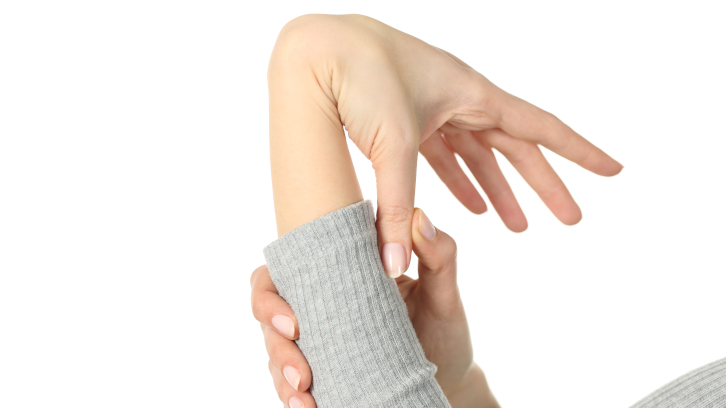
Ehlers-Danlos syndromes (EDS) are a group of mostly rare hereditary diseases (14 subtypes described), characterized by alterations in the structure, synthesis, or processing of collagen, a protein essential for giving structure and strength to our tissues. People living with EDS often have joint hypermobility, very elastic or fragile skin, and other symptoms that affect their daily lives. A lesser-known aspect that nevertheless has a major impact on those affected is gastrointestinal problems.
This research work from the HAPAECC program, carried out in collaboration with Pr. Antonio Bulbena, also from the UAB and a pioneer in the study of the links between hypermobility and psychopathology, we described how these digestive symptoms are associated with eating behaviors and nutritional status in people with EDS. To achieve this goal, a cohort of women with EDS was compared to a healthy control group, evaluating digestive discomfort (including reflux, early satiety, nausea, bloating, and abdominal pain), food allergies and intolerances, disordered eating behaviors, and body mass index (BMI).
Findings indicated that women with EDS with the hypermobile subtype, which is the most prevalent form, the experience gastrointestinal symptoms, food allergies, and food intolerances more frequently than healthy controls. These digestive issues are associated with a more significant history of eating disorders and a heightened risk of developing them. Furthermore, factors such as allergies and intolerances significantly influence both dietary habits and body weight.
The relevance of this study lies in its contribution to a deeper understanding of how gastrointestinal symptoms that are highly prevalent in Ehlers-Danlos Syndrome (EDS) impact not only physical well-being but also nutritional status and the patient's relationship with food. This broader perspective highlights the daily complexity of living with the condition and underscores the necessity of a comprehensive clinical approach that addresses medical symptoms alongside dietary habits and their emotional implications.
For more information on this and other connective tissue diseases, as well as other publications and collaborations in this field of research, please visit our website HAPAECC.
Sonia Lorente
Department of Psychobiological and Methodology of Health Sciences
Universitat Autònoma de Barcelona (UAB)
HAPAECC program
sonia.lorente@uab.cat
Carolina Baeza-Velasco
Laboratoire de Psychopathologie et Processus de Santé
Université Paris Cité
HAPAECC program
carolina.baeza-velasco@u-paris.fr
References
Baeza-Velasco, C., Lorente, S., Tasa-Vinyals, E., Guillaume, S., Mora, M. S., & Espinoza, P. (2021). Gastrointestinal and eating problems in women with Ehlers-Danlos syndromes. Eating and weight disorders, 26(8), 2645–2656. https://doi.org/10.1007/s40519-021-01146-z.
Lorente, S, Espinoza, P, Tasa-Vinyals, E, Guillaume S, Mora, M, Bulbena, A, Baeza-Velasco, C. (8-10 octubre 2025). Características gastrointestinales y patrones alimentarios en mujeres con síndrome de Ehlers-Danlos: Estudio comparativo. Poster in Congress. Fifteenth International Conference on Food Studies, University of Pretoria (South Africa).