Ilaria Ampollini: What do we mean by "immersive techniques"? A historical perspective on virtual witness and the circulation of knowledge (17th-19th centuries)
Detalles del evento
- Inicio: 17 diciembre 2025 12:00
- Final: 17 diciembre 2025 13:30
- Sala de Seminarios del IHC (L3-05)
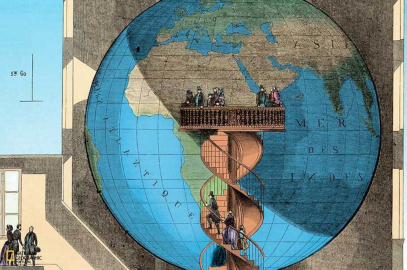
The seminar will explore what I term "immersive techniques"—rhetorical, visual, and multimedia strategies that construct alternative realities around readers or observers, transporting them beyond their here and now. I argue that such techniques were fundamental to the circulation of scientific knowledge in both modern and late modern Europe. They were crucial because no other technique so directly addressed the scientist’s need —whether an experimental philosopher of the Royal Society, an optical theorist, or an Arctic explorer— to convey what he had seen, discovered, or experienced to those who were not physically present. Distant audiences were thus turned into virtual witnesses and drawn into the scientist’s own experiential and intellectual world.This process served a dual function. First, it worked to legitimize the scientist’s work and establish his credibility. Second, it allowed for precise control over how recipients engaged with the object of inquiry—guiding their gaze, shaping their perception, and framing their understanding through the scientist’s own analytical and interpretive lens. In this respect, they were far more effective than a generic text or a simple illustration, as the immersive effect made it easier for the public to adopt the scientist’s point of view and identify with him. As a result, the public was enabled to trust him at a distance through imagination, or, later on, to assimilate his theories or discoveries through the sensory impressions provoked by immersive virtual environments.
Ilaria Ampollini is Assistant Professor (tenure-track) of History of Science at University of Ferrara, Italy. She was previously a member of the ERC Advanced Grant An-Iconology: History, Theory, and Practices of Environmental Images, at University of Milan. Her research mainly deals with the material and visual history of science popularization and education. Thanks to a Labex Hastec grant (IHMC/Paris 1), she has extensively worked on understudied primary sources, such as science-themed educational board and card games (17th – 19th century). Her articles have been published in international journals like Public Understanding of Science (2019), Nuncius (2019), Centaurus (2024), Archives Internationales d'Histoire des Sciences (2024) and Early Popular Visual Culture (2025).