The research group Person–Environment Interaction in Risk and Resilience for Mental Health participates in the the Schizophrenia International Research Society (SIRS) annual conference
The research team Person–Environment Interaction in Risk and Resilience for Mental Health, led by Professor Neus Vidal Barrantes from the Department of Clinical and Health Psychology at the Universitat Autònoma de Barcelona, took part in the annual Schizophrenia International Research Society Conference (SIRS), held in Florence (Italy) from March 25 to 29, 2026.
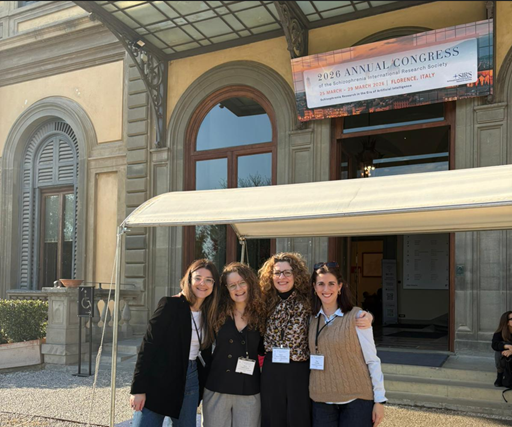
The Schizophrenia International Research Society (SIRS) is a leading international organization that brings together researchers and clinicians specializing in schizophrenia and other psychotic spectrum disorders. Its main objective is to promote the exchange of scientific advances, foster international collaboration, and contribute to a better understanding of the impact of these disorders on society.
During the conference, the group presented several studies related to its research lines, focusing on the interaction between environmental, psychological, and genetic factors in the development of subclinical manifestations of the psychotic spectrum.
In an oral presentation, predoctoral researcher Valeria Lavín presented the study titled “Beyond Vulnerability: Schizophrenia Polygenic Risk as a Marker of Environmental Plasticity,” which examines the role of polygenic risk for schizophrenia as a marker of environmental plasticity in young adults. This innovative approach suggests that this marker, traditionally interpreted in terms of risk, may actually reflect greater sensitivity to the environment, moderating the effects of early experiences—both adverse and positive—not only on transdiagnostic psychopathology but also on positive traits such as creativity. These findings broaden the conventional understanding of risk and highlight the importance of considering both adverse and positive experiences in psychosis research.
The group also presented three scientific posters. Dr. Neus Vidal presented the poster “Time to Incorporate Positive Experiences and Outcomes in Psychosis Research. Genetic Sensitivity to the Environment works ‘for Better and for Worse’,” which showcased results from a study recently published in Translational Psychiatry. This work examines the role of genetic sensitivity to the environment, extending previous studies on the Differential Susceptibility model in psychosis. The study shows that such sensitivity not only increases risk in the face of adverse experiences but also enhances the benefits of positive environments, influencing both the manifestation of psychopathology and indicators of positive mental health.
Dr. Pilar Torrecilla presented the study “Daily-Life Expression of the Early Psychosocial Exposome in Subclinical Psychosis: The Mediating Role of Attachment,” which analyzes how early psychosocial experiences are associated with how individuals interpret their social environment and experience psychotic and affective symptoms in daily life, considering the mediating role of attachment. This work was selected as a finalist for the conference poster awards, recognizing its scientific quality and relevance in the field.
Finally, predoctoral researcher Karen Fagián presented the study “The Role of Positive and Adverse Early Experiences in Shaping Responses to Recent Life Events Across the Extended Psychosis Phenotype,” which analyzes how early experiences—both positive and adverse—influence responses to recent life events across the psychosis continuum.
The group’s participation in this international conference reinforces its commitment to research and its contribution to advancing knowledge on risk and resilience factors in psychotic spectrum disorders. The results presented contribute to the development of integrative models that consider the complex interaction between individuals and their environment in mental health.