Victoria Reyes-García joins UNESCO panel on climate resilience in marine protected areas
Victoria Reyes-García, ICREA Research Professor at ICTA-UAB participated in an international gathering in Helsingør, Denmark (5–8 October 2026) to develop good practice guidelines for assessing climate vulnerability and strengthening resilience in marine protected areas (MPAs) globally.
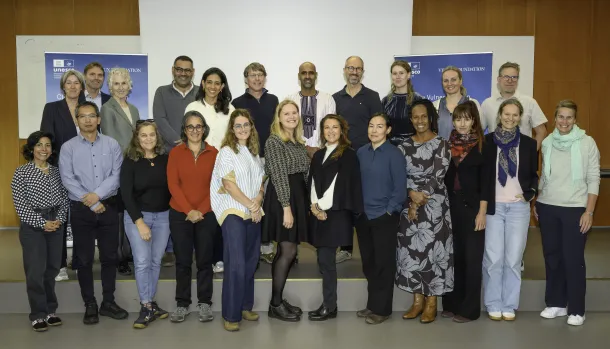
The International Expert Working Meeting marked a key milestone in the project Towards Climate Solutions for the Safeguarding of Marine Protected Areas, led by the Intergovernmental Oceanographic Commission (IOC) of UNESCO in collaboration with the UNESCO World Heritage Centre. The IOC hosted the meeting at its Science and Communication Centre on Harmful Algae, in cooperation with the University of Copenhagen.
The meeting brought together experts in climate and ecosystem modelling, Indigenous and local knowledge, MPA management, climate adaptation, and representatives from pilot sites, alongside members of the project’s International Advisory Board, including ICTA-UAB researcher Victoria Reyes-García. Together, participants developed the first comprehensive guidance to help MPA managers globally assess climate vulnerability and risk, identify priority adaptation measures and pathways to build resilience, and translate these findings into on-the-ground action with the appropriate financing and governance support.
The three-year initiative contributes to global efforts to adequately protect marine biodiversity in a rapidly changing ocean and advance the conservation of at least 30% of the ocean by 2030 under the Kunming-Montreal Global Biodiversity Framework. The work supports the implementation of the IOC Strategy for Sustainable Ocean Planning and Management (SOPM), which promotes a more strategic, future-oriented whole-of-society and whole-of-government approach to ocean planning and management, grounded in science, data and knowledge.
The central focus of the meeting was ensuring the guidance is practical and adaptable across diverse ecological, cultural, and resource-limited contexts. Discussions emphasized combining scientific data with Indigenous and local knowledge, ensuring local communities are meaningfully involved throughout the assessment process.
First-hand experiences from pilot MPAs—such as the UNESCO World Heritage sites of Banc d’Arguin National Park (Mauritania), Ilulissat Icefjord (Greenland), and the transboundary Wadden Sea—demonstrated how these assessments help integrate adaptation measures into management plans, unlock climate financing, and guide dynamic management as ocean conditions change.
A comprehensive draft of the guidance will be tested on-the-ground at the pilot sites and circulated in February 2027 through regional MPA networks (including MedPAN and WIOMPAN) for wider feedback. Financed by the VELUX FOUNDATION, the project runs through December 2028.