Professor Giorgos Kallis brings the post-growth perspective to the Tokyo Forum 2025
ICREA researcher at ICTA-UAB, Giorgos Kallis, participated as a featured speaker at the Tokyo Forum 2025, held at the Yasuda Auditorium of the University of Tokyo. The event, jointly organized by the University of Tokyo and the Choi Jonghyun Academy of Social Sciences (South Korea), brought together researchers, business leaders, and institutional representatives to discuss the current challenges facing capitalism and explore its possible future transformations.
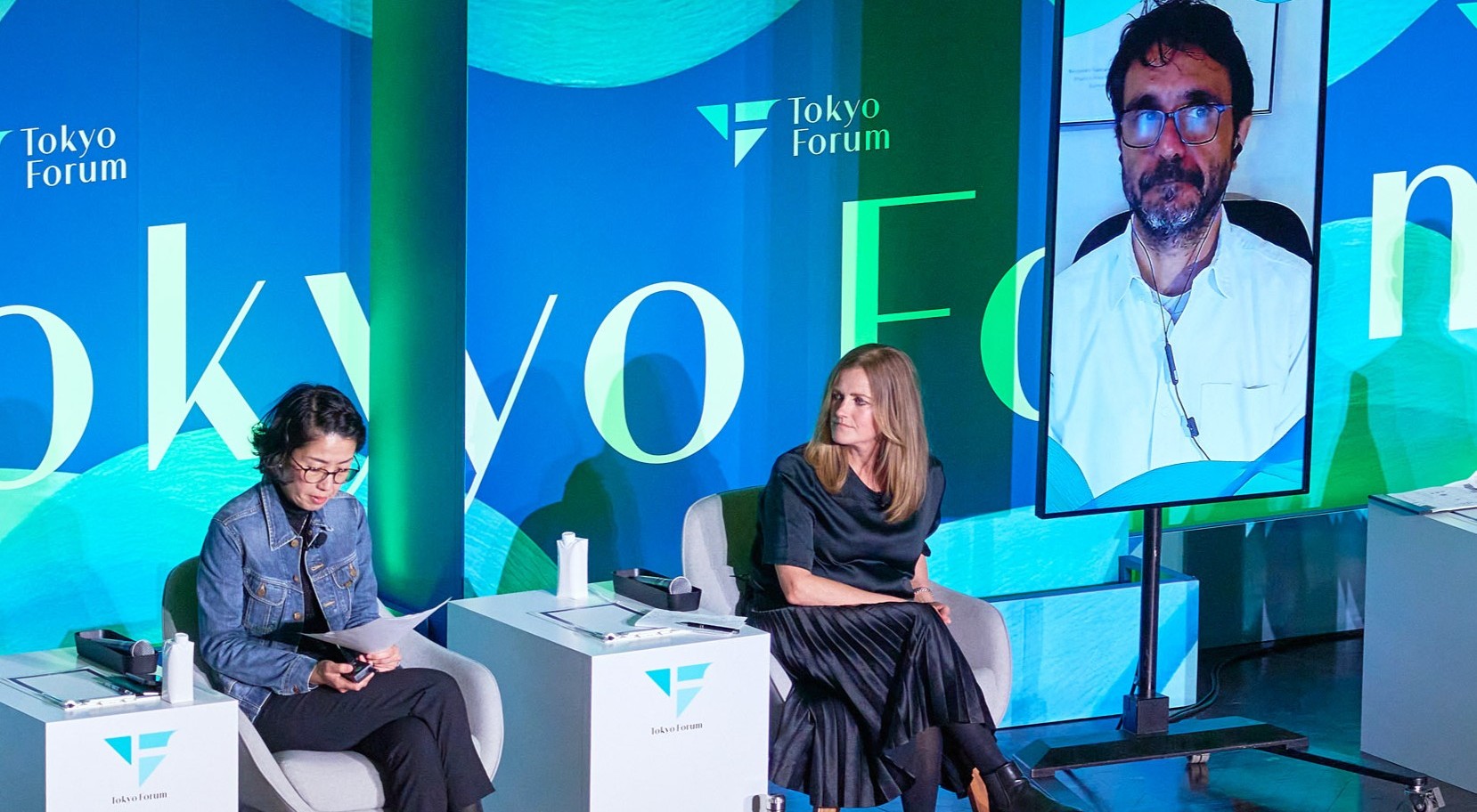
In its seventh edition, titled “Rethinking Capitalism: Diversity, Contradictions and the Future,” the debate focused on rising economic inequalities, the climate crisis, and the need to rethink the dominant economic model in a context of global uncertainty. Within this framework, Giorgos Kallis’ contribution stood at the center of one of the forum’s key discussions: the transition towards post-growth models capable of ensuring human well-being within the planet’s ecological limits.
Post-growth as a proposal for a transformed capitalism
During the roundtable session entitled “Creating Future Social Change: Society Beyond Degrowth and the Well-being Economy,” Kallis argued that post-growth does not imply impoverishment or regression, but rather a redefinition of progress. As he explained, the goal is to achieve high levels of well-being—understood as physical, mental, and social fulfillment—while respecting planetary boundaries and drastically reducing dependence on fossil fuels.
The ICTA-UAB researcher emphasized the need for a profound energy transition based on renewable energy, efficient public transport, low-energy housing, and more localized systems of production and consumption. He also stressed that such transformation must be accompanied by social justice, ensuring the satisfaction of basic needs and eliminating the exploitation of socially disadvantaged groups.
Kallis presented research findings suggesting that it would be possible to secure decent living standards for a global population of 9 billion people with a fraction of current energy use, provided that efficient infrastructures are prioritized and economic models are oriented toward collective well-being rather than unlimited growth.
ICTA-UAB’s contribution to the international debate
Giorgos Kallis’ participation in the Tokyo Forum 2025 strengthens ICTA-UAB’s presence in major international debates on sustainability, ecological economics, and environmental justice. His intervention provided a solid scientific perspective on the future of capitalism, positioning post-growth as a viable and well-founded response to the climate crisis and structural inequalities.
At a forum that brought together leading voices from Asia, Europe, and the United States to discuss potential reforms of the economic system, Kallis’ contribution stood out for offering a transformative framework that combines academic rigor, social commitment, and ecological feasibility.
Through his participation in Tokyo, ICTA-UAB further reinforces its role as a leading center for critical research on economy, sustainability, and socio-ecological transition, actively contributing to global debates on how to build more just and environmentally responsible societies.