

When a blood test tells more than expected
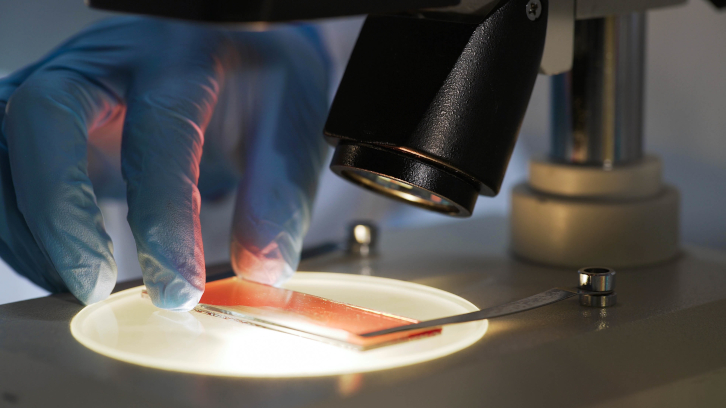
Researchers at the Faculty of Veterinary Medicine of the UAB conducted a study analyzing feline blood samples. The results and analysis have shown a higher-than-normal presence of the fibrin protein, which can indicate disorders related to blood clotting. The study highlights the importance of continuing to use a direct analysis of blood smear to find relevant clinical phenomena.
In our article published in Veterinary Clinical Pathology, we present an atypical WDF scattergram from the Sysmex XN-1000V in a feline peripheral blood sample. The WDF (white blood cell differential) scattergram is a representation generated by flow cytometry that displays leukocyte populations according to their cellular complexity (X-axis) and fluorescence signal (Y-axis). This distribution allows the different leukocyte types to be classified, and reviewing the scattergram helps assess the reliability of the analyzer-reported count as well as detect atypical cell populations or potential interferences. In this case, the unusual WDF cluster was attributed to abundant fibrin deposits, which were confirmed by special staining.
In the lower graphs a greater accumulation of points can be seen, related to the existence of fibrin in large quantities.
Fibrin is a key protein in the clotting process, appearing when blood begins to coagulate. The presence of visible fibrin strands may indicate preanalytical errors, such as partial clotting during sample handling, but may also reflect clinically relevant conditions such as thrombosis or other coagulation disorders.
To our knowledge, this is the first human or veterinary peer-reviewed report of fibrin strands and clumps alone,without significant platelet aggregation,associated with an atypical cluster on the Sysmex XN-1000V WDF scattergram. This finding enhances our ability to recognize abnormal patterns produced by these instruments and to differentiate technical artifacts from meaningful pathological signs.
This case highlights the importance of combining automated analysis with expert visual assessment. Despite advances in hematology technology, direct examination of blood smears remains indispensable for identifying phenomena that analyzers can only suggest. Ultimately, the partnership between advanced instrumentation and professional judgment deepens our understanding of what blood can tell us about animal health.
Javier Martínez-Caro
Veterinary Clinical Hematology Service
Department of Animal Medicine and Surgery
Universitat Autònoma de Barcelona
Josep Pastor
Veterinary Clinical Hematology Service
Department of Animal Medicine and Surgery
Universitat Autònoma de Barcelona
References
Martínez-Caro J, Chaves-Falcón L, Lemos M, Roura X, Bosch L, Pastor J. What Is Your Diagnosis? Abnormal WDF Scattergram From the Sysmex XN-1000V in a Cat. Vet Clin Pathol. 2025 Sep 19. https://doi.org/10.1111/vcp.70030. Epub ahead of print. PMID: 40973994.