The trace of mother’s milk in teeth: the Tooth Mouse discovers isotopes
Teeth—like a tiny “black box”—can preserve chemical clues about the first months of life. A study with participation of the Institut Català de Paleontologia Miquel Crusafont (ICP–CERCA), using controlled experiments with rodent mothers and pups, shows how breastfeeding leaves a detectable imprint in the carbon isotopes of tooth enamel.
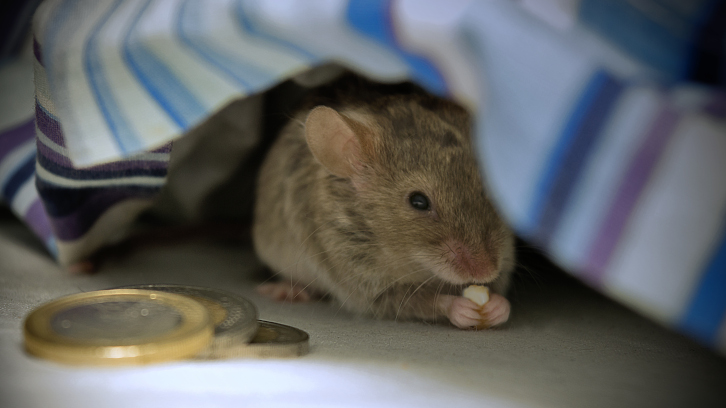
In Catalonia and in English-speaking countries, tradition speaks of the little tooth angels or fairies, but in many parts of Spain and across much of Latin America, a small mouse named “Ratoncito Pérez” works late every night: it collects the teeth children leave under their pillows and, in return, leaves a sweet or a small gift. But… what if Mr. Pérez, once back in its burrow, could read that baby tooth like a diary? It would find clues about a key stage of childhood: the transition from milk to solid food.
The key lies in isotopes. An isotope is a “variant” of an element such as carbon (C): it is still carbon, but with a different number of neutrons in the nucleus. Carbon‑12 (12C) is the most common form, while carbon‑13 (13C) is rarer and slightly heavier because it has one extra neutron. What really matters is that the ratio between these two isotopes can change depending on what we eat. That ratio becomes recorded in tooth enamel—the hardest tissue in the body—which, being almost entirely mineralized, preserves chemical information extremely well.
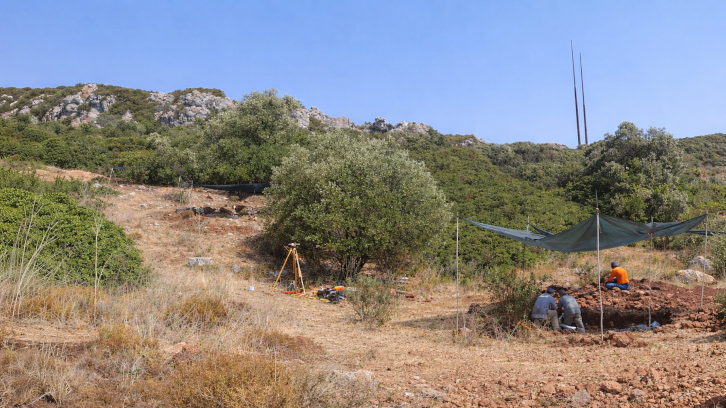
In our study published in iScience, with the team led by paleontologist Yuri Kimura from the National Museum of Nature and Science (Tokyo) and researcher at the Institut Català de Paleontologia Miquel Crusafont (ICP–CERCA), we carried out an experiment with mothers and pups of four rodents (hamster, mouse, rat, and gerbil) fed a controlled diet—i.e., chow with a known carbon‑isotope composition. During breastfeeding and weaning, the researchers tracked carbon “in circulation” by analyzing the carbon isotopes of CO2 in breath (an indicator of the carbon the body is metabolizing) and, later on, the carbon isotopes in the enamel of the three molar teeth these rodents have.
Because molars appear one after another, each tooth captures a different moment: the first molar forms mainly while the pup is still nursing; the second forms when it starts nibbling chow but still drinks milk; and the third forms when the diet is mostly “adult”. The results show that mother’s milk leaves a signal in the teeth that form earlier: they contain less 13C than the teeth that form later. How much less? Up to 4 per mil—a very small difference, but one that can be measured with a mass spectrometer. The weaning signal also shows up as a gradual shift in the 13C/12C ratio along the molar series. And here is the key point: despite the dietary change (from milk to chow), the difference between the diet signal and the enamel signal stays almost constant. All three molars, from the first to the third, are consistently about twelve per mil higher in 13C than the diet consumed. This matters because it tells us the “thermometer” does not change its scale as the animal grows. So, when a tooth shows lower 13C, we can attribute that mainly to what the animal was eating (more milk or more chow), rather than to some mysterious change in body chemistry or metabolism.
Stable carbon isotopes are widely used in archeology and paleontology to reconstruct animal diets and, from there, infer vegetation and climate. The isotopic composition of the teeth of an antelope feeding on fruits and leaves in a tropical forest is very different from that of a relative grazing on grasses in open grassland. However, researchers usually analyze teeth that form later (such as third molars) to avoid the breastfeeding effect. In rodents, that is not always possible: most teeth form while pups are still nursing, and the third molar is often too small to be analyzed reliably. Our study makes it possible to quantify the milk effect and reconstruct diets with greater confidence—even in fossil rodents. In other words: if the Ratoncito Pérez analyzed the isotopes in the teeth it collects, it could read a small chronicle of childhood written in enamel.
Institut Català de Paleontologia Miquel Crusafont (ICP-CERCA)
References
Kimura, Y., Cerling, T. E., Yamada, K., Seki, A., Casanovas-Vilar, I., Flynn, L. J., Jacobs, L. L. (2026). Dynamic tracking of breastfeeding and weaning in carbon isotopes of tooth enamel. iScience 29, 115350. https://doi.org/10.1016/j.isci.2026.115350