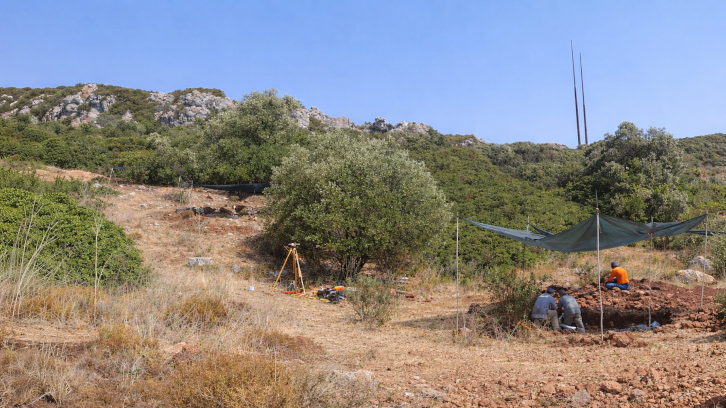

Re-creating learning at university: connecting classrooms with real-world territory challenges

Challenge-Based Learning promotes an educational model in which students learn by tackling real and complex challenges, connecting academic rigor with tangible impact on their environment. While the methodology is well received by students, it poses significant organizational challenges. Researchers at UAB have proposed an action plan to implement it throughout the entire educational process.
How can we ensure that university education directly responds to the real needs of our society? At Universitat Autònoma de Barcelona (UAB), we strongly believe that students cannot learn disconnected from social, economic, and environmental realities. For this reason, we promote Challenge-Based Learning (CBL), a methodology that transforms our classrooms by engaging students in solving complex problems proposed by local councils, social entities, and companies.
Within the framework of the RE-CREAT project (funded under the 2024 Call for Grants for Teaching Innovation and Quality Improvement Projects), we analyzed how CBL works across our university. We found that this learning approach generates immense enthusiasm. For students, working on real challenges greatly boosts motivation, enhances critical thinking and teamwork, and directly increases employability by allowing them to showcase real-impact projects in their CVs. For educators, it builds a closer, more human, and supportive relationship with students.
However, we also identified significant hurdles: CBL entails a heavy workload for teaching staff, encounters rigid schedules, requires evaluating complex teamwork, and demands continuous coordination with external partners. To prevent CBL from relying solely on individual goodwill, we designed a structured action plan covering all educational stages.
Key proposals include creating a CBL Technical Unit acting as a single point of contact to handle legal agreements and partner relations, relieving faculty members of administrative burdens. We also propose dedicated timetable slots, diagnostic tools accompanied by learning nuggets to align student skills, and formal institutional recognition for teaching dedication.
Through these improvements, we aim to consolidate an open, flexible, and community-engaged university model where academic excellence and social commitment go hand in hand.
David Rodríguez-Gómez
Departament de Pedagogia Aplicada
Universitat Autònoma de Barcelona
David.Rodriguez.Gomez@uab.cat
Sílvia Blanch Gelabert
Departament de Psicologia Bàsica, Evolutiva i de l’Educació
Universitat Autònoma de Barcelona
Silvia.Blanch@uab.cat
References
Rodríguez-Gómez, D., Gelabert, S. (Coord.). Propostes de millora del model d’Aprenentatge Basat en Reptes desenvolupat a la UAB. Disponible a: https://ddd.uab.cat/record/337277
Blanch-Gelabert, S. (coord), Galdames Calderón, M., López Crespo, S., i Rodríguez-Gómez, D. (coord). Re-creant l’Aprenentatge Basat en Reptes a la UAB: desafiaments i beneficis. Informe de Resultats. Disponible a: https://ddd.uab.cat/record/335369