
Evaluating mathematical tools for a more accurate diagnosis of multiple sclerosis
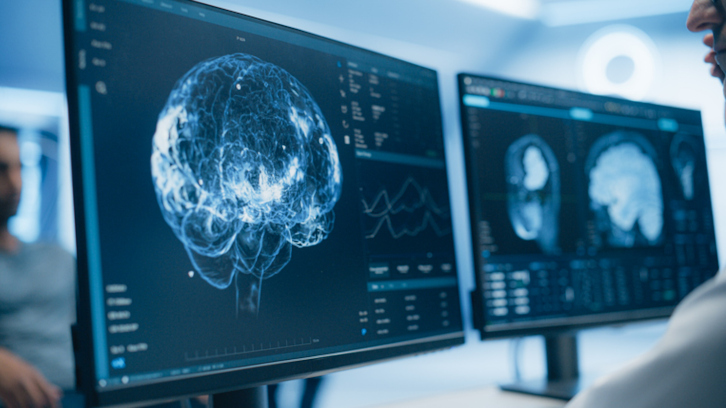
A study from the Computer Science Department evaluates the effectiveness of topological analyses and graph’s theory in extracting relevant information that allows for more accurate identification of characteristics features of the brain in patients with multiple sclerosis. The results highlight the potential of topological data for enhancing the understanding and diagnosis of neurodegenerative disorders.
In this study, we explore how brain connections change in people with multiple sclerosis (MS) using different magnetic resonance imaging techniques. MS is a neurodegenerative disease that disrupts communication between brain regions, and our goal is to better understand these changes in order to advance towards more accurate diagnostic and monitoring tools.
To do this, we work with three complementary sources of brain information: structural connectivity obtained through diffusion imaging, which reflects the state of white matter; morphological networks derived from grey matter; and functional connectivity, which shows how brain regions coordinate their activity.
From these modalities, we construct networks in which brain regions are nodes and connections are edges. To analyse them, we compare two approaches: on the one hand, classical graph-theoretical metrics, which describe the importance and role of each region in global communication; and on the other, algebraic topological techniques, particularly Betti curves, which capture more complex and persistent connection patterns across different scales.
We also study two ways of integrating the information: analysing each modality separately or combining them into a multilayer network, which allows us to represent structural, morphological, and functional data simultaneously.
The results reveal three main conclusions. First, we observe that structural connectivity is the modality that best helps us distinguish people with MS from healthy volunteers, likely because the disease affects white matter early on. Second, we find that multimodal integration, whether through feature concatenation or multilayer networks, improves performance compared to using a single modality. Finally, we see that topological tools slightly outperform graph metrics, as they detect more subtle and robust global patterns.
Although we also test graph neural networks (GNNs), their performance does not exceed that of the other approaches, probably due to the limited number of participants.
Overall, our results show that combining different MRI modalities and using topological tools can provide a more comprehensive view of the brain alterations associated with MS. We believe that this line of work may contribute to the development of more sensitive biomarkers for diagnosis and monitoring, and that it could be valuable for studying other neurodegenerative disorders as well.
Jordi Casas Roma
Department of Computer Science
Universitat Autònoma de Barcelona
jordi.casas.roma@uab.cat
Toni Lozao Bagén
Department of Computer Science
Universitat Autònoma de Barcelona
antonio.lozano.bagen@uab.cat
References
Lozano-Bagén, T., Martinez-Heras, E., Pontillo, G., Solana, E., Vivó, F., Petracca, M., Calvi, A., Garrido-Romero, S., Solé-Ribalta, A., Llufriu, S., Prados, F. and Casas-Roma, J. (2025) Evaluating topological and graph-theoretical approaches to extract complex multimodal brain connectivity patterns in multiple sclerosis. Health Information Science and Systems, Vol. 13, N. 68. https://doi.org/10.1007/s13755-025-00386-y