
Detecting the piglets’ post-weaning diarrhoea syndrome
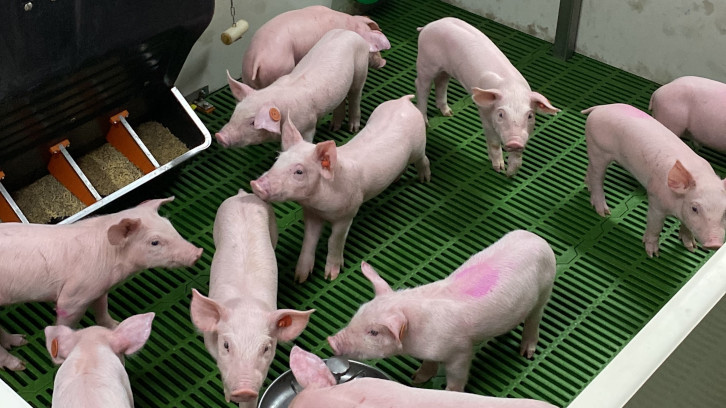
Researchers of the Department of Biochemistry and Molecular Biology and the Department of Animal and Food Science recently conducted a study using pig faeces to identify biomarkers that could address the urgent need for early and reliable diagnosis of post-weaning diarrhoea syndrome. They ensure that knowledge of these variables is essential for the sustainability of veterinary practices and for the health and well-being of piglets.
Early weaning in piglets carries a considerable risk to their subsequent health. It often triggers intestinal alterations that predispose to high morbidity, growth retardation and, in extreme situations, death. For years, this syndrome was kept under control with antimicrobials and antibiotics, but current restrictions on their use have left the sector with fewer tools and with the urgent need to anticipate the problem. Early diagnosis, before the onset of clinical symptoms (diarrhoea), would allow the application of alternative control measures such as nutritional and management strategies, which would improve piglet resilience, reduce reliance on antibiotics and, ultimately, contribute to the broader goal of promoting sustainability in food production and the safety of animal-derived foods.
To have early diagnostic tools, it is necessary to have adequate analytical parameters. In this context, the analytical validation of the techniques for determining these parameters is essential to verify that these techniques give reliable results, in this case in the porcine species. In this work, we have validated the techniques for determining several biomarker molecules as indicators of intestinal inflammatory processes, causing diarrhoea. In the context of intestinal health, faeces are a sample of choice to determine these inflammatory markers released in the intestinal content. The advantage of this type of sample is that it non-invasive since faeces can be collected easily, quickly and without causing stress. In this study, we validated the analytical procedures to measure the following biomarkers in porcine faecal samples: calprotectin (fCal), lipocalin-2 (LCN-2), myeloperoxidase (MPO) and adenosine deaminase (ADA). Validation was carried out by studying several characteristics: precision (intra- and interassay coefficients of variation), linearity, recovery and limits of detection and quantification. All biomarkers met the required validation parameters. In addition, we analysed their distribution in faeces and found that all of them, except LCN-2, were homogeneously distributed in the faecal sample. The stability of the compounds at different storage temperatures was also evaluated, and fCal was found to be the most stable parameter in general.
Knowledge of these variables is essential for the use of these biomarkers in veterinary practice. In parallel studies, we have demonstrated the validity of fCal and LCN-2 as early markers of post-weaning diarrhoea in piglets, before the appearance of clinical symptoms. We hope that, thanks to these studies, carried out in collaboration with the Servei de Bioquímica Clínica Veterinària (SBCV) and the Animal Nutrition and Welfare Service (SNiBA), the determination of intestinal inflammatory markers in faeces will become widespread and contribute to improving the health and well-being of piglets, as well as to reducing the use of antibiotics and the sustainability of pig production.
Servei de Bioquímica Clínica Veterinària (SBCV)
Department of Biochemistry and Molecular Biology
Faculty of Veterinary Medicine
Universitat Autònoma de Barcelona
References
Pelegrí-Pineda, A; Pato, R; Peña, R; Suppi, J; Llauradó-Calero, E; Solà-Oriol, D; Bassols, A; Saco, Y (2025). Fecal intestinal inflammatory biomarkers in piglets: analytical validation, homogeneity and stability studies. Veterinary and Animal Science 30:100523 https://doi.org/10.1016/j.vas.2025.100523