Aging and loneliness cost us energy: how demographic changes are slowing down efficiency in Spanish households
A recent study conducted by the Department of Economics and Economic History points to the changes in household composition to explain why the residential energy consumption is not decreasing as much as might be expected. The main contribution is to create a method that does not require assumptions about how variables, meaning types of households, relate to each other.
The study's main contribution is methodological. We developed a tool called IADCP (Integrated Analysis of Demographic and Consumption Profiles), which, unlike conventional models, does not treat all households as a unit. Instead of analyzing residential consumption as a homogeneous group, the method combines data from the Household Budget Survey with that of the Population Census, allowing researchers to calculate how much energy each group—single-person households, older couples, families with children—consumes and how that consumption has changed over time. The advantage is that it doesn't require assumptions about how variables relate to each other, thus avoiding errors common in traditional econometric models.
Applying this method to Spain between 2006 and 2023, we reached a striking conclusion: technological advances and behavioral changes reduced residential energy consumption by 17.91%. But at the same time, demographic changes increased it by 10.07%, resulting in a net real reduction of just 6.71%. In other words, almost two-thirds of the savings achieved vanished due to changes in our lifestyles.
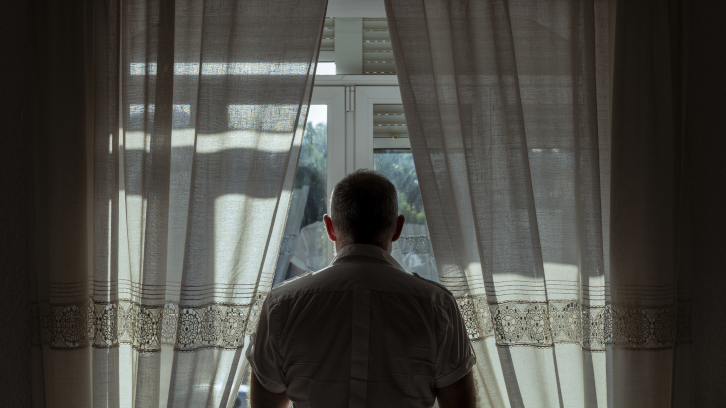
This 10.07% loss of efficiency can be broken down into two mechanisms. The first is the increase in the number of households: although the population grew by 16% between 2001 and 2021, the number of households grew by 30%, representing an additional 6.78% in energy consumption. The second mechanism is the change in the composition of these households: there are increasingly more people living alone and more households headed by older people, who tend to consume more energy per person. This explains the remaining 3.30%. The households that have seen the greatest increase in total consumption are those headed by an older person living alone and those of couples in which at least one partner is over 65, precisely the groups that are growing most rapidly.
The impact is not uniform across the region: in the Mediterranean region, the growth in the number of households has a greater impact, while in the North Atlantic, changes in composition predominate, with more small and aging households despite minimal population growth.
Given this diagnosis, we propose several public policy recommendations. First, we point to the need to promote smaller homes and cohousing models, that is, spaces where several people share resources without sacrificing a degree of independence, thereby restoring lost economies of scale and combating the isolation of older people. Secondly, we advocate for differentiated policies that facilitate access to efficient heating systems for lower-income households, as these are more responsive to economic incentives than to price signals. Finally, we recommend awareness campaigns specifically targeting older people, focusing on health benefits rather than economic or environmental savings, since they are the group that invests the least in new technologies and whose demographic weight will continue to grow in the coming decades.
Department of Economics and Economic History
Institute of Environmental Science and Technology
Universitat Autònoma de Barcelona
References
Ramos-Martín, J. and Matsumoto, S. Impact of changes in the distribution of household types on residential energy consumption in Spain, 2006-2023, Energy and Buildings, Vol. 358, 117250, https://doi.org/10.1016/j.enbuild.2026.117250