Career pathways of the first promotion of Biomedical Sciences
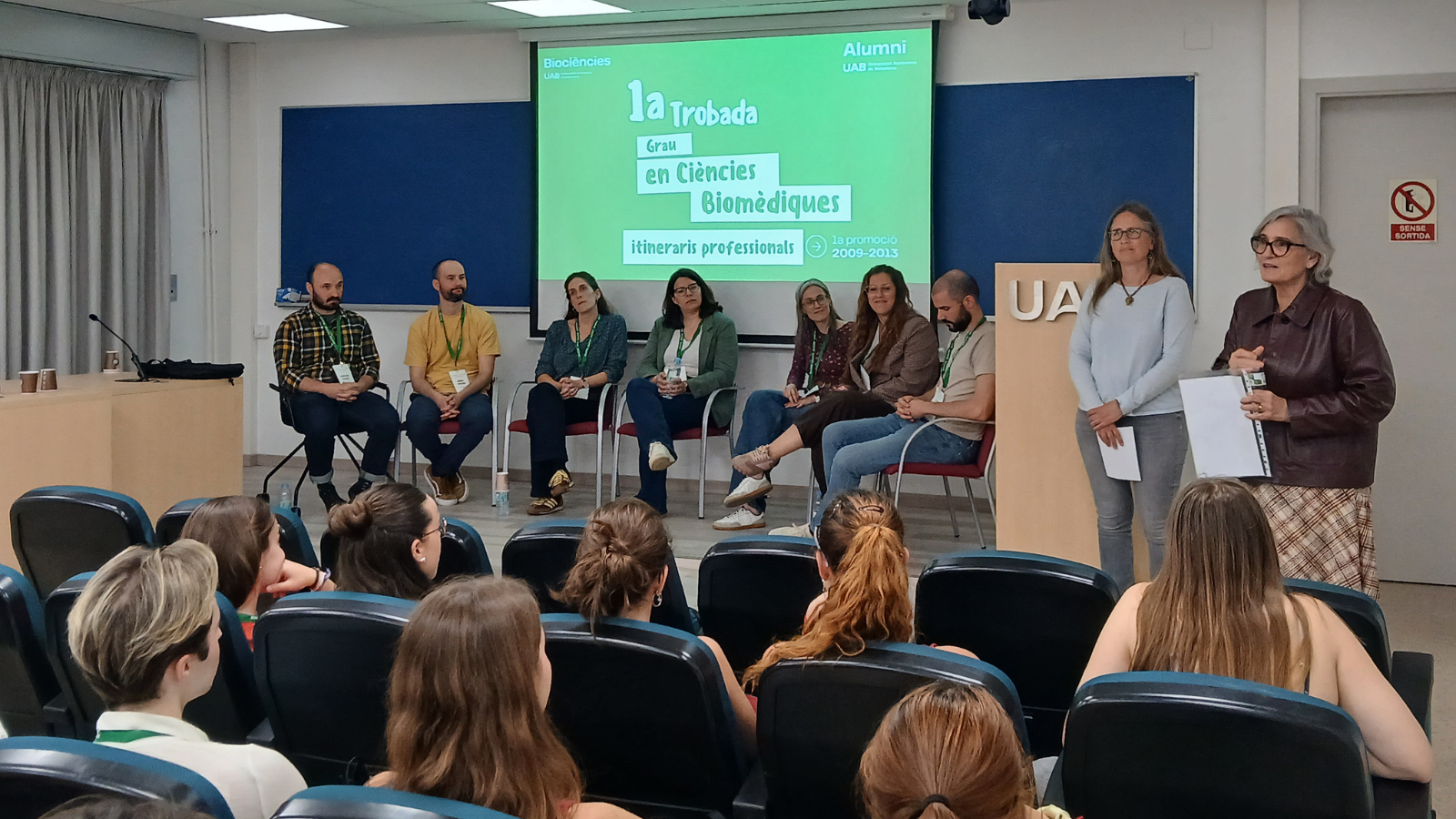
Alumni from the first cohort of Biomedical Sciences return to the classroom to share their career paths and advice with students. The meeting highlights the importance of lifelong learning, perseverance, and the diversity of professional trajectories.
24/04/2026
The diversity of career paths, key to inspiring new graduates.
Career opportunities are far more numerous than one might expect when starting a degree, and some even remain unknown by the time students graduate. One of the best ways to discover the available options after finishing university studies is to meet professionals from the field who can explain their work, their career paths, and what they have done to reach their current positions. This was precisely the aim of the meeting with students of the Biomedical Sciences degree.
The objective of this first edition, organised with more than a dozen graduates from the first cohort (2008-2013), was for them to share openly everything that has been part of their professional journey: doubts, difficult decisions, successes, disappointments and, above all, the importance of continuing to move forward while looking to the future.
Mercè Martí, coordinator of the Biomedical Sciences degree, highly values this first meeting: Career pathways of the first cohort (2008-2013). She expresses her gratitude to the alumni speakers —Pau Atienza, Anna Martínez Muriana, César Cordero Gómez, Bea Canals, Mònica Carreras, Ainoa Córdoba Giménez, Carlos Duque Afonso, PhD, Gemma Gómez Giró, PhD, Oriol Pavón Arocas, PhD, Clara Pons Duran, Anna Rechi and Carla Vila de la Puente— for their generosity and openness in sharing their experiences.
“It is especially inspiring to see how our alumni are now advising current students and, in many cases, may also become future employers and create opportunities for new graduates to begin their own professional paths,” she notes.
Among the key ideas discussed, Martí highlights the importance of degree specialisations and a solid understanding of core concepts, as these can be decisive when selecting among candidates.
Regarding job searching, participants were reminded that looking for a job is a job in itself: tailoring your CV is essential, many applications need to be sent to receive responses, and if there is a particular interest in a company, it is advisable to follow up periodically, for example every six months.
Other points raised by the alumni included that a PhD is not essential to find employment —although it can be an advantage in certain environments—, the importance of daring to take steps forward even if they are not initially a priority, the need to find time to disconnect outside of work, and the importance of continuous learning despite moments of doubt and uncertainty.
In summary, it was an enriching event featuring alumni who represent the diversity of possible career paths and who serve as real role models to help students shape their future and make more informed decisions.
Preparations are already underway for next year’s meeting, where final-year Biomedical Sciences students will be able to learn about the career paths of graduates from the second cohort (2009–2014) and ask their questions. “I am confident it will be just as interesting as the first edition,” concludes the coordinator.