Interview with Patricia Aymà, Biotechnology graduate '15
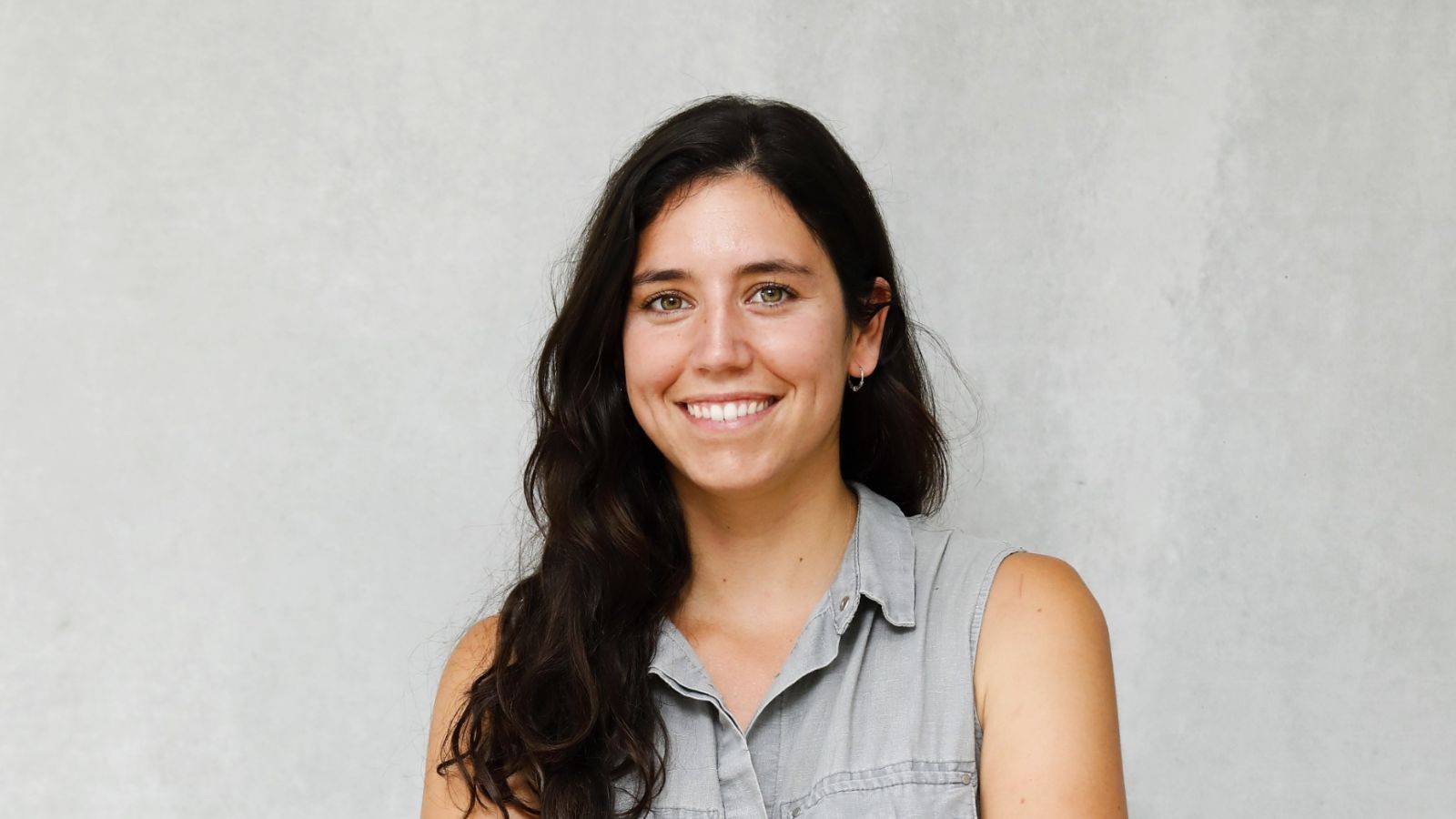
“Society needs to be willing to pay for the changes it demands.”
“Entrepreneurship enriches you on every level and enables you to drive real actions to solve problems.”
30/06/2026
Patricia Aymà, bacteria trainer, President and CTO of Benviro, is an alumni of the Biotechnology degree and a mentor in the UAB Mentorship Programme since its first edition. In 2026, she received the Princess of Girona Foundation CreaEmpresa Award, in recognition of her leadership in using science to redesign the materials of the future, her impact in the field of sustainable biotechnology, and her entrepreneurial track record.
– Congratulations! What has the 2026 Princess of Girona CreaEmpresa Award meant to you?
Many things: visibility for the company and also on a personal level. I’ve been chosen as a role model, which is hard to believe at first because you don’t think you’re doing things better than others. It’s a recognition of the work of explaining what we do and how we do it, and perhaps also of inspiring others. I trust that some girls, when they see me, will consider that they too can do things they had never even imagined before because they lacked role models. We need many more female role models.
– What made you decide to develop 100% biodegradable bioplastics from organic waste?
When I was studying Biotechnology, I fell in love with bacteria. I realised they have enormous potential: they can take part in processes to generate products and services that improve the environment. I felt it needed to become a reality—that the idea should have an impact on society—and to do so through a company. It became my purpose.
– What is your purpose today?
To develop products and services that help improve the planet through the use of bacteria, with the aim of eliminating the negative effects of microplastics on health and the environment.
– Do you believe in science as a driver of change?
100%, in every area of life. I like applying the scientific method to everything—it’s a true driver of change.
– How is this method applied in practice?
It involves creating hypotheses, gathering data, analysing it, drawing conclusions, and then formulating new hypotheses.
– Beyond science, what else is needed?
Society needs to be willing to pay for the changes it demands. The market is driven by price. We can create innovative and sustainable products, but innovation is often associated with higher costs. There is a lot of R&D behind bioplastics, which offer properties that petroleum-based plastics do not, so they cannot cost the same. Cheaper plastics do not include the externalised costs that society ultimately pays. They may seem cheaper, but in the long term they are more expensive.
– What are the main challenges of sustainability?
Breaking the price barrier and ensuring that the real value is perceived. Nature does not recognise petroleum-based plastics and cannot degrade them, just as our bodies do not recognise the accumulation of microplastics in the brain, ovaries, or placenta. This leads to inflammation—they are foreign elements in our bodies. Research supports the shift towards sustainability, but it is essential for society to understand that organic plastics will biodegrade, and that comes at a cost. To break the price barrier, strong communication and marketing campaigns are needed. That’s why I focus on outreach, explaining the great potential of bacteria to produce better products and services.
– At Benviro, you train bacteria to produce bioplastics. How does that work?
We isolate bacteria from their natural environment, transform them, and train them to produce bioplastics. We place them in a reactor and feed them organic waste in the exact quantities they need to produce the best bioplastics. It’s circular economy: we turn waste into raw material to create a final product.
– What challenges have you encountered?
We started in 2018 with the goal of producing a single material, and we achieved it in 2023. Then we realised that in the plastics sector, relying on a single material is not a competitive advantage—it actually limits opportunities. From there, we had to develop bioplastics with different properties. The key is adapting to market needs. Now we are experts in producing a range of biodegradable bioplastics.
– Are you currently facing other obstacles?
Yes, market price. It is crucial that the economic value of organic materials is properly understood.
– What is the most rewarding part of entrepreneurship?
Seeing how small steps add up to a meaningful result. The beauty of entrepreneurship is that you grow as a person on every level. You deal with many different areas—research, human resources, accounting—and even if you’re not directly responsible, you need to understand them to make decisions. Entrepreneurship enriches you in every way and allows you to drive real actions to solve problems.
– Would you recommend becoming an entrepreneur?
Not to everyone. There are very tough moments. You often have to find your best version of yourself, learn continuously, keep training, and be self-critical—it’s a humbling experience. You may end up with nothing or go months without earning an income. I recommend it as a life experience if you’re willing to take risks.
– You are still connected to UAB as a mentor since the first edition of the Mentorship Programme. What motivated you to take that step?
I enjoy helping and sharing knowledge. When you gain experience, you’ve already solved many doubts and questions. If your perspective can help others feel less insecure and better informed when making decisions, it’s worth doing.
– When you chose to study Biotechnology, did you already know what you wanted to do?
I imagined myself working with bacteria at any level. When I was in high school, I attended a fair where Biotechnology students explained they were modifying bacteria to produce a protein that would be added to rice as a nutritional supplement for developing countries.
– How do you remember your years as a student at UAB?
Very positive. I learned a lot, I remember the quality of the teaching staff, and I also experienced significant personal growth.
– Now that you are still in contact with students, how would you describe their entry into the job market?
We are in a very competitive world where everyone has access to information and knows how to present themselves, but I often see expectations that don’t match their level of knowledge. Universities should better explain how the labour market works: you earn more if you bring greater added value, work more hours, or take bigger risks. Otherwise, you follow standard market rules. Today, even junior roles require a lot of experience, which makes things difficult. That’s why, if they have the opportunity to do internships—even if they are low-paid or unpaid—they should see them as an investment, because getting a foot in the door is not easy.
– You are a role model for new generations. Did you have any role models yourself?
I always looked up to Marie Curie, although she felt very distant. More than scientific role models, I had role models from the tech world, such as Sheryl Sandberg, former COO of Meta. There is a lack of scientific role models pushing the sector forward.