
The Groundhog Day of millions of years ago: Reconstructing climate using fossil rodents
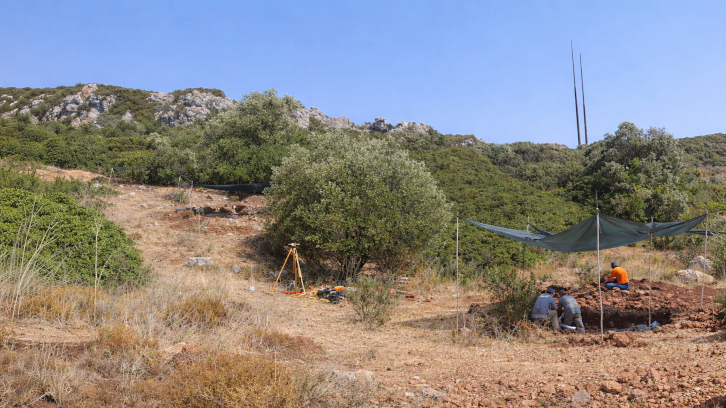
Small mammals are closely linked to climate, and their fossils allow scientists to reconstruct past precipitation and climatic conditions. A study by the Institut Català de Paleontologia Miquel Crusafont (ICP-CERCA) reveals that between 12.5 and 9 million years ago in the Vallès-Penedès region, rainfall was approximately twice as high as it is today, and the climate was subtropical.
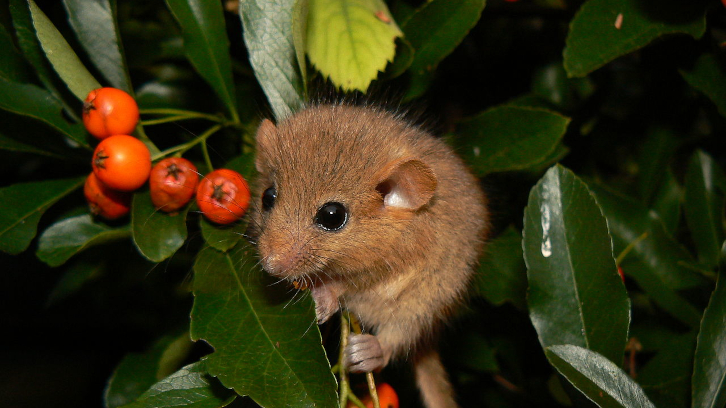
Every 2nd of February in the town of Punxsutawney (US), all eyes are on a meteorologist rodent: Phil the groundhog. According to tradition, if he sees his shadow when emerging from his burrow and retreats, winter will last six more weeks; if not, spring will arrive soon. This ceremony gained fame thanks to the movie Groundhog Day (1993), in which Bill Murray is doomed to relive the same day endlessly. But can rodents really predict the weather? Perhaps not exactly, yet they do have a close relationship with climate, which can help us reconstruct past climates.
Rodents, along with other small mammals such as insectivores (shrews, hedgehogs, and moles) and lagomorphs (rabbits and pikas), are among the most diverse and abundant mammals in today’s terrestrial ecosystems, and they were also in the past. In fact, large numbers of their fossilized remains are recovered in paleontological sites, allowing for statistical analyses. It has been observed that in wetter climates there are more arboreal and insectivorous species, as higher rainfall favours denser forests, rich in invertebrates. This link between small mammals and climate was first studied in detail by Jan van Dam, an associate researcher at the ICP. Van Dam developed equations to estimate both the average annual rainfall and how it was distributed across seasons, by looking at fossil small mammal communities.
Rainfall in the Vallès-Penedès basin was twice today’s level
At our ICP and UAB team, we have applied these methods to discover what the climate may have been like during the Miocene in the Vallès-Penedès Basin (the depression between the Pre-Coastal Range and the Coastal Range), between 12.5 and 9 million years ago. This record is exceptional: it includes hundreds of precisely dated sites from which more than 20,000 small mammal fossils have been recovered. The results indicate that over this interval of more than 2 million years, annual precipitation remained stable and quite consistently exceeded 1,000 mm (roughly doubling today’s levels), with little seasonality and without a clear summer drought.
Since the mean temperature was also higher, around 17–18°C, the climate would have been subtropical and more humid than the Mediterranean climate. It is difficult to find an exact analogue today, but it may have resembled the climate of eastern coastal Asia, such as southeastern China or southern Japan. These areas lie at the edge of the subtropics and are covered by dense, humid forests mixing deciduous and evergreen trees, such as cinnamon or certain types of bay trees.
By Tata Aka, with licence CC BY 2.0, via Wikimedia Commons.
In Catalonia, during the Miocene, various primates lived in this environment, including hominids and pliopithecoids, which went extinct around 9 million years ago, possibly due to climatic changes. Pliopithecoids were small arboreal primates, whereas hominids are the family that includes —besides humans— chimpanzees, gorillas, and orangutans, which today mainly inhabit tropical rainforests. During the Miocene, they were widespread across Europe and Asia and certainly lived in habitats that would be too harsh for modern species. So, what led to their extinction? It is possible that rather than living comfortably, they ‘struggled’ for survival in the wetter areas of subtropical forests, generally near small lakes, where most fossils are found. If so, even a small change, such as slightly lower temperatures or a more severe drought, could have led to their definitive extinction. For now, this remains a hypothesis, but new studies are expected to provide answers. Perhaps the ancestors of Phil the groundhog have not yet had their final say.
Isaac Casanovas-Vilar
Uxue Rezola Rodríguez
Institut Català de Paleontologia Miquel Crusafont (ICP-CERCA)
References
Casanovas-Vilar, I., van Dam, J., Angelone, C., Furió, M., García-Paredes, I., van den Hoek Ostende, L. W., Alba, D. M. (2026). Micromammal-based paleoprecipitation estimates for the late Middle and early Late Miocene record of the Vallès-Penedès Basin (Catalonia): Implications for primate habitats. Journal of Mammalian Evolution 32, 48. https://doi.org/10.1007/s10914-025-09788-x