TalkINC to... Professor Ephrem Engidawork
Professor Ephrem Engidawork is a neuropharmacologist at the Addis Ababa University (AAU). His research aims to investigate the effects of khat (Catha edulis) on the brain, its potential role in the development of mental disorders, and its potential as a pharmacological agent for treating neurological diseases.
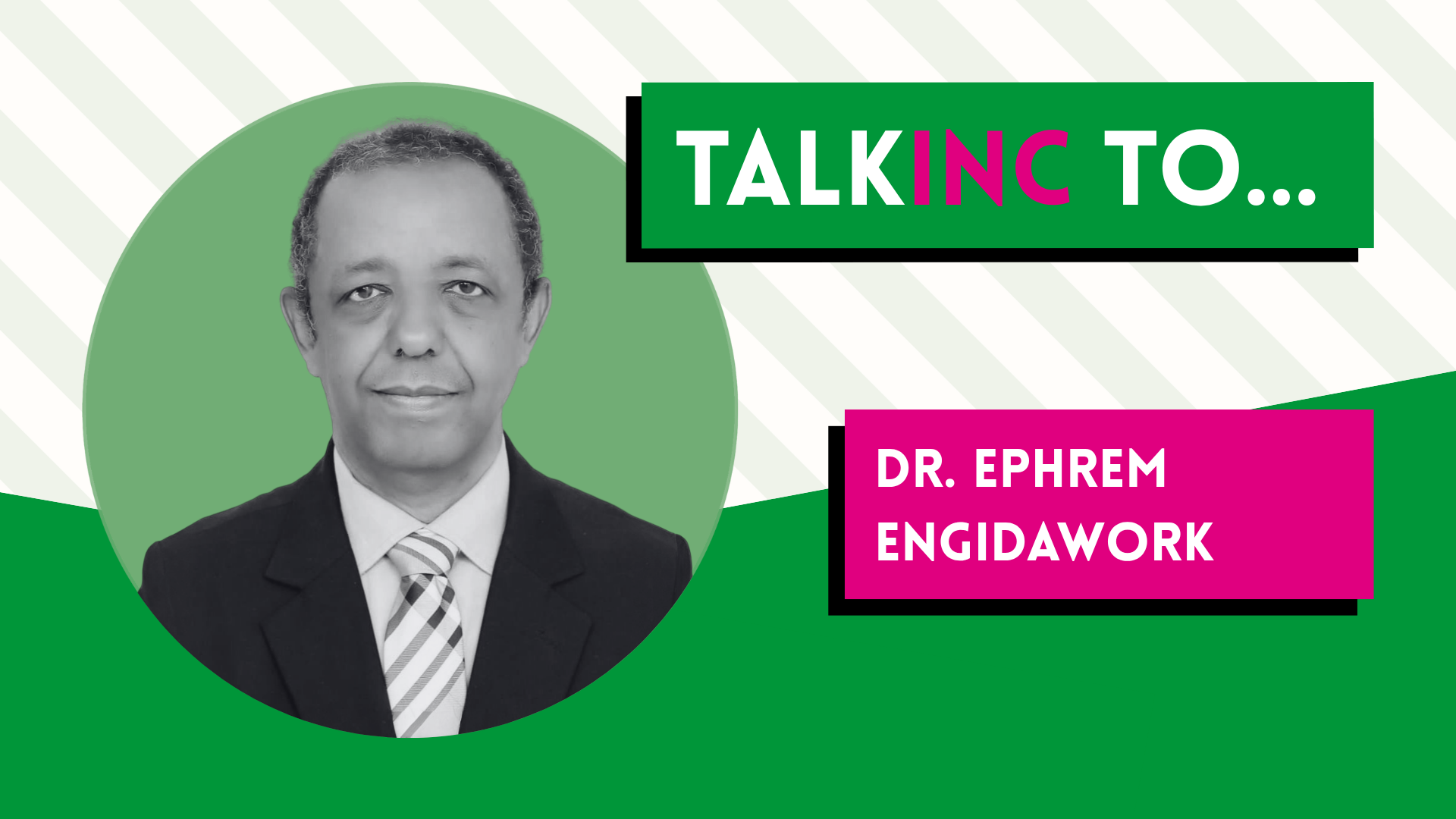
Our communications technician had the opportunity to speak with him while on an Erasmus exchange at AAU and thought it would be great to share the conversation with all of you, kicking off a new series of INCterviews.
1. You have spent many years studying khat and its effects on the brain. What initially led you to investigate this plant from a neuroscience perspective?
I was born in an area where khat is widely chewed, and I noticed that some people develop mental health problems as a result, while others do not. I wanted to understand why. At the same time, many students chew khat while studying because they believe it can improve their cognitive performance. I wanted to find out whether khat actually has any effect on cognitive abilities.
2. What are the most common mental disorders observed in people who consume khat habitually?
Schizophrenia. As a result, we tested the herb’s potential to induce schizophrenia in animals and the study showed that khat could induce schizophrenia-like symptoms.
3. Do students who consume khat to improve their cognitive performance actually benefit from it?
The findings in the scientific literature are conflicting. In our studies, we have consistently observed that khat does not improve learning, although it does increase alertness and concentration.
4. Is it somewhat similar to caffeine, then?
Yes, you could say that, although they act through different mechanisms and depnds on the amount taken.
5. Speaking of mechanisms, I saw that you have also investigated the endocannabinoid system. Is this because khat acts on this system?
Khat is widely believed to act, like amphetamine, through inhibition of the plasma membrane transporters responsible for the reuptake of neurotransmitters such as serotonin, noradrenaline and dopamine. This is the reason why it is dubbed as “Natural amphetamine”. Several studies have shown the interaction between the endocannabinoid system and drugs of abuse. However, nothing was reported between khat and this system. Thus, we wanted to see if there is any interaction between them. The result showed that there is an interaction, whereby khat might either work through the cannabinoid receptors or there is a common mechanism separately activated by the two agents.
6. While we are talking about the problems associated with khat, you are also investigating its potential use in treating neurological disorders.
Yes. We have tested khat in animal models of Parkinson's disease and found that it reverses catalepsy induced by antipsychotic drugs such as haloperidol but not by morphine. Moreover, khat attenuated MPTP induced motor deficits as well as increased expression of tyrosine hydroxylase positive cells and dopamine transporter mRNA gene in wild type mice.
7. This research is being carried out at Addis Ababa University. What makes the university a good place to study neuroscience and medicinal plants?
Addis Ababa University is the pioneer university in Ethiopia. It has an excellent research environment and strong collaborations with institutions around the world.
8. Do you have any collaborators in Barcelona?
We do have collaborators in Salamanca, but not in Barcelona yet. Perhaps in the future!